Advertisement
Justina Wamae decries toxicity of pre-election coalitions, urges focus on governance
04th November, 2025 08:40 PM
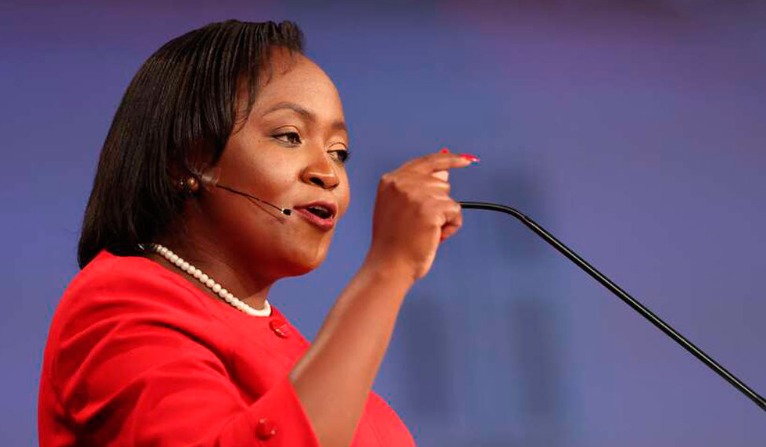
Former Roots Party deputy presidential candidate Justina Wamae has questioned the idea that winning Kenya’s presidency requires joining a pre-election coalition.
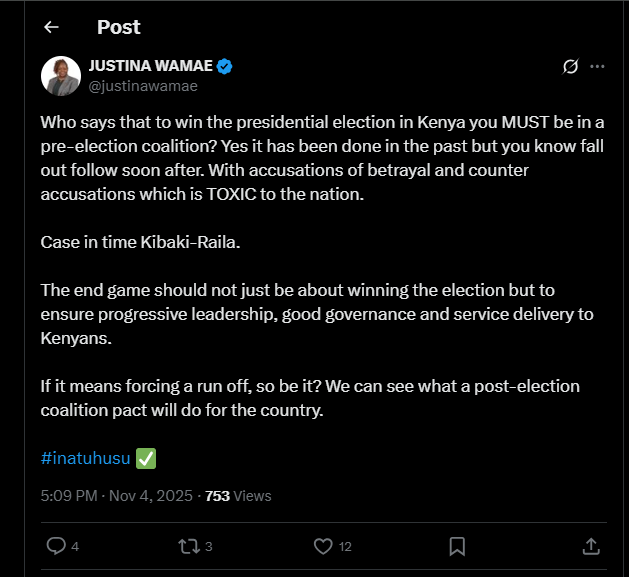
In a statement shared via her X account on Tuesday, November 4, 2025, she said such arrangements often end in bitter fallouts that harm national unity and distract leaders from delivering services.
Also watch: Justina Wamae dismisses early 2027 election bids as ‘political virginity’
Wamae argued that forcing a coalition before votes are cast can lead to accusations of betrayal later and make politics toxic. She said the priority should be progressive leadership, good governance, and service delivery, not only electoral victory.
She suggested that post-election pacts or run-off contests could be healthier for the country if they allow clearer policy choices during campaigns.
“Who says that to win the presidential election in Kenya, you MUST be in a pre-election coalition? Yes, it has been done in the past, but you know, fallout follows soon after. With accusations of betrayal and counteraccusations, which is TOXIC to the nation. Case in time, Kibaki-Raila. The end game should not just be about winning the election, but to ensure progressive leadership, good governance and service delivery to Kenyans. If it means forcing a runoff, so be it? We can see what a post-election coalition pact will do for the country,” Wamae stated.
Her comments recall long-standing debates in Kenya about whether parties should combine before elections to increase chances of winning or negotiate after the vote to form workable governments.
Also watch: Justina Wamae details how private sector can unlock Kenya’s economic potential
Kenya has a history of both approaches. Broad pre-election alliances have sometimes succeeded, such as the National Rainbow Coalition that brought Mwai Kibaki to power in 2002. At the same time, pre- and post-election deals have at times contributed to instability and mistrust.
The 2007 result between Mwai Kibaki and Raila Odinga led to mass protests and violence that left hundreds dead and forced a power-sharing arrangement to restore stability. That episode still shapes how many Kenyans view coalition deals and post-election negotiations.