Advertisement
Temporary smart home upgrades that make tenants feel safer at home
04th June, 2026 12:47 PM
Feeling safe where you live should not be a luxury. Yet for many Nairobians renting in flats and maisonettes across the city, security can feel entirely out of their hands.
Landlords are slow to act, caretakers are not always reliable, and applying for structural changes to a rental unit is its own headache.
The good news is there’s a growing category of smart security gadgets that change that equation entirely, requiring no drilling, no landlord permission, and no enormous budget.
Here are the specific upgrades worth considering.
A doorbell camera changes who controls your front door
The doorbell camera is probably the single most impactful security purchase a renter can make.
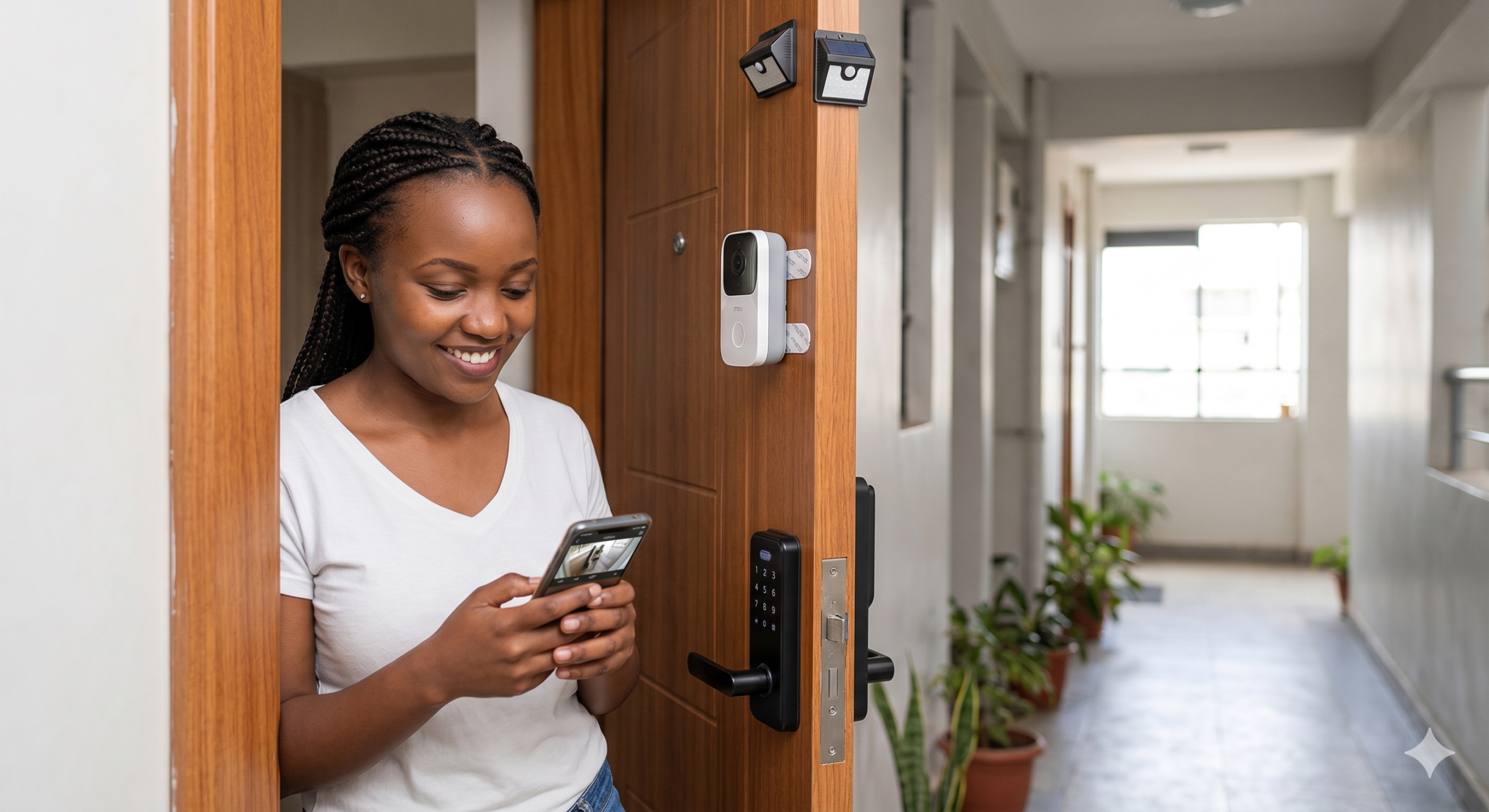
They are available locally and connect to your phone via Wi-Fi, letting you see, hear, and speak to whoever is at your door – whether you are inside, at work, or travelling.
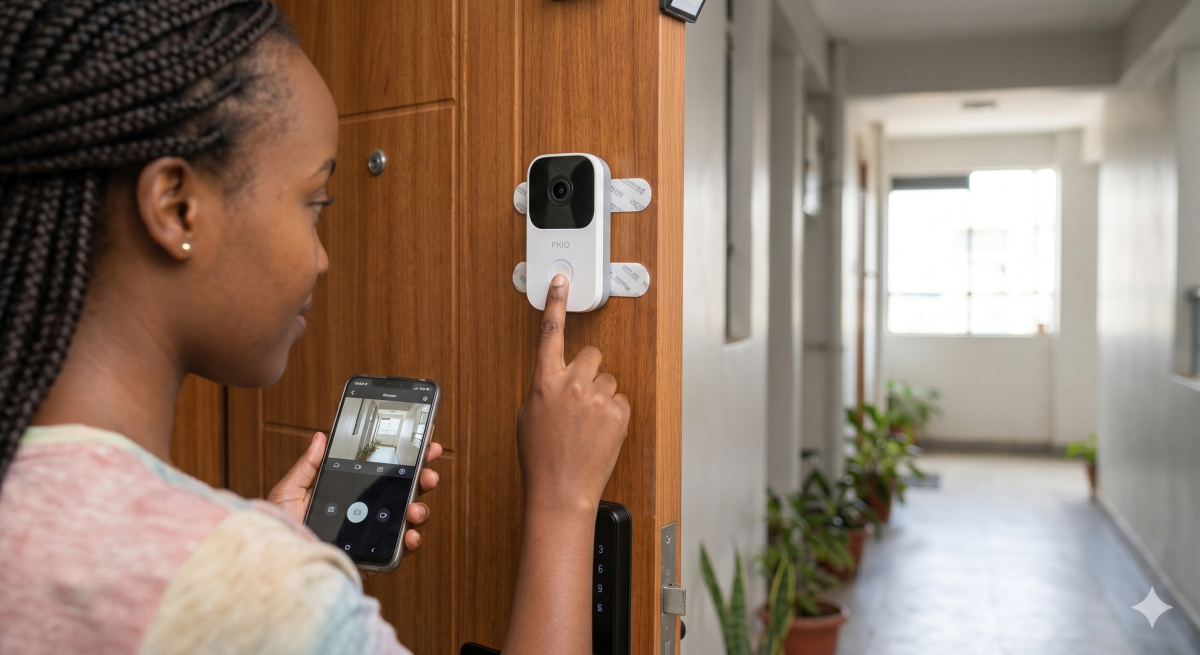
Many use battery power or USB charging, meaning installation is as simple as mounting with adhesive strips or a single screw into a wooden door frame.
A 2024 review published in JMIR mHealth and uHealth found that across 68 studies, “many smart home users reported satisfaction over perceived benefits such as an increased sense of safety and home security.”
Visible cameras deter opportunistic intruders, who tend to seek the path of least resistance.
Pair the doorbell camera with a motion-activated security light – a solar-powered PIR sensor light mounted above the entrance.
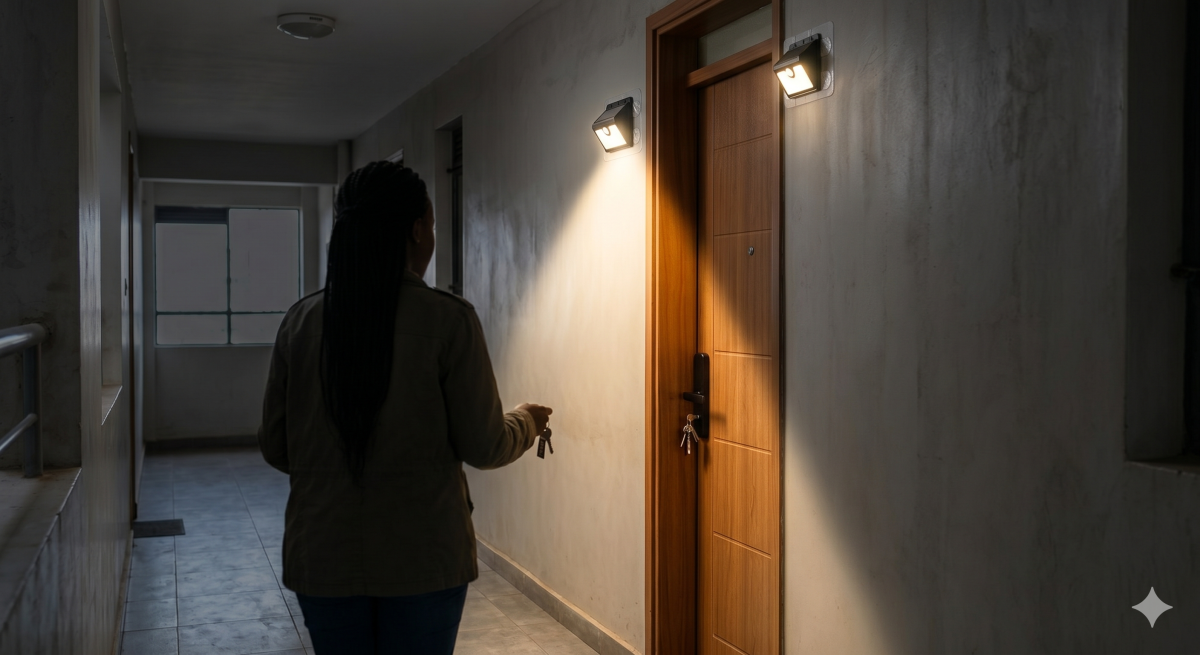
The sudden activation of a light when someone approaches is startling and unpredictable, and security experts consistently rank motion-sensor lighting as more effective than always-on floodlights for this reason.
Smart locks let you control access without touching the hardware
The other upgrade gaining ground in urban Kenyan rentals is the smart lock – a keypad or fingerprint deadbolt that fits over an existing lock cylinder without replacing the entire door mechanism.
Brands sell renter-friendly versions that install from the inside only, leaving the exterior of the door untouched and the landlord none the wiser.
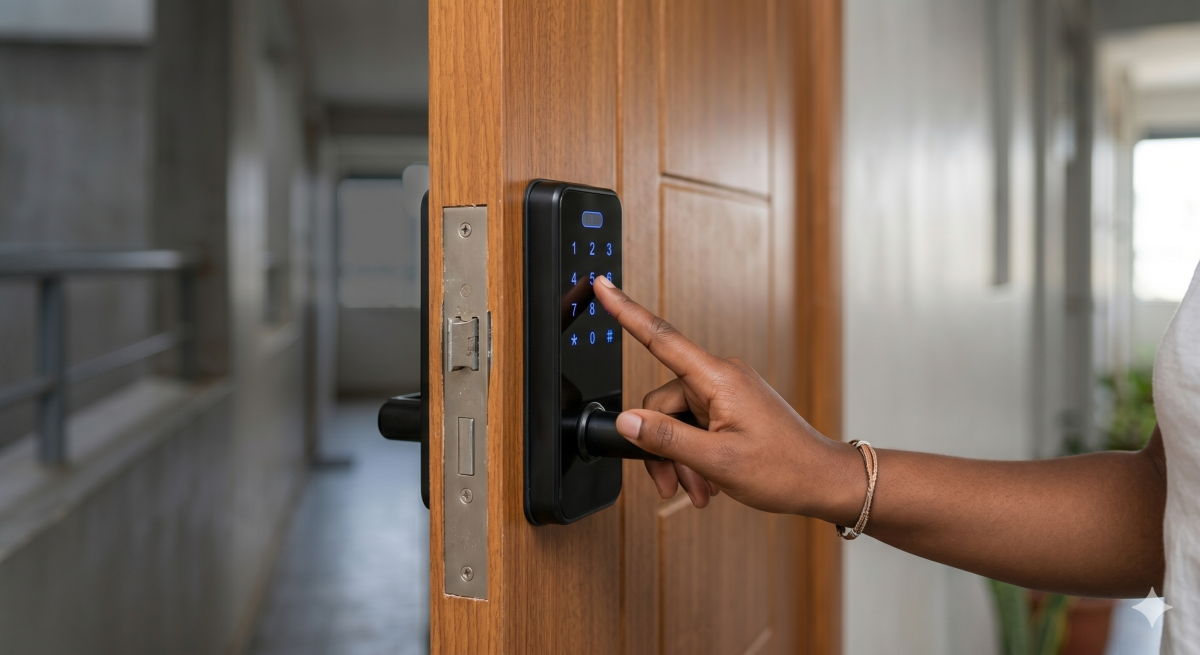
A 2024 study published in the peer-reviewed journal Wireless Networks described smart locks as offering “a simple and secure alternative to traditional key-based entry, making them an attractive choice for both residential and commercial properties.”
The practical upside in a rental context is immediate: you can issue temporary PIN codes to cleaners or family, revoke access instantly when a relationship sours, and receive a phone alert every time your door is unlocked.
No more hiding keys under the mat or worrying whether a spare set was ever returned.
These three devices (a doorbell camera, a motion-sensor light, and a smart lock) function best as a layered system rather than standalone fixes.
Together, they address the three most common security vulnerabilities in a Nairobi rental: the unknown knock, the dark stairwell, and the vulnerable door. None of them requires a landlord’s blessing. All of them can come down when you move out.