Advertisement
How a car’s automatic transmission decides which gear to engage
28th June, 2026 01:43 PM

To the average motorist navigating daily traffic, the automatic gearbox feels like magic. You shift into drive, press the accelerator, and the car moves smoothly without any extra effort.
Yet, beneath the floorboards, a hard-working mechanical network manages every shift.
Failing to understand how this system works leads many drivers to shorten its lifespan unknowingly, resulting in sudden, expensive garage visits.
How the system chooses your gear
Instead of magic, your transmission relies on fluid pressure and clever mechanical parts.
It begins with the torque converter, a fluid-filled component acting as an automatic clutch that connects the engine to the transmission. From there, planetary gear sets handle the gear changes.
Unlike a manual gearbox that uses separate gears on parallel shafts, a planetary system uses a central sun gear surrounded by smaller planet gears inside an outer ring. By locking or releasing different parts of this set, the gearbox changes speed ratios instantly.
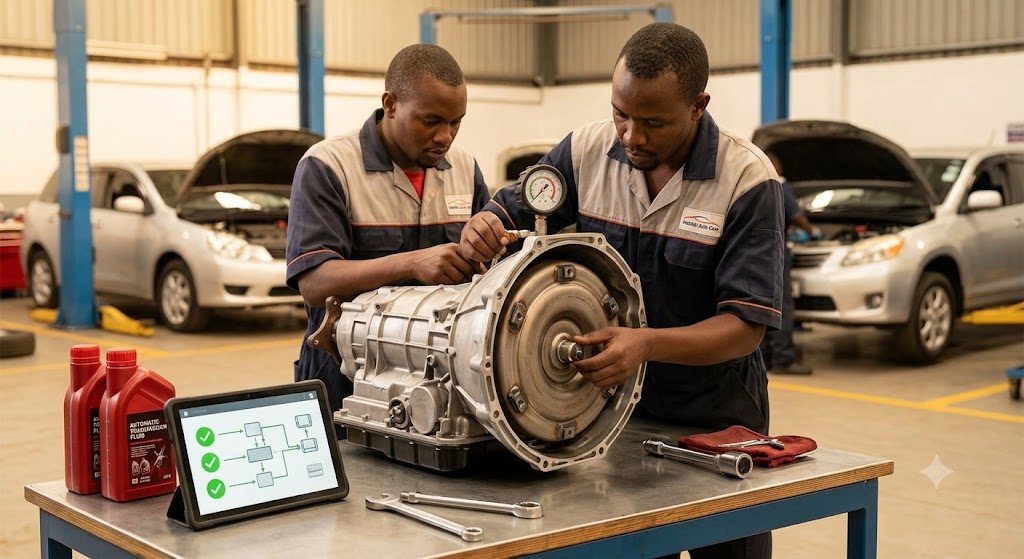
The muscle behind this movement is the hydraulic system, which uses pressurised fluid to engage internal clutch packs. The electronic control unit acts as the brain.
This computer tracks your road speed and throttle position, sending electrical signals to solenoids that open or close fluid lines.
A study published in the journal Scientific Reports notes that “the shift quality of an automatic transmission directly affects the human-perceived comfort and the durability of the automatic transmission.”
When internal components wear out, this precise timing fails. Research in Applied Sciences also warns that a “large leakage in the solenoid valve will reduce the efficiency of the automatic transmission,” which directly increases fuel consumption.
Bad habits causing transmission failure
Because the car handles the shifting, it is easy to adopt driving habits that ruin these internal parts.
One common error is towing heavy loads, or climbing steep hills, while leaving the gear selector strictly in Drive. This forces the gearbox to constantly hunt for gears, generating intense heat that destroys the transmission fluid.
Another frequent mistake is shifting between Reverse and Drive while the vehicle is still rolling. Doing this forces the internal clutches to stop a moving car, causing rapid mechanical wear.
Finally, riding the brakes while driving downhill instead of shifting to a lower gear range places continuous stress on the system without adequate cooling airflow.
A modern automatic gearbox is a high-pressure machine. Pausing completely before changing directions and selecting lower gear ranges for heavy tasks protects the hydraulic system.