Advertisement
Primitive fan behaviour could turn Talanta Stadium into Kenya’s next vandalism victim
01st September, 2026 03:12 PM
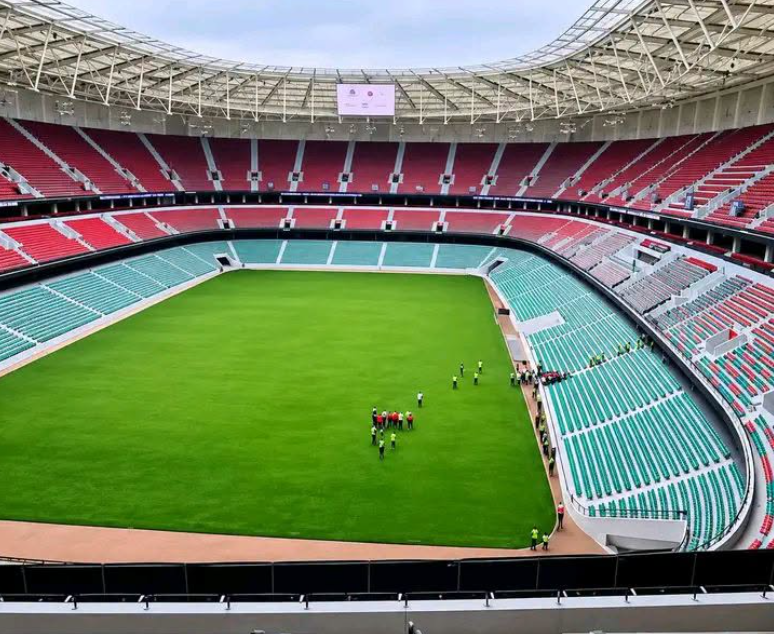
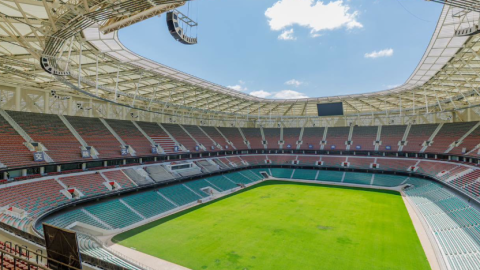
Kenya is preparing to usher in a new era of sports infrastructure with the completion and operation of the 60,000-seater Talanta Sports City Stadium, but there is an uncomfortable question that needs to be asked before thousands of football supporters are allowed through its gates: how long will the facility remain intact if the worst elements of Kenyan football fan culture are allowed to continue unchecked?
Talanta Stadium is not an ordinary football ground. The project has become one of the country’s biggest investments in sports infrastructure, with the latest reported project value reaching about Ksh45.85 billion.
Yet Kenya’s recent football history provides enough warning signs to suggest that protecting the facility will require much more than installing turnstiles, CCTV cameras and security barriers.
The biggest threat may come from the very people the stadium is intended to serve.
A disturbing culture of destroying stadium property
Kenyan football has repeatedly witnessed supporters respond to disappointing results, controversial officiating or frustration by damaging stadium property.
In November 2023, for example, supporters associated with Gor Mahia caused damage at the Moi International Sports Centre, Kasarani, including seats, prompting renewed calls for clubs and supporters to take responsibility for hooliganism.
The problem is hardly new.
In 2013, Gor Mahia supporters vandalised Kasarani Stadium following a goalless draw against Nairobi City Stars. Reports at the time said about 600 seats were damaged, with the replacement cost estimated at more than Ksh2 million before additional labour and repair expenses were considered. The same report recalled previous vandalism involving AFC Leopards supporters.
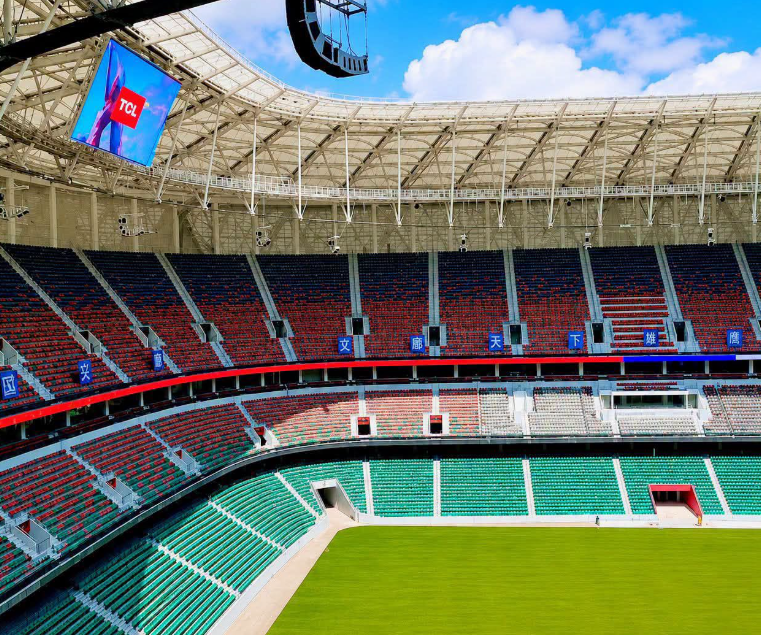
AFC Leopards supporters have also been involved in stadium trouble. In July 2020, angry supporters suspected to be associated with Ingwe vandalised lower-tier seats at Kasarani and threw them towards the pitch.
And this is not simply a Gor Mahia-AFC Leopards problem.
In September 2024, Shabana supporters damaged seats at Ulinzi Sports Complex after their team’s match against Ulinzi Stars. The incident resulted in sanctions, including Shabana being ordered to meet the cost of the damaged seats and subsequently playing five home matches without supporters.
The incidents demonstrate a worrying pattern: stadium seats have repeatedly become casualties of football frustration.
When a seat becomes a projectile
Perhaps the most disturbing aspect of Kenyan football hooliganism is the transformation of stadium infrastructure into ammunition during moments of disorder.
A seat is installed for a spectator to sit on. In the hands of an angry supporter, however, it can become an object thrown towards the pitch, another section of supporters, security officers or officials.
That culture has already cost Kenyan football facilities millions of shillings.
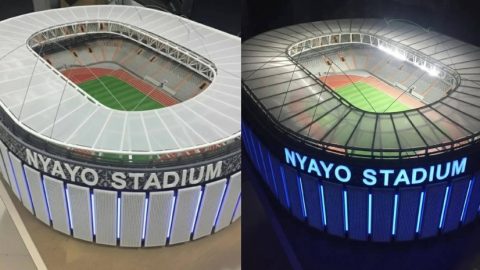
During the 2024 Mashemeji Derby between Gor Mahia and AFC Leopards at Nyayo National Stadium, supporters from both clubs were blamed for destruction to stadium property. Sports Stadia Management Board subsequently assessed damages at more than Ksh631,000 combined, including replacement of fixed seats and other repairs. AFC Leopards was barred from using Sports Kenya facilities until its bill was settled.
That incident should be treated as a warning for Talanta.
The new stadium will have thousands of seats packed into a modern, high-capacity facility. If supporters develop the same habit of ripping out seats whenever tempers boil over, the financial consequences could be enormous.
Talanta could become the ultimate test
Talanta Stadium is being built to give Kenya a modern venue capable of hosting major international football and other sporting events. The stadium is also central to Kenya’s preparations for the 2027 Africa Cup of Nations.
But a world-class stadium requires world-class behaviour from the people using it.
That is where Kenya’s football culture faces its biggest test.
A supporter who tears out a stadium seat because a referee made a decision he dislikes is not merely protesting. He is destroying public infrastructure. A fan who throws that seat onto the pitch is potentially turning a public facility into a dangerous environment for players, officials, fellow spectators and security personnel.
And when hundreds of people behave in the same way, the damage can quickly escalate.
It is therefore not enough for authorities to spend billions building modern facilities and then rely on clubs to settle repair bills after supporters have destroyed them.
The responsibility must move closer to the individual offender.
Musonye’s warning deserves another look
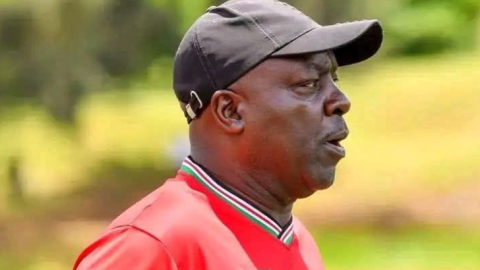
Nicholas Musonye, the chairman of the Local Organising Committee for Kenya’s major continental football preparations, has repeatedly spoken about the need for stronger security and discipline around stadiums.
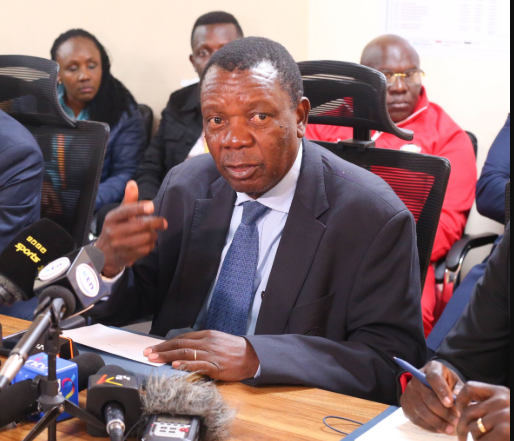
People Daily‘s coverage of the problems surrounding CHAN 2024 highlighted Musonye’s warnings about disciplinary action and the need for supporters to respect stadium regulations.
More recently, Musonye has continued to stress the importance of protecting expensive public sporting facilities. In February 2026, he warned that Kenya could not compromise on security and said the experience from CHAN had influenced preparations for AFCON 2027. He also emphasised that public sporting facilities are expensive and must be protected, while calling for tougher penalties against offenders.
That position deserves serious consideration.
For years, the punishment system has frequently landed on clubs rather than the individuals responsible for destruction. The 2024 Nyayo incident illustrates the problem: although the clubs were billed for the damage, the question naturally arises as to why identifiable individuals caught on CCTV should not also face the consequences of their actions.
If a supporter can be identified uprooting a seat, damaging a gate or destroying another part of a stadium, the law should be allowed to take its course.
Clubs cannot keep paying for supporters’ crimes
There is also a wider accountability problem.
Gor Mahia, AFC Leopards and Shabana are among Kenya’s most passionate and heavily supported clubs. Their supporters generate atmosphere, attend matches in large numbers and provide an important commercial foundation for the game.
But passion cannot become an excuse for destruction.
Clubs should certainly educate their supporters and take responsibility for crowd management. However, repeatedly charging clubs for damage caused by identifiable individuals risks creating a system in which the actual offenders escape while the institution carries the bill.
That is neither deterrence nor justice.
The solution should combine strong stadium security, CCTV surveillance, properly trained stewards, supporter education and individual prosecution where criminal damage has occurred.
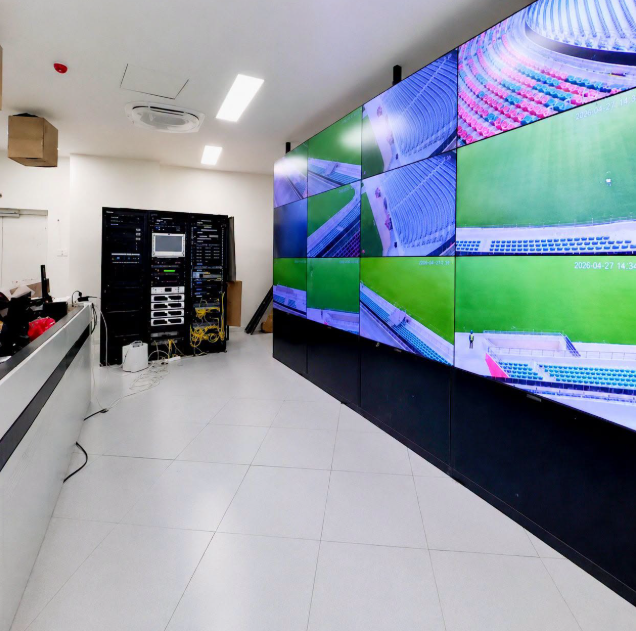
Kenya’s authorities have already moved towards stricter stadium controls. During CHAN, officials introduced measures including ticket checks, designated seating and stronger perimeter controls, while unruly conduct was explicitly identified as behaviour that could result in offenders being removed or prosecuted.
Those measures should become the permanent standard at Talanta.
The stadium should not be sacrificed to football passion
There is nothing wrong with passionate support.
Gor Mahia supporters can sing. AFC Leopards supporters can dance. Shabana supporters can celebrate. Fans can complain about referees, criticise players and passionately debate decisions.
But there has to be a line.
Once a supporter starts uprooting seats, smashing facilities or throwing stadium property, that stops being football passion and becomes destructive behaviour.
Calling such conduct “primitive” is uncomfortable, but perhaps necessary when discussing a culture that repeatedly destroys facilities built with public resources.
Kenya cannot spend tens of billions of shillings constructing a modern stadium only for its own football supporters to begin dismantling it after a few controversial decisions or disappointing results.
Talanta should represent the country’s arrival at a higher standard of sporting infrastructure.
It must also represent a higher standard of sporting culture.
Otherwise, the irony will be painful: Kenya could build a world-class stadium only for primitive fan behaviour to start pulling it apart almost immediately.
The real challenge, therefore, is not simply completing Talanta Stadium.
It is teaching football supporters that the stadium belongs to them too, and that destroying it is ultimately destroying their own football home.