Advertisement
From pride to eyesore: How Kasarani Stadium has become longest construction site
25th August, 2026 04:07 PM
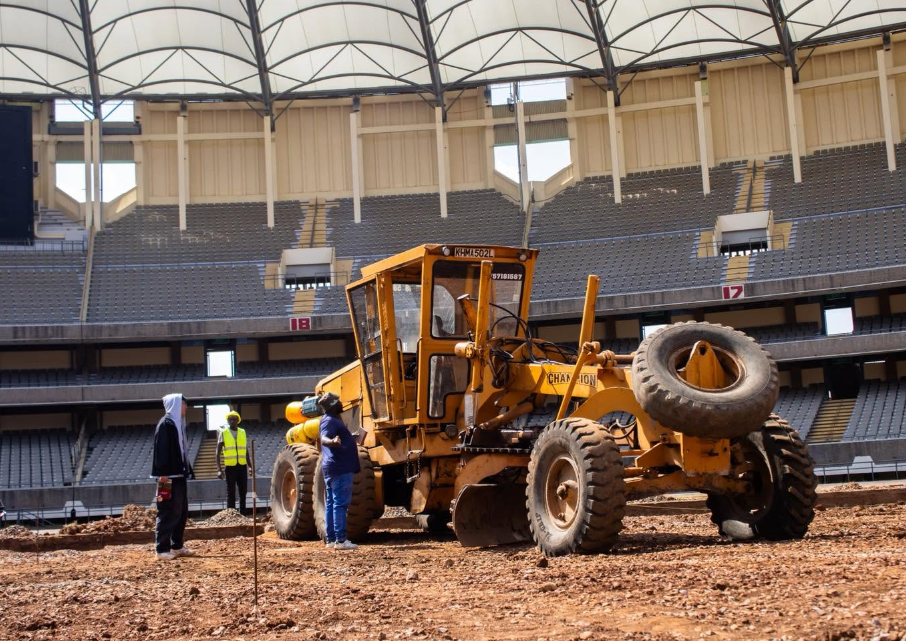
At what point does rehabilitation become an endless cycle of spending?
That is the uncomfortable question Kenyans should be asking about the Moi International Sports Centre, Kasarani, as billions of shillings continue to be poured into the facility barely two years after another major rehabilitation programme was undertaken.
Kasarani is undoubtedly one of Kenya’s most important sporting landmarks. Built in 1987 during the administration of the late President Daniel arap Moi, the complex has hosted generations of athletes, footballers and major international competitions. Its importance to Kenyan sport cannot be questioned.
What should, however, be questioned is the manner in which taxpayers’ money is being spent on its rehabilitation.
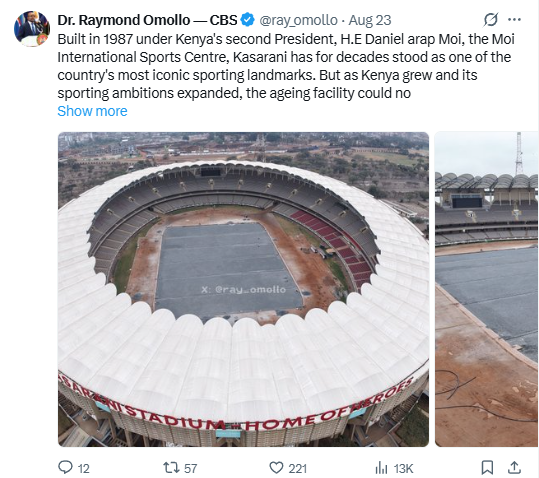
The latest figures indicate that Kasarani has already undergone a major phased rehabilitation costing Ksh6.7 billion. The first phase alone consumed Ksh3.6 billion and was completed in mid-2025 ahead of the African Nations Championship (CHAN). A further Ksh3.1 billion was allocated for the second phase, ostensibly to complete outstanding works and prepare the facility for the 2027 Africa Cup of Nations (AFCON).
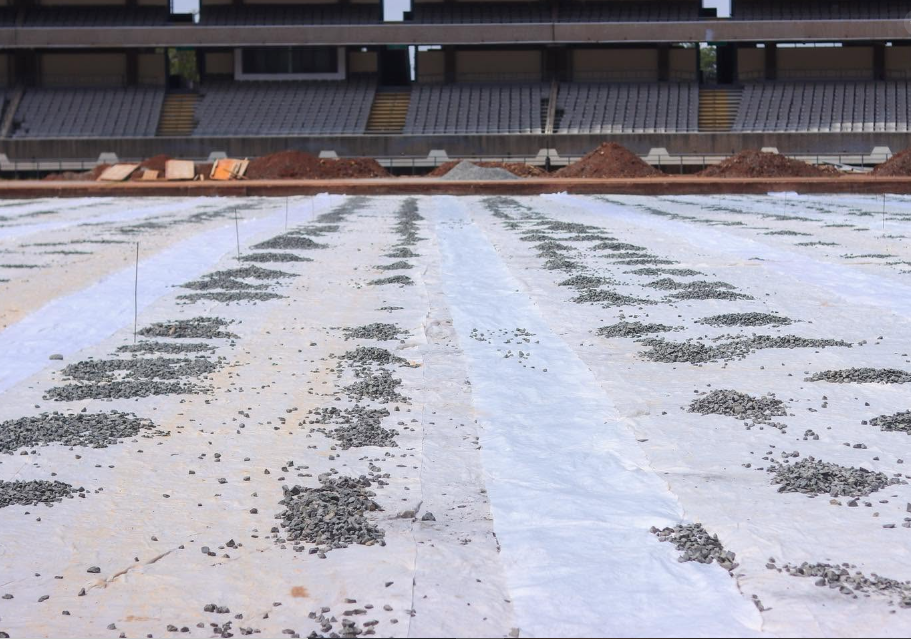
That is a staggering amount of public money for a facility that was supposedly being comprehensively prepared for international football only recently.
And now Kenyans are being told that another transformation is necessary.
Interior Principal Secretary Raymond Omollo has defended the current works, arguing that the initial rehabilitation was carried out in haste because of the need to prepare Kasarani for CHAN.
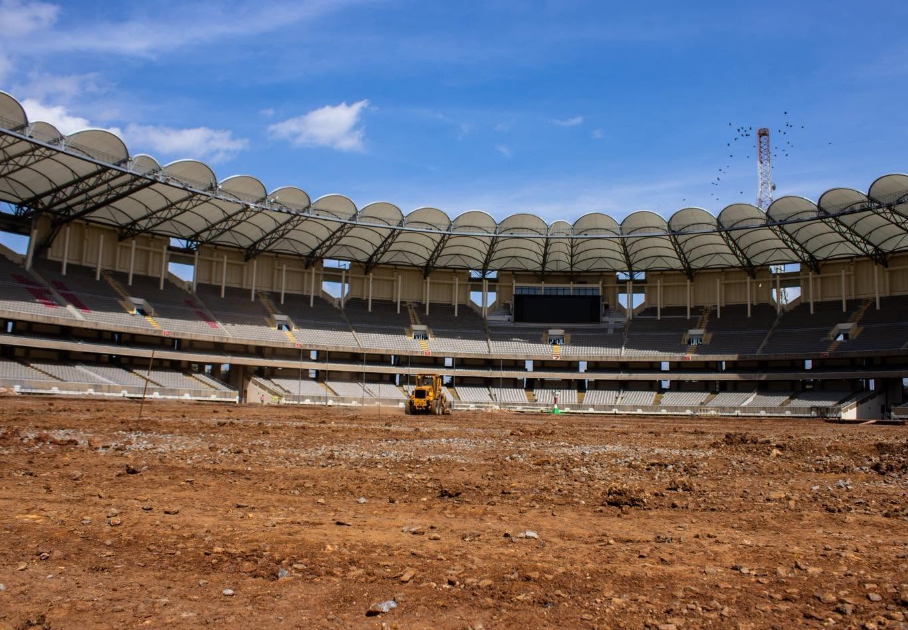
According to Omollo, the ongoing project is being undertaken comprehensively under the oversight of the Ministry of Defence and Sports Kenya to produce a 60,000-seater stadium that complies with FIFA and CAF requirements ahead of AFCON 2027.
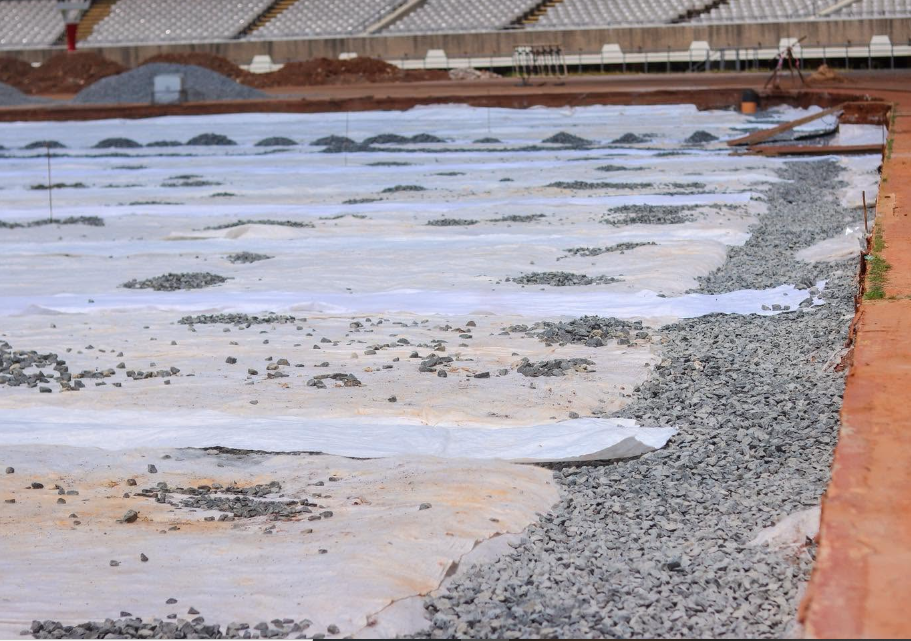
He says the latest transformation includes a hybrid Bermuda-grass pitch, an advanced drainage system, a nearly completed spectator canopy, completely replaced seats, upgraded VIP and VVIP facilities, 2,000-lux floodlights, animation screens and VAR infrastructure. The project also includes modern changing rooms, automated ticketing, upgraded media facilities and two rehabilitated training grounds.
There is nothing wrong with wanting a world-class stadium.
In fact, Kenya deserves modern sporting infrastructure capable of hosting the biggest competitions on the continent. The problem is that taxpayers deserve to know why a facility that received billions of shillings for rehabilitation in preparation for a major tournament seemingly required another comprehensive overhaul almost immediately afterwards.
If the first rehabilitation was rushed, why was that allowed to happen in the first place?
Why were the requirements for future competitions not incorporated into the original works?
Why should taxpayers pay twice because planning was inadequate the first time?
These are not minor questions. They go to the heart of accountability in the management of public resources.
Kenya has repeatedly found itself in a familiar situation: a major international tournament approaches, authorities announce urgent renovation works, billions are allocated, contractors move in, and the country races against time to complete projects. Once the tournament is over, questions emerge about the quality, sustainability and value of the expenditure.
That model cannot continue indefinitely
Kasarani should not be treated as a permanent construction site every time Kenya prepares to host an international sporting event, while other historic facilities such the City Stadium and Nyayo National Stadium keep receiving promises of facelift. For the latter stadium, President William Ruto has consistently promised that it be be upgraded with a canopy, while renovation works at City Stadium are moving at a slow pace after years of neglect.
A better approach would be to establish a long-term master plan for the facility, based on internationally recognised standards and the country’s sporting ambitions. Such a plan should determine the stadium’s structural, technological, hospitality, security, media, pitch and spectator requirements for the next 15 to 20 years.
Then the government should renovate the facility once, comprehensively and transparently, rather than repeatedly undertaking expensive emergency upgrades.
The government should also publish a detailed breakdown of the KSh6.7 billion expenditure. Kenyans deserve to know precisely what was done under the first phase, what remains under the second phase, how much each component costs and why certain works were not included in the initial programme.
There must also be an independent assessment of the previous rehabilitation. If a KSh3.6 billion project was completed in 2025, Kenyans should be told exactly why substantial additional works are required so soon afterwards.
The argument that the stadium is old cannot, on its own, justify an endless expenditure cycle. Kasarani’s age has been known for decades. Its deterioration did not suddenly become apparent when Kenya won hosting rights for CHAN or began preparing for AFCON 2027.
Ageing infrastructure requires proper lifecycle planning, not repeated last-minute interventions.
The government must also look beyond the glamour of hosting international tournaments. Once AFCON 2027 is over, Kasarani will still belong to Kenyans. The facilities must therefore be designed not simply to satisfy CAF inspectors for one tournament, but to serve athletes, football clubs, schools, federations and ordinary sports fans for decades.
That means durability should be given as much attention as appearance.
A new canopy, LED screens, floodlights and VIP lounges may create an impressive stadium, but the real measure of success will be whether the facility can operate efficiently years after the cameras leave.
The same principle should apply to the country’s other sporting facilities. Kenya cannot afford to concentrate billions on a handful of stadiums while community sporting infrastructure remains neglected.
A wider economic question
At a time when Kenyan households and businesses are facing significant economic pressure, every billion shilling spent by the government must demonstrate value. Public money is not an unlimited resource. Funds committed to repeated renovations cannot simultaneously be used for hospitals, schools, roads, grassroots sports facilities and other urgent public needs.
This does not mean Kenya should abandon its ambition to host international sporting events.
Quite the opposite
The country should aspire to host AFCON, CHAN, athletics championships and other global competitions. But ambition must be accompanied by proper planning, transparent procurement and responsible expenditure.
PS Omollo is right that Kasarani is a national landmark whose transformation should bring it to global standards.
But global standards should also apply to the management of public money.
A world-class stadium should not be built on a foundation of endless emergency spending.
The government now has an opportunity to draw a line under the cycle. Once the current works are completed, Kasarani should be subjected to a rigorous independent technical and financial audit. Its long-term maintenance programme should then be made public, with clear budgets and timelines designed to prevent another expensive overhaul in a few years.
Kenyans should not have to hear every two or three years that their flagship stadium needs another multibillion-shilling facelift.
Build it properly. Maintain it properly. Account for every shilling. Then move on.
Kasarani should become a symbol of Kenya’s sporting ambition, not a permanent symbol of how the country repeatedly spends billions fixing the same problem.