Advertisement
Top 10 most iconic stadiums in Africa in 2026, where Kenya’s Talanta Stadium ranks
26th August, 2026 04:58 PM
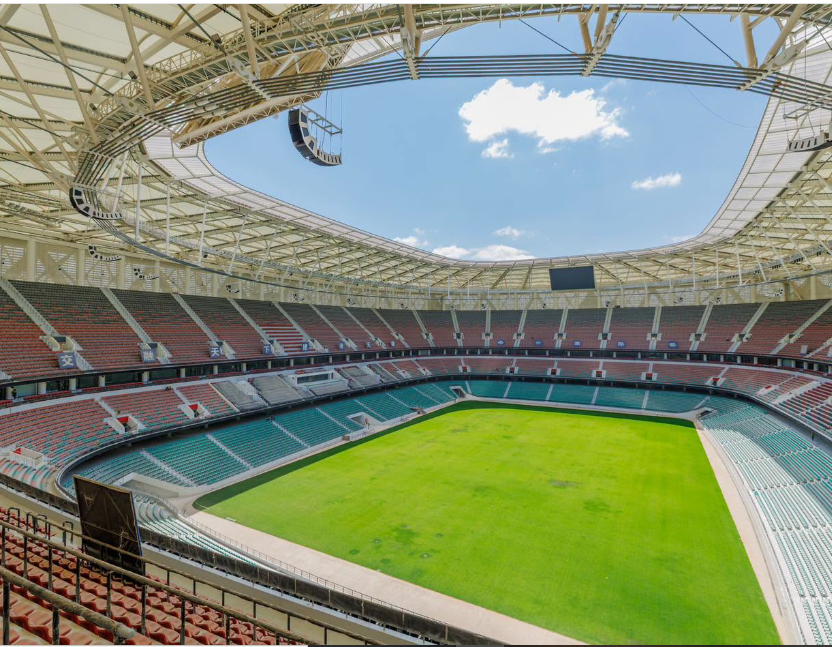
Africa is home to some of the continent’s most spectacular sporting venues, combining huge capacities, striking architecture and rich sporting history. From Johannesburg to Cairo, Kinshasa and Abidjan, these stadiums have hosted World Cup matches, continental tournaments, national-team fixtures and historic moments.
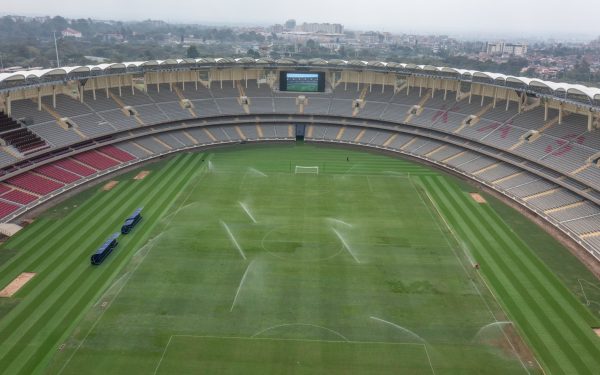
At Nairobi’s Raila Odinga International Stadium, the sporting facility is entering one of the most important stages of its development, with workers now undertaking synthetic stitching to reinforce the natural grass ahead of the facility’s planned use for major international matches.
Still under construction, the 60,000-capacity stadium, formerly known as Talanta Stadium, is being developed as one of Kenya’s flagship venues for the 2027 Africa Cup of Nations, making it rank among the best stadiums continentally, once finished. Recent updates indicate that the main pitch has been levelled and the grass has established sufficiently for the stitching phase to begin.
Here are 10 of the continent’s most iconic stadiums based on their size, design, history and importance to African football.
1. FNB Stadium — Johannesburg, South Africa
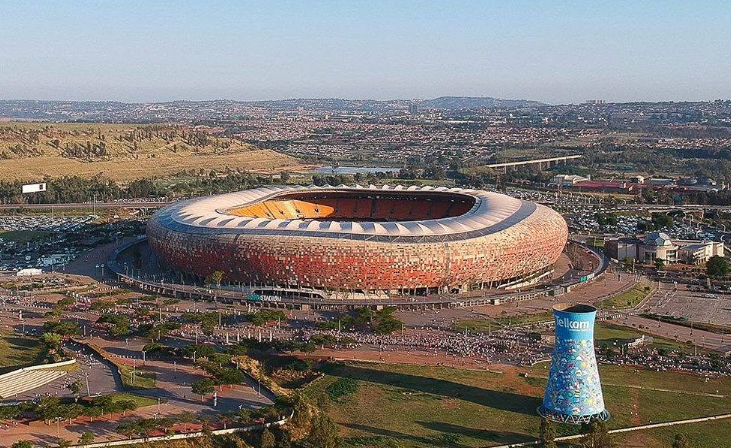
With a capacity of 94,736, FNB Stadium, popularly known as Soccer City, is the largest stadium in Africa. Its distinctive design was inspired by an African calabash, giving the venue a uniquely African appearance.
The stadium gained worldwide recognition during the 2010 FIFA World Cup, when it hosted the final between Spain and the Netherlands. It has also played an important role in South Africa’s history, including hosting Nelson Mandela’s first major speech after his release from prison.
2. Misr Stadium — Cairo, Egypt
The Misr Stadium, also known as the New Administrative Capital Stadium, has a reported capacity of 93,940, making it one of Africa’s largest sporting venues.
Located within Egypt’s International Olympic City, the modern facility represents the country’s ambition to develop world-class sporting infrastructure capable of hosting major international competitions.
3. Borg El-Arab Stadium — Alexandria, Egypt
With space for approximately 86,000 spectators, Borg El-Arab Stadium is another giant of African football.
Situated near Alexandria, the imposing venue was originally constructed as part of Egypt’s preparations for its unsuccessful bid to host the 2010 FIFA World Cup. It has since become one of the country’s principal venues for major football matches.
4. Stade des Martyrs de la Pentecôte — Kinshasa, DR Congo
The Stade des Martyrs in Kinshasa can accommodate around 80,000 fans, making it one of Africa’s largest traditional football stadiums.
The historic venue serves as an important home ground for the DR Congo national football team and has witnessed some of the country’s biggest football occasions. Its enormous capacity also makes it one of the most intimidating venues for visiting teams.
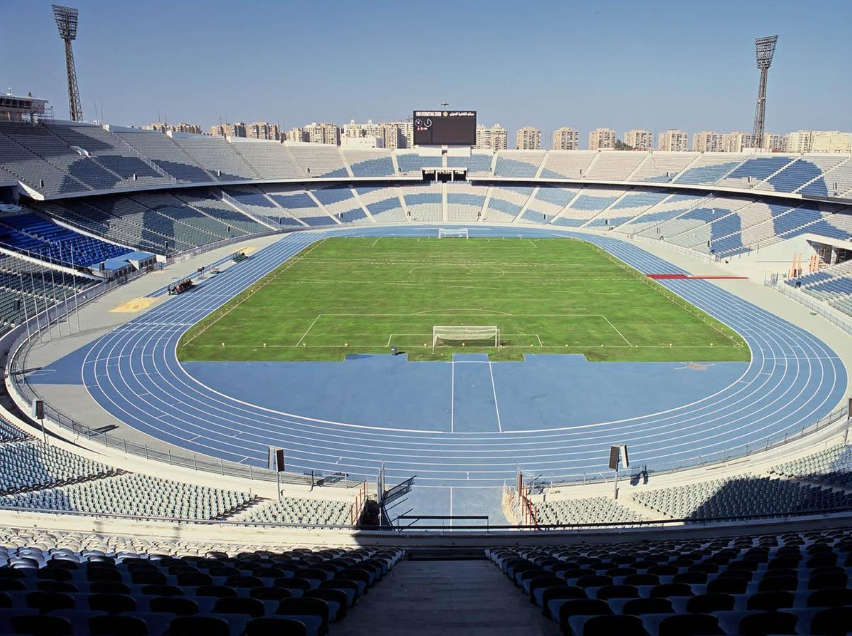
5. Cairo International Stadium — Cairo, Egypt
Another legendary Egyptian venue, the Cairo International Stadium has a capacity of more than 75,000 spectators.
For decades, the stadium has been central to Egyptian and African football, hosting major domestic fixtures, continental matches and international encounters. Its long history and regular use at the highest level have cemented its reputation as one of Africa’s iconic football grounds.
6. Ibn Batouta Stadium — Tangier, Morocco
The Ibn Batouta Stadium, also known as the Grand Stade de Tanger, can accommodate approximately 65,000 spectators.
The Tangier venue has undergone major improvements as Morocco has continued to expand and modernise its sporting infrastructure. Its combination of large capacity and modern facilities has made it an important venue for major international sporting events.
7. Alassane Ouattara Stadium — Abidjan, Ivory Coast
The Alassane Ouattara Stadium, located in Ebimpé near Abidjan, is one of West Africa’s most impressive modern football venues.
With a capacity of around 60,000, the state-of-the-art stadium became a major centrepiece during the Africa Cup of Nations hosted by Ivory Coast. Its modern facilities and large seating capacity have strengthened its status as one of the continent’s premier sporting arenas.
8. Moses Mabhida Stadium — Durban, South Africa
Moses Mabhida Stadium in Durban is instantly recognisable because of its spectacular arch stretching over the stadium.
The venue holds around 56,000 spectators and offers striking views of Durban and the Indian Ocean. Beyond football, its architectural design and location have made it one of South Africa’s most recognisable sporting landmarks.
9. Abdoulaye Wade Stadium — Diamniadio, Senegal
Senegal’s Abdoulaye Wade Stadium is a modern 50,000-seat facility located in Diamniadio.
Built to provide the Teranga Lions with a world-class home, the stadium combines contemporary architecture with the country’s growing reputation as a major force in African football. It has become an important symbol of Senegal’s investment in sporting infrastructure.
10. Godswill Akpabio International Stadium — Uyo, Nigeria
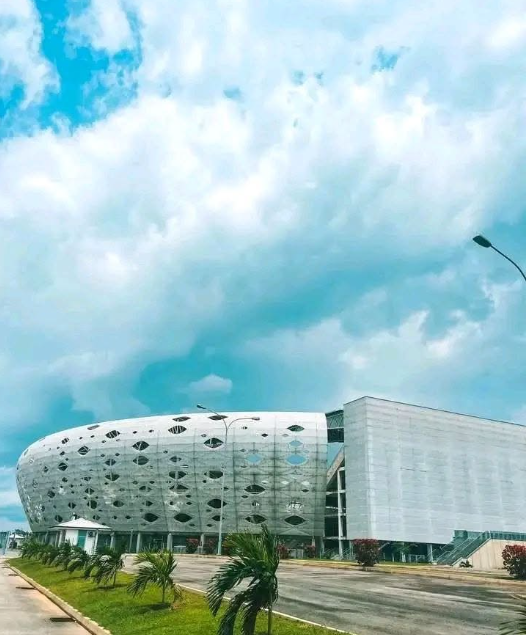
Known locally as the “Nest of Champions,” the Godswill Akpabio International Stadium has a capacity of approximately 30,000.
PHOTO/https://www.facebook.com/profile.php?id=61582923597792
Although smaller than several other stadiums on this list, its futuristic design and vibrant atmosphere have earned it a special place among Africa’s notable sporting venues. Located in Uyo, the stadium has hosted major domestic and international football fixtures.
The diversity of these stadiums highlights the evolution of African sporting infrastructure. Some, such as FNB Stadium and Cairo International Stadium, are celebrated for their history, while newer venues such as Misr Stadium and the Alassane Ouattara Stadium showcase the continent’s push towards modern, international-standard facilities.
Beyond their capacity, these grounds have become landmarks connected to memorable football matches, national celebrations and defining moments in African sporting history.