Advertisement
Why do we act and sound like someone else after a trip?
31st July, 2026 07:37 PM
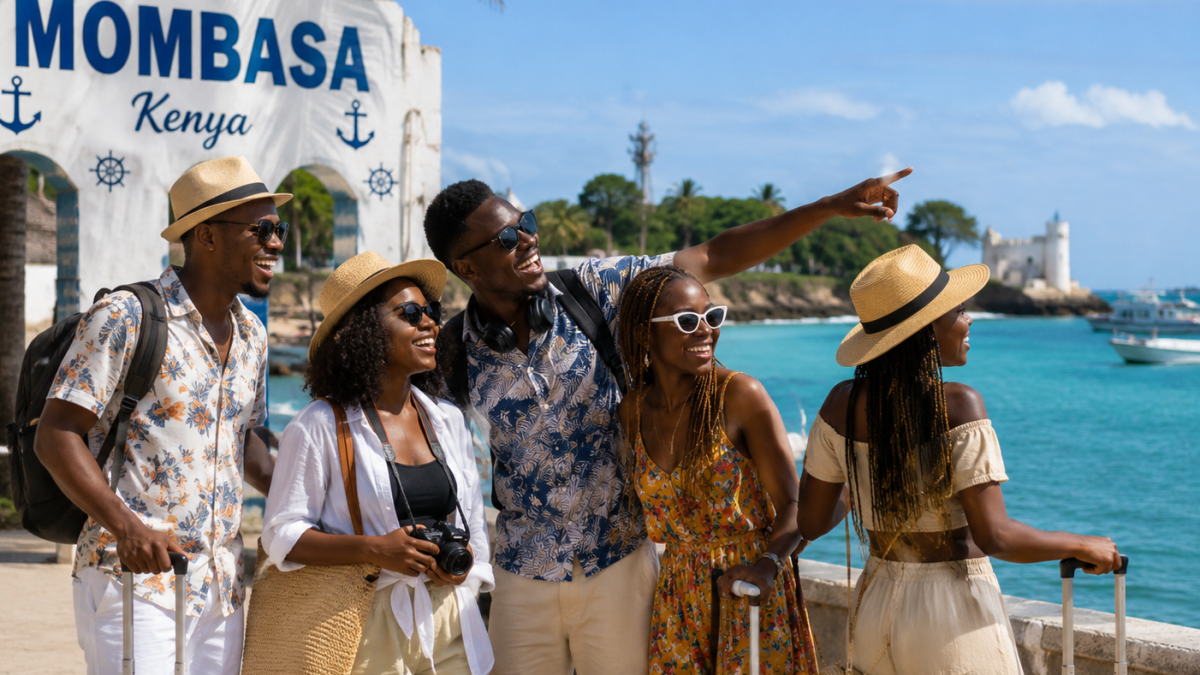
Instead of bringing back souvenirs, some travellers return home from holiday with an entirely different accent, look and mannerisms. But why?
When I was in my 20s, I had no idea what I wanted to do with my life. I had a yen for travel, so I settled in Prague. Three years and hundreds of pints of Czech pilsner later, I moved back to the US with something I hadn’t planned: a new look and accent.
Out was my long, dark-blonde hair and my utilitarian jean-and-T-shirt style of dress; and in was my cropped bleach-blond hair, an androgynous fashion sense and a new affectation that sounded somewhere between central Bohemian and pretentious.
My family hated this new me. And looking back, I would have hated me, too.
Many people just back from their summer holidays this year will show friends and family photos to convey how transformative their trip was. But there’s a whole other subsection of travellers who physically transform by bringing home the accent, dress or customs of a place and incorporating them into their daily lives.
I know an American woman who suddenly started signing off her emails with “Namaste” after returning from Bhutan
Remember Madonna’s widely mocked British lilt during her time in England? That’s just the tip of the iceberg. But it turns out that she and other travellers may not be able to help themselves.
The internet is filled with viral videos poking fun of people who start chain-smoking and wearing all black after three days in Berlin, saying “bollocks” on their first day in London and pronouncing “Airbnb” with a Gallic flourish after five days in Paris. But while it’s easy to mock these “semester abroad accents” and seemingly forced newfound mannerisms, I was curious to know why some of us are susceptible to this.
It’s actually not that difficult to pick up an accent – especially if we spend enough time in a place. Studies have suggested that we even unconsciously imitate other accents, since human beings frequently adjust to each other’s ways of speaking. Travelling somewhere new may bring this out.
For many people, travel can be both influential and addictive. Learning about other cultures and experiencing how people around the world live can have a profound, lasting effect on us in ways both big and small.
According to Dr Charlotte Russell, a clinical psychologist and the founder of The Travel Psychologist these revelations can quickly become personal rituals. “The most obvious motivation [why some people incorporate foreign customs or speech] is that someone has really connected with a part of their experience in a particular place, and want to ‘hold’ onto their experiences and their sense of connection,” she said.

Russell gave a personal example of “the quieter kinds of things we might bring back with us” from travelling abroad. She loves the Greek word parakalo, which translates to “please”, but has a much deeper function in the Greek language.
“I really like the sound of the word and how it’s used to show courtesy to others in a way that we might say ‘after you’ or ‘how can I help you?’,” she said. “Despite connecting to the word and the culture in Greece, I choose not to use it loudly or to strangers who don’t have any context. I use it when I’m in Greece and with any of my Greek friends when I’m back home. For me, using the word [selectively] is about the connection I feel to the Greek culture and my experiences there.”
But then there are the more explicit things we drag back from our trips. I know an American woman who suddenly started signing off her emails with “Namaste” after returning from Bhutan. A friend of mine briefly lived in Italy and now pinches his fingertips and shakes his hands up and down whenever he’s confused. And most everyone I’ve met who goes to Costa Rica now won’t stop saying “pura vida!” while strangely flashing the Hawaiian “shaka” sign.
“The second motivation might include this sense of connection to a place, but [it’s] not quiet – it’s about signalling to others that I am well-travelled, and perhaps in some cases, even a sense of superiority because of this,” Russell said.
According to Gareth Barkin, an anthropology and sociology professor at the University of Puget Sound in Tacoma, Washington, some travellers may adapt foreign customs out of respect or even reverence for the local culture. Barkin points to the work of French philosopher René Girard who coined the term “mimetic desire” and argued that when we travel, we don’t want to only consume food and sights, but also to absorb the host culture itself.
“Even if it’s another highly developed country like France or Japan, the argument is that we will often see it as somehow more ‘authentic’ and ‘traditional’ than our own fractured, modern lives,” said Barkin. “By adopting their accent or mimicking their physical posture, we are engaging in – often unconsciously – an attempt to ‘yield into and become the Other,’ to quote [anthropologist] Michael Taussig. We’re hoping that their more authentic state of being will somehow transfer to us.”
Interestingly, Barkin says that not every destination possesses the same allure for travellers when it comes to mimicry. Whether a culture is more or less likely to inspire this imitation usually boils down to the sociolinguistic power of “prestige bias”, the idea that we adopt the tendencies of people or places that we hold in high esteem.
“In the travel world, certain destinations wield a lot of overt prestige for Americans – the UK, France, Italy or Greece – countries associated with the classical canon of Western culture,” he said. “When an American tourist adopts an English accent in London or tries to mimic local hand gestures in Rome, the idea is that they are using mimicry as a shortcut to ‘borrow’ some of the destination’s social capital. And to signal to locals that they belong there.”
Another reason why some travellers come back from a trip with a slight affectation or peppering their conversations with newly acquired foreign words may also be linked to overtourism. As mass tourism has increased, Berkin claims that the allure of those historically “high-prestige” destinations has waned, and we are currently seeing a surge in “covert prestige” thanks to social media.
“With covert prestige… middle-class [Western travellers] romanticise rural, Indigenous or less-developed communities, and in so doing, contrast themselves against traditional tourists,” he said. “[They’re broadcasting] a specialised cultural capital meant not just to associate themselves with the host culture, but also to signal their elevation above conventional tourists who visit more traditional, accessible destinations.”
We all know the type: the gringo who spent a month learning Spanish in rural Guatemala and will now only eat masa tortillas, the Canadian just back from Laos who now clasps his hands and bows whenever you hand him anything, the Europeans who backpack through India donning saris and wrap-around dhotis.
In a way, people adopting the local culture from their travels abroad can be viewed as a sort of one-upmanship. Okay, so you waited your turn to get that perfect sunrise photo of yourself at Machu Picchu doing the Warrior II pose and you can’t wait to post it on Instagram.
But there’s someone returning home right now who is going to show the world how to make perfect pisco sours and ceviche on TikTok while perfectly pronouncing “aji amarillo“, despite having never had heard of these things before their trip.
I suppose this is what I was doing when I moved back to the US from Prague. With my new look and my new way of speaking, I was unconsciously trying to re-introduce myself to old friends and show that I had been transformed by a culture different than my own.
In hindsight, this fleeting act may have been more for me than others – a way to myself how much I had changed. Everyone else likely just thought I was a pretentious idiot.