County bosses on the radar as data protection crackdown starts

The Office of the Data Protection Commissioner (ODPC) is intensifying efforts to hold county executives accountable for data protection compliance, with a renewed focus on sensitising senior officials in devolved units.
The ODPC confirmed that the engagements will be rolled out in all 47 counties as part of its crackdown on non-compliance during a meeting on Monday, August 4, 2025.
You might also like



With counties increasingly handling sensitive personal information from healthcare records to licensing data, the ODPC says leadership must take the lead in safeguarding data and ensuring systems meet national legal standards.
Counties that fail to comply with the Act now face legal and reputational risks. The ODPCs said the latest strategy signals a firm stance: responsibility for data protection begins at the top.
In a strategic shift from general awareness to executive-level enforcement, the ODPC has launched a targeted campaign to engage county leadership on their legal obligations under the Data Protection Act. The move comes amid rising concerns over how countries handle personal data, especially as more services become digitised.
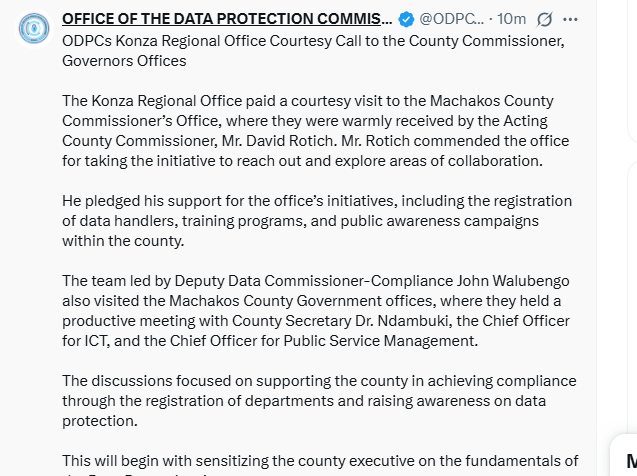
In a statement on X account on Monday, August 4, 2025, the agency said that the outreach specifically targets county executives, governors, county secretaries, and chief officers who are responsible for overseeing data governance within their jurisdictions.
According to Deputy Data Commissioner for Compliance, John Walubengo, the campaign recognises that leadership buy-in is essential for effective implementation of the Data Protection Act.
“We’re starting by sensitising the county executive on the fundamentals of the Data Protection Act. Informed leadership is key to building a compliant data ecosystem within county governments,” Walubengo said.
The agency reiterated that the strategic engagements with senior officials from both the national and county government, including the County Secretary and chief officers.

It said the discussions will focus on executive-level responsibilities such as registration of data processors and controllers, staff training, and the establishment of internal data protection mechanisms.
Meanwhile, Nairobi residents can expect a wave of compliance measures, digitised service platforms, and property regularisation reforms as the county unveils an ambitious strategy to fund its Ksh44.6 billion 2025/2026 budget, without imposing any new taxes.
The county expects these measures to generate billions in revenue by unlocking dormant property value, enforcing timely payments, and broadening the tax base through enhanced data mapping.