Advertisement
Kenya’s stadium-building obsession: What happens after the ribbon-cutting?
02nd September, 2026 02:20 PM
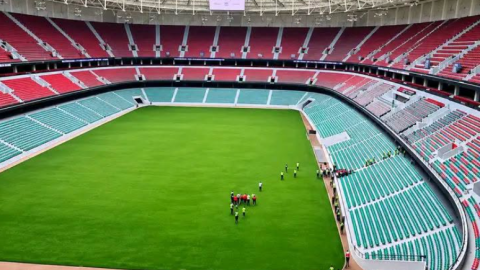
Kenya is investing heavily in sports infrastructure, with new stadiums and mini-stadia emerging across the country. The government says the expansion is intended to increase access to sporting facilities, nurture talent and support the country’s ambitions to host major international competitions.
Sports Kenya’s latest annual report shows the scale of the programme: 16 stadium projects were listed as completed, 19 were ongoing, three had been tendered, while another 32 were planned. The same report listed 37 constituency sports academies, 12 of them ongoing and 25 awaiting tendering. The estimated cost of completed projects was Ksh11.989 billion, with Ksh9.489 billion already spent and Ksh2.5 billion still outstanding.
Latest reports reveal that the Kenyan government is again planning to borrow Ksh38.74 billion against the Sports, Arts and Social Development Fund to finish 33 new and ongoing stadium projects nationwide.
The move is aimed at completing and upgrading 33 stadium projects across multiple counties. The funding source is secured against future revenues of the Sports, Arts and Social Development Fund, with the repayment plan structured over a 15-year period, using incoming collections into the fund.
That raises an important question: Is Kenya building enough sports infrastructure, or is it building more facilities than it can realistically maintain?
A stadium is not simply a construction project. It is a long-term public asset. Once the contractor leaves, the real financial responsibility begins: turf replacement, drainage, electricity, floodlights, cleaning, security, changing rooms, water, seating, perimeter walls and general repairs all require money year after year.
And Nairobi has two particularly useful warnings about what happens when that lifecycle is ignored.
Camp Toyoyo: Ksh90 million lesson in neglect
Camp Toyoyo in Jericho was once an important football facility in Nairobi.
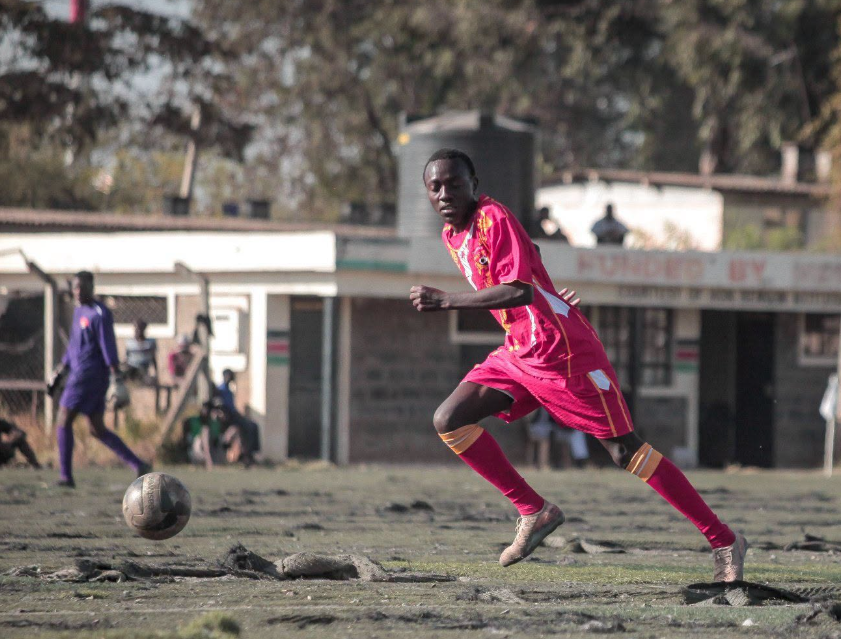
The ground was transformed from a dusty field into a facility with an artificial playing surface, floodlights and changing rooms. The refurbishment was reported to have cost about Ksh90 million, with funding coming through the constituency development programme. It was officially opened in July 2015 and subsequently hosted National Super League matches and became a training venue for clubs including Gor Mahia and AFC Leopards.
But the facility did not remain in that condition.
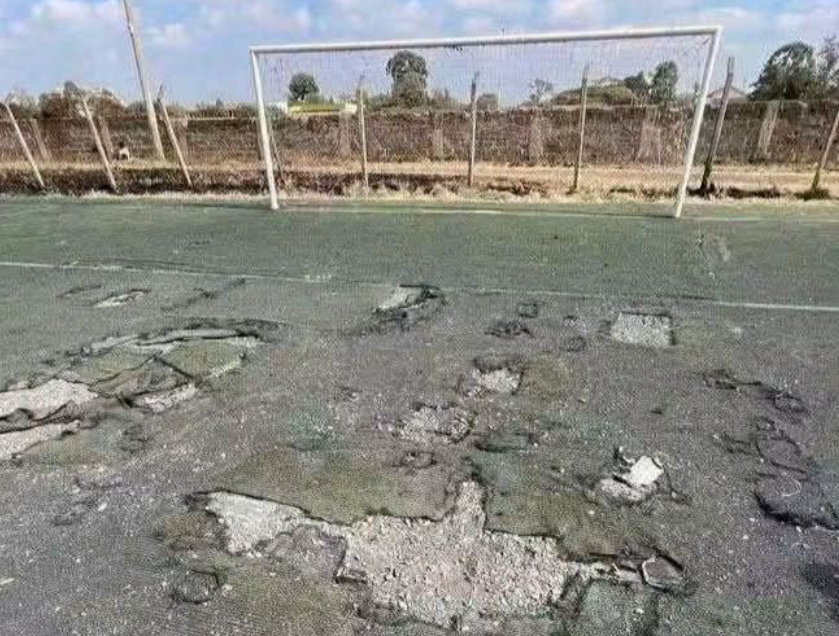
By 2024, reports described the artificial turf as badly deteriorated, with sections of the surface in poor condition and concerns about the safety and quality of football being played there. And the problem has not simply disappeared.
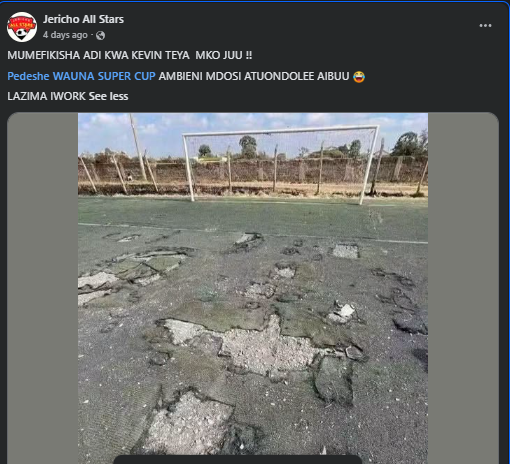
As recently as August 2026, photographs shared publicly prompted fresh concern about Camp Toyoyo, with reports describing large sections of the artificial turf as worn out or missing. This is precisely where Kenya’s stadium strategy deserves scrutiny.
What was the maintenance plan when the turf was installed in 2015?
Artificial turf does not last forever. It requires maintenance and eventually replacement. Floodlights need servicing. Changing rooms deteriorate. Drainage systems require attention.
If the national or county government builds a facility but does not reserve money for those recurring costs, the investment becomes a cycle:
Build → celebrate → overuse → deterioration → neglect → rehabilitate → repeat.
That is not sustainable infrastructure development.
City Stadium tells an even bigger story
Nairobi City Stadium is an even more significant example because of its history and location.
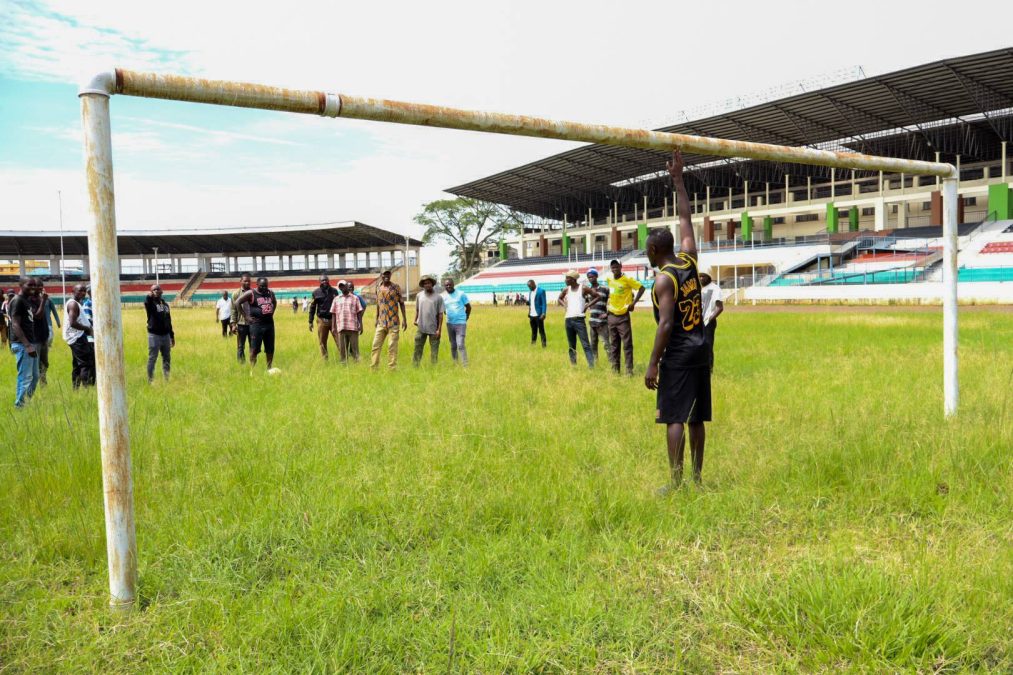
The historic Nairobi facility was previously shut down in 2016 after failing to meet required safety standards. Nairobi County itself acknowledged that the artificial turf had become worn because of poor maintenance, while washrooms and dressing rooms were in poor condition and the stadium lacked running water.
That is remarkable because the problem was not necessarily the absence of a stadium. The stadium already existed. The problem was keeping it functional.
Nairobi County subsequently embarked on rehabilitation programmes. In 2023, the county said it planned to refurbish the facility at a projected cost of Ksh525 million, with the intention of bringing it to international standards.
The county’s 2025/26 budget documents also proposed Ksh362.048 million for rehabilitation of City Stadium, now known as Joe Kadenge Stadium. The same budget contained allocations for several other sports facilities, including Ksh60 million for rehabilitation of Jericho Grounds and almost Ksh94 million for Woodley Stadium. That illustrates the central problem.
Kenya can spend hundreds of millions rehabilitating an existing stadium while simultaneously allocating hundreds of millions to construct or upgrade other facilities.
There is nothing inherently wrong with either decision. But policymakers have to answer a simple question:
What will prevent the newly renovated facility from requiring another major rehabilitation a few years later?
The problem isn’t necessarily too many stadiums
It would be too simplistic to argue that Kenya should not build stadiums outside Nairobi.
A young footballer in Marsabit, Turkana, Bungoma or Makueni should not have to travel to Nairobi to find a decent playing surface.
Decentralising sporting infrastructure makes sense. The problem arises when the number of facilities grows faster than the government’s capacity to maintain them.
Parliament has already encountered this problem.
A parliamentary inquiry into stadium projects found serious weaknesses in several projects. The committee reported that many contractors lacked the financial and equipment capacity to complete their work, while payments in some cases exceeded the proportion of work completed. It also identified problems including missing drainage systems.
The committee’s figures were striking: projects estimated at Ksh4.4 billion had received approximately Ksh2.6 billion, or 59 per cent of the estimated cost, while physical completion was around 49.5 per cent.
That history should be part of today’s conversation about expanding sports infrastructure.
A stadium should have a business plan before it has a foundation
The biggest question policymakers should ask before approving another mini-stadium is not:
“How much will it cost to construct?”
It should be:
“How much will it cost to operate for the next 20 years, and where will that money come from?”
Consider a hypothetical community stadium with an artificial pitch.
Its construction might cost hundreds of millions of shillings.
But then come:
Turf maintenance and eventual replacement;
Floodlight electricity;
Water bills;
Cleaning;
Security;
Groundskeeping;
Drainage maintenance;
Changing-room repairs;
Perimeter-wall repairs;
Insurance;
Administrative staff;
Equipment;
Periodic renovations.
Those costs don’t disappear when the stadium is officially opened. If a facility cannot generate sufficient revenue, the government must budget for its maintenance. If that money isn’t protected, deterioration is almost inevitable.
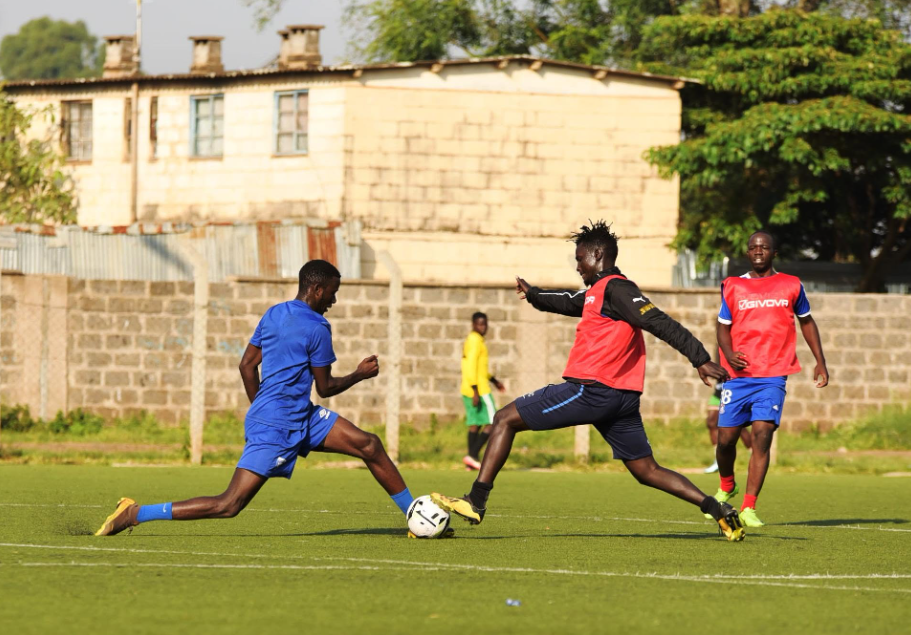
Camp Toyoyo provides a clear warning.
Who owns the facility, and who pays?
Another problem is institutional responsibility.
Who is responsible for a community stadium after completion?
Is it Sports Kenya?
The national government?
The county government?
The constituency?
A local management committee?
A football club?
A private operator?
Camp Toyoyo’s history demonstrates why that question matters. An Auditor-General report noted that the Makadara NG-CDF spent more than Ksh72.2 million on construction and rehabilitation of Camp Toyoyo between financial years 2013/14 and 2017/18. The completed facility was handed over to a community-based management committee, which was expected to manage issues including hiring the facility.
That raises another accountability question:
If several institutions contribute money to construct a facility, who is ultimately responsible for ensuring that it remains operational ten years later?
Without a clearly defined answer, responsibility can become everyone’s job, and therefore nobody’s job.
The danger of confusing construction with sports development
A new stadium looks impressive.
A ribbon-cutting ceremony is politically visible.
A new turf can be photographed.
A completed stand can be showcased.
Maintenance, however, is invisible.
Nobody holds a major ceremony to announce that a county has allocated money to clean drains, repair changing rooms or replace worn-out turf.
But those mundane activities are what determine whether the stadium will still be usable five, 10 or 20 years later.
Kenya’s own history provides enough evidence.
In 2022, a report on substandard sports facilities noted that Camp Toyoyo’s refurbishment had provided a much-needed training and playing venue, but the broader challenge facing Kenyan sports was the poor condition of facilities.
In 2025, concerns were also raised about Dandora Stadium potentially suffering the same fate as City Stadium and Camp Toyoyo because of heavy usage and the absence of adequate maintenance.
That should be a warning for every new mini-stadium being constructed today.
Kenya should build strategically, not simply widely
The country does need more sporting facilities.
But instead of measuring success by how many stadiums have been constructed, government should measure:
How many are operational;
How many meet safety standards;
How many are being used regularly;
How many generate revenue;
How many have dedicated maintenance budgets;
How long their playing surfaces last;
How many professional and grassroots teams use them;
How many athletes have emerged from them;
and how much it costs taxpayers to keep each facility operational.
That would produce a much more meaningful assessment of sports infrastructure.
Sports Kenya’s own infrastructure masterplan describes a tiered system ranging from international stadia to community grounds. That approach makes sense, provided each tier has an appropriate financial and management model.
A community ground does not need to become a 60,000-seat stadium. It needs to be safe, accessible, well-maintained and consistently available to the community.
The Talanta question
The issue becomes even more important as Kenya commits billions to major facilities.
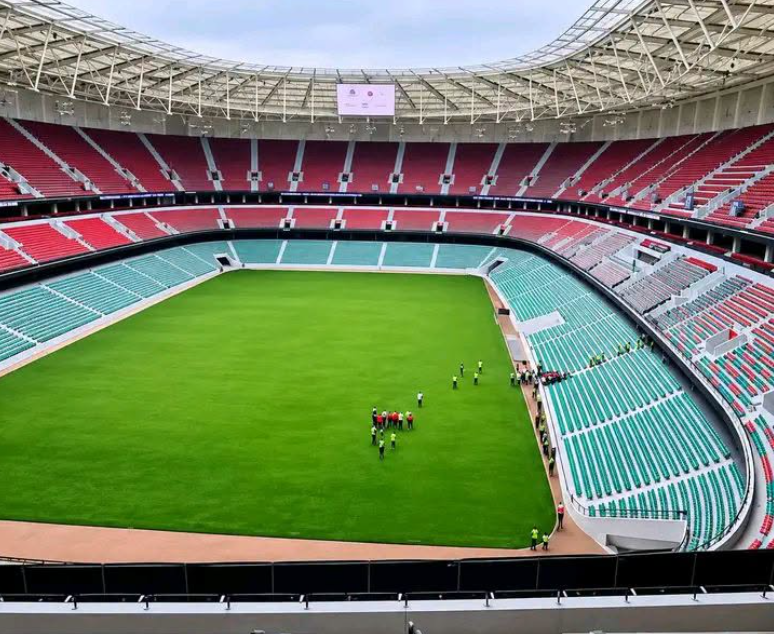
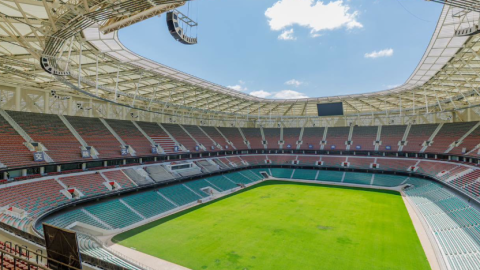
The Talanta Sports City stadium has itself attracted parliamentary scrutiny over cost, procurement and documentation. In May 2026, the Senate examined the project after the cost became a major point of debate, with the committee discussing figures around Ksh45.8 billion.
The government has defended the project and stressed its importance ahead of AFCON 2027. Separately, the government has continued to describe Talanta as part of Kenya’s broader effort to develop world-class sports infrastructure.
But once AFCON is over, the fundamental question will remain:
Who will pay to operate and maintain all these facilities?
That question should be answered before construction, rather than after the facilities begin deteriorating.
The lesson from Jericho
Camp Toyoyo is particularly powerful because it demonstrates that Kenya does not necessarily have a shortage of ideas.
It had:
A facility.
A modern artificial turf.
Floodlights.
Changing rooms.
Professional clubs using it.
Grassroots football using it.
A community around it.
What it lacked was sustained maintenance.
That is why the photographs of its deteriorated surface should be treated as more than an isolated Nairobi problem.
They should be viewed as a warning about the entire national stadium-building strategy.
If Kenya borrows or allocates billions to construct sports facilities today, taxpayers should not be forced to finance another multibillion-shilling rehabilitation programme tomorrow because nobody planned for maintenance.
The real measure of a stadium is not how it looks on opening day. It is whether it is still usable, safe and productive 15 years later.
And before the government builds the next mini-stadium, it should be able to answer one simple question:
Who will maintain it when the cameras leave?
That is the question City Stadium and Camp Toyoyo have already asked Kenya, and the country should not wait for the newest generation of mini-stadia to provide the same answer.