Advertisement
World Meteorological Organisation forecasts 100 per cent chance El Niño will persist through to February 2027
03rd September, 2026 12:23 PM
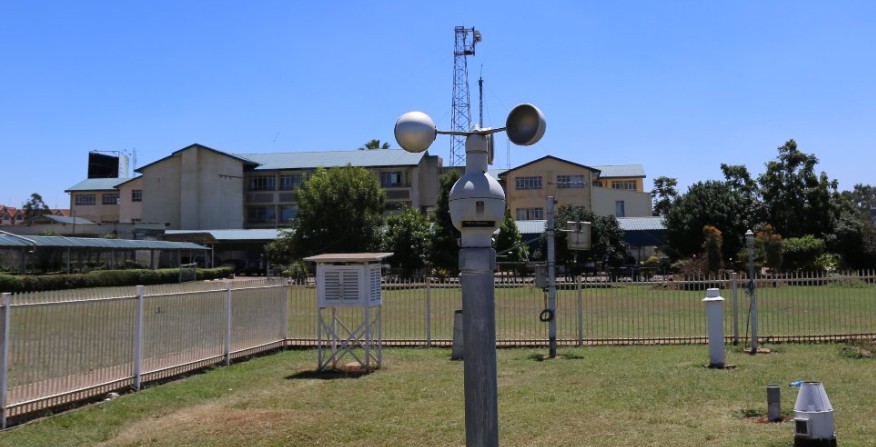
There is a 100 per cent chance that current El Niño conditions will persist through February 2027, according to a climate update published by the World Meteorological Organization on September 3, 2026.
The international weather body confirmed that ocean surface temperatures across the Pacific are rising steadily, setting the stage for an unusually strong El Niño over the coming months.
In its official update, the agency stated that “El Niño is firmly established and will intensify into a very strong event in the coming months. WMO forecasts show ~100% likelihood that it will persist through February 2027.”
Ocean warming to peak late
Visual data from the September 2026 WMO Global Seasonal Climate Update illustrates a sharp upward trajectory in sea surface temperature anomalies across the central and eastern equatorial Pacific Ocean.
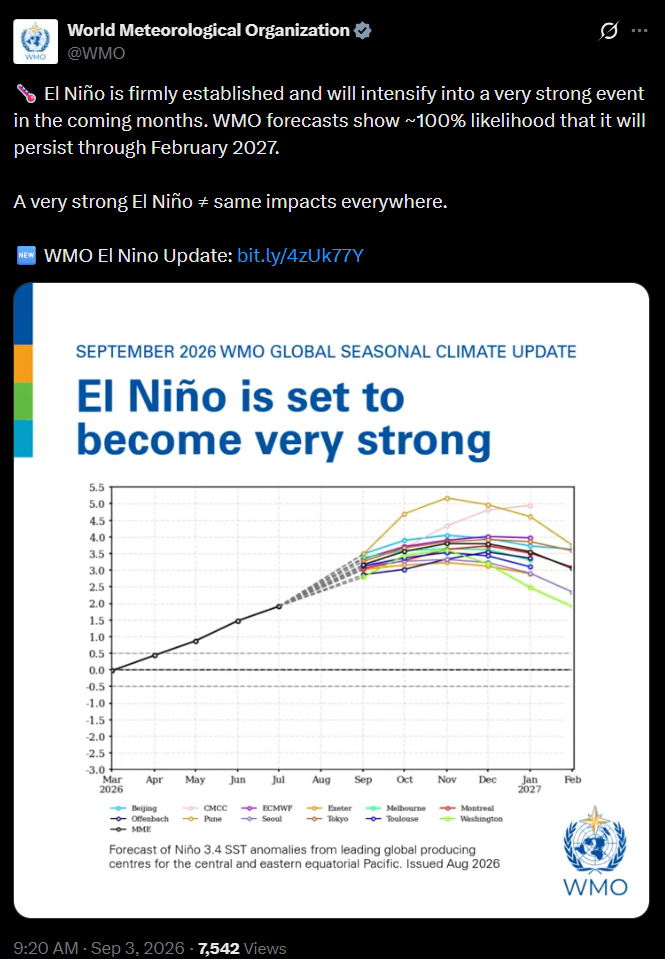
Tracking charts recorded from March 2026 show ocean warming gaining significant momentum through the middle of the year.
Projections compiled from leading global climate prediction centres, including Exeter, Tokyo, Toulouse, Melbourne, and ECMWF, show temperature anomalies rising steeply toward late 2026.
Most forecast models indicate that the warming trend will reach peak intensity between October 2026 and December 2026, with surface anomalies spiking well above standard baseline levels.
Although the graph shows a gradual decline entering January 2027, ocean temperatures will remain elevated right through February 2027.
What this means for local weather
While global ocean signals point to an intense climate event, weather conditions on the ground will vary depending on local geography. Clarifying common misconceptions, the WMO emphasised that “a very strong El Niño ≠ same impacts everywhere.”
For Kenya and the wider East African region, El Niño typically influences seasonal rainfall during the October to December short rains. A positive Indian Ocean Dipole is also developing, which can amplify local rainfall.
Knowing with 100 per cent certainty that ocean warming will extend through February 2027 gives households, farmers, and local authorities critical time to prepare. Communities can clear drainage channels, adjust planting cycles, and manage water storage to safeguard livelihoods.
By paying close attention to reliable seasonal forecasts, citizens can protect their property and livelihoods.