Advertisement
KeRRA gives status update on Mwachande Bridge in Kwale County
02nd September, 2026 09:27 PM
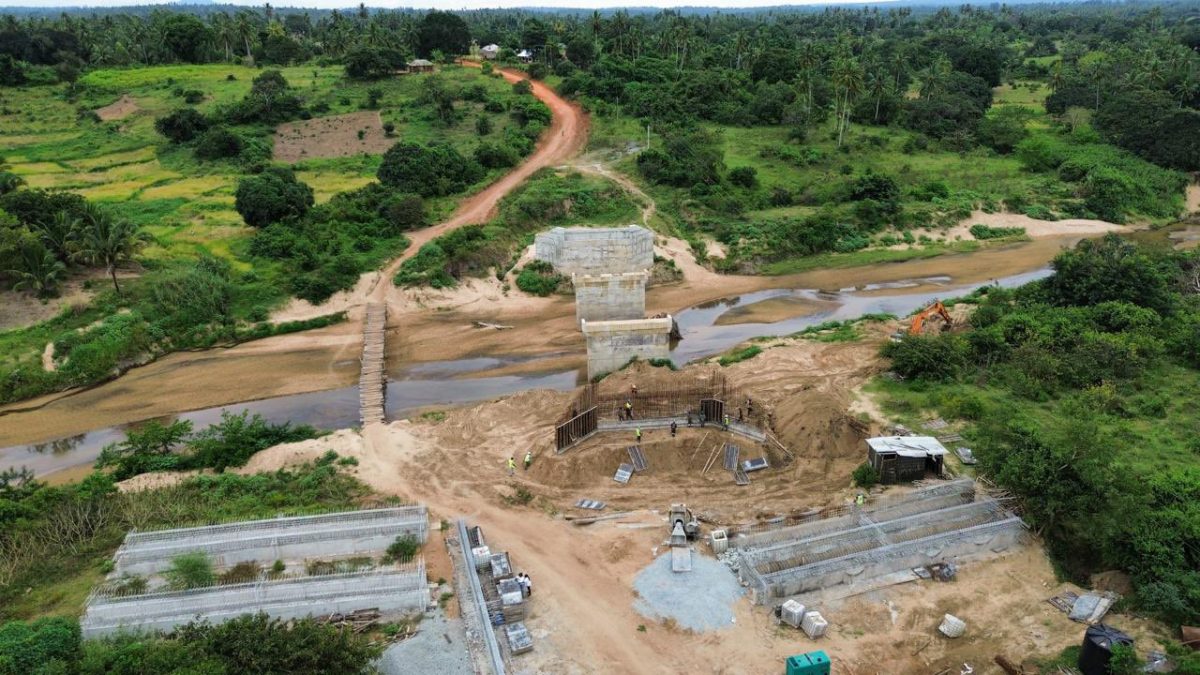
Residents across Kwale County are moving closer to safer and more reliable travel as construction on the Mwachande Bridge reaches the 76 per cent completion mark.
The Kenya Rural Roads Authority (KeRRA) shared the progress update on September 2, 2026, confirming that structural works across the river corridor are advancing smoothly towards final completion.
Transforming transport across River Ramisi
The S
Ksh538 million infrastructure project spans across River Ramisi along the Milalani-Kikoneni-Mwangulu road (C209). This vital transport corridor links Msambweni, Kinango, and Lunga Lunga sub-counties.
It serves as an essential artery for local trade, agricultural produce, and public access to key healthcare facilities and learning centres across Kwale.
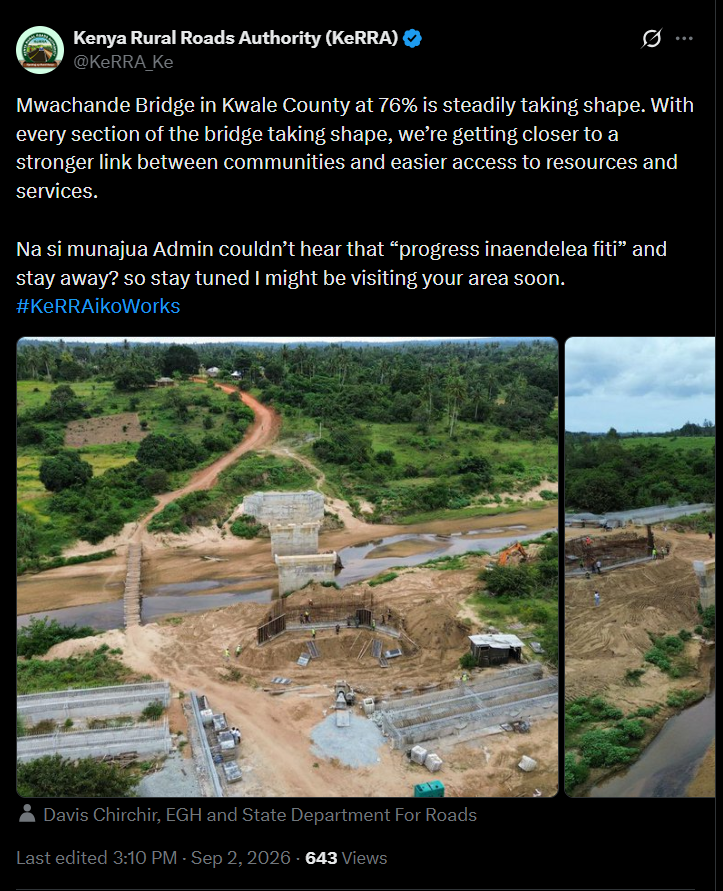
In an official update published on X, KeRRA stated: “Mwachande Bridge in Kwale County at 76% is steadily taking shape. With every section of the bridge taking shape, we’re getting closer to a stronger link between communities and easier access to resources and services.”
Aerial photographs published alongside the announcement show the substantial progress made at the site. Heavy concrete abutments and main support piers are now anchored within the riverbed.
Concrete mixers, excavators, and construction teams remain active on the ground, shaping the embankments and bridge foundations.
The visual update also captures the narrow, makeshift footbridge running parallel to the project, highlighting the risky conditions commuters previously endured when floodwaters cut off the old crossing.
Boosting local trade and safety
For years, heavy seasonal flooding along River Ramisi disrupted daily movement, forcing farmers, traders, and families to undertake lengthy 35-kilometre detours.
The new 60-metre concrete bridge will permanently resolve these travel bottlenecks, streamlining the transit of sugarcane and food crops from agricultural hubs like Kikoneni to coastal markets.
KeRRA technical teams are continuing to supervise the final phases, including beam placements, safety guardrails, and paved approach roads, to ensure the new bridge is ready for full public use.