Advertisement
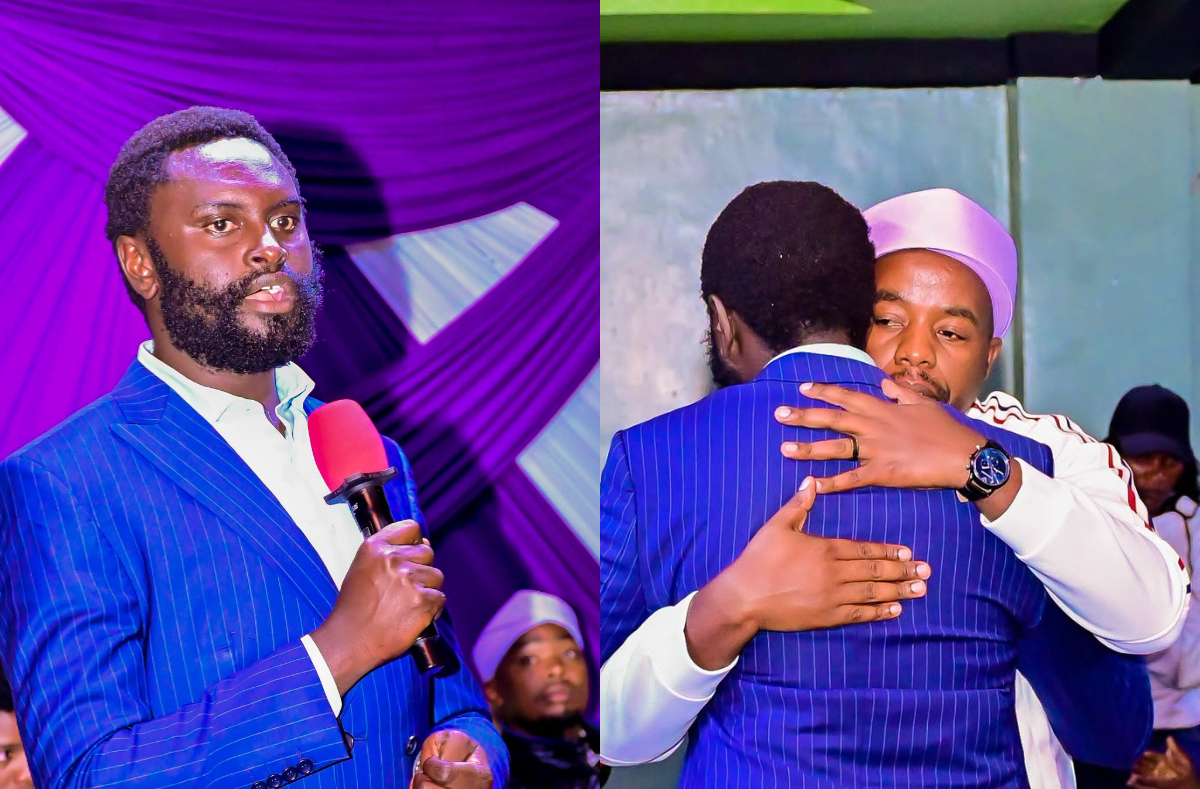
Cyrus Jirongo: Former powerful KANU youth leader who employed Ruto as his ‘mtu wa mkono’
13th December, 2025 03:01 PM

The country is mourning the sudden death of Cyrus Jirongo, a once-dominant political figure whose rise, excesses and contradictions mirrored the turbulence of Kenya’s transition from one-party rule to multiparty democracy.
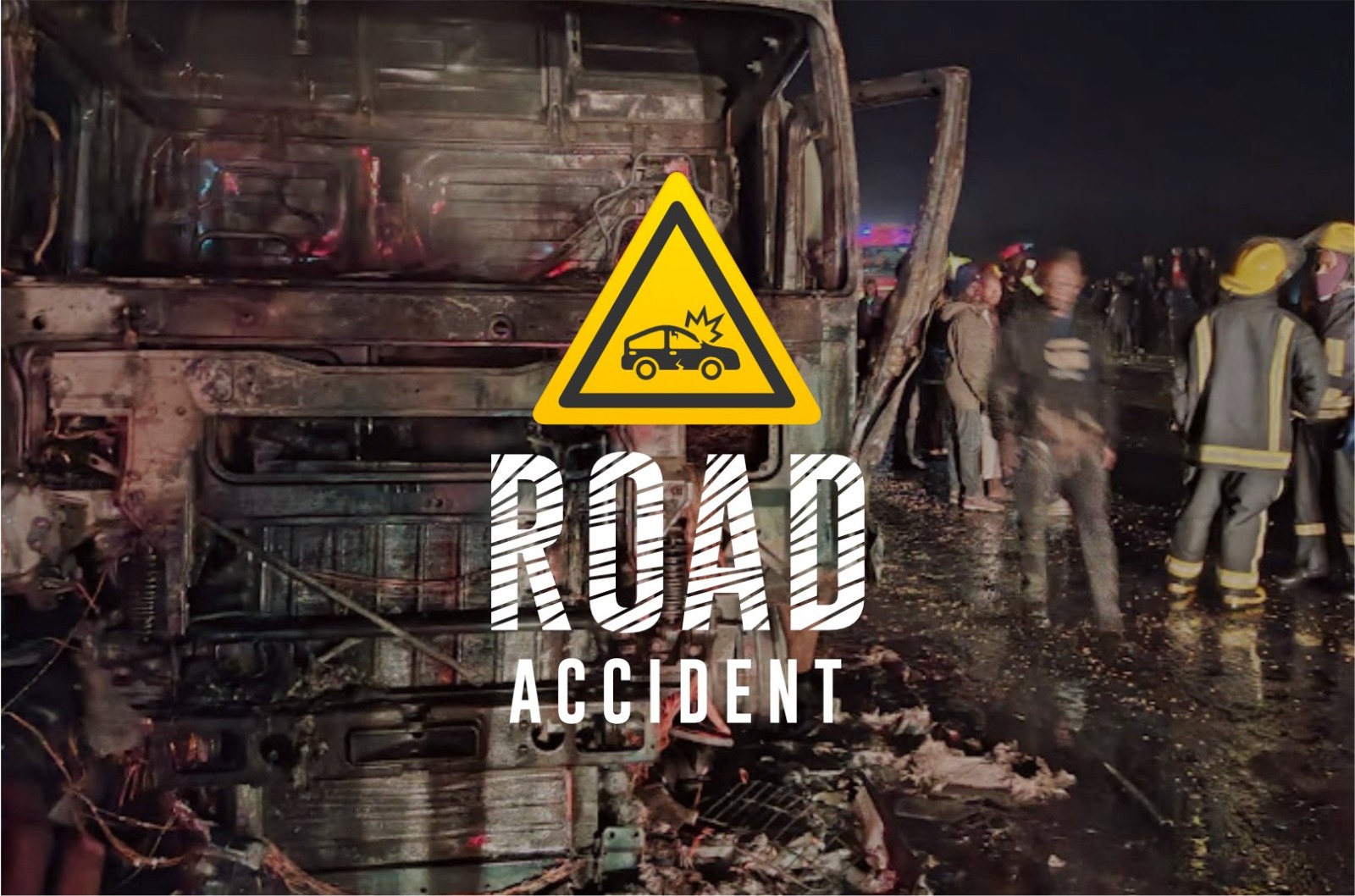
Jirongo, a former Lugari Member of Parliament and Cabinet minister, died on Saturday, December 13, 2025, in a road accident along the Nairobi–Nakuru Highway, a tragedy that has prompted an outpouring of tributes from across the political divide.
He was widely regarded as fearless, flamboyant and deeply influential – particularly in the 1990s, when money, loyalty and power collided in Kenya’s high-stakes politics.
Few leaders captured his complicated legacy more vividly than President William Ruto, who led national tributes while acknowledging a relationship that oscillated between mentorship, rivalry and mutual respect.
“I am deeply saddened by the passing of my friend, former Lugari MP Cyrus Jirongo.
“Jirongo was a relentless go-getter, a seasoned businessman, and a consummate politician who refused to be defined, let alone defeated, by life’s challenges.
“He was a fighter in every sense: blunt yet warm, bold yet approachable, enlightened and endlessly entrepreneurial.
“Above all, he was generous to a fault; always willing to give, to uplift, and to back others with his time, resources, and belief.
“Never one to shrink from a tough stand or a grand idea, he lived on his own terms and left an indelible mark on our political landscape.
“My thoughts and prayers are with his family and friends during this difficult time.
“Rest in peace, my friend,“ Ruto wrote on X following Jirongo’s demise.
A power broker of the Moi era
To understand Cyrus Jirongo is to revisit the era of Youth for KANU 1992, or YK92 – a powerful lobby group that helped President Daniel arap Moi cling to power during the turbulent introduction of multiparty politics.
Jirongo was its public face and undisputed financier, a symbol of unapologetic political muscle backed by money.
His flamboyance was legendary. At the height of YK92’s influence, the Ksh500 note was nicknamed ‘Jirongo’, a reflection of his reputation for lavish spending and sensational cash handouts.
He was widely viewed as the group’s chief strategist and benefactor – the man who could open doors, bankroll campaigns and shape careers.
One of those careers belonged to a young William Ruto.
At the time, Ruto was a junior member of YK92, operating in the shadow of Jirongo’s dominance.
Years later, that dynamic would resurface publicly, as both men rose and diverged in Kenya’s political hierarchy.
A public falling-out
The relationship between the two men turned sharply adversarial in 2016, when Jirongo publicly linked the then–Deputy President Ruto to the killing of businessman Jacob Juma.
Speaking during Jacob Juma’s requiem service on May 12, 2016, Jirongo demanded that police interrogate Ruto, citing claims made by the late entrepreneur in a series of controversial tweets.
Jirongo went further, claiming that Jacob Juma had once slapped Ruto and likening the then deputy president to Cain in the biblical story of jealousy and betrayal.
Ruto responded weeks later on June 4, 2016, during the funeral of former Cabinet minister Soita Shitanda at Tande Secondary School in Malava, Kakamega County.
His rebuttal was pointed, deeply personal, and revealing of their shared past.
Ruto claimed that Jirongo was bitter because he had risen to become the second most powerful man in the country, while the former Lugari MP—whom he once served as his ‘mtu wa mkono’ during the KANU era—was nowhere near the centre of power.
“My brother Jirongo saa zingine anakasirika na mimi sababu zamani nilikua mtu yake ya mkono. Anakasirika na mimi, sasa anaona huyu ambaye alikua mtu wangu ya mkono alipitia wapi hapa mbaka aka… [akakua DP]. Lakini my friend unajua ni kujipanga,” Ruto told mourners.
“Mimi sikatai nilikua mtu wako ya mkono lakini sasa unanikasirikia ya nini na sasa hii ni maneno ya mungu? Ama namna gani jameni, nlikuambia hii siasa peleka namna hii polepole usifanye sana namna ile itaharibika. Unaona mimi nakaa nyuma ya Uhuru Kenyatta najipanga hapo pole pole pole pole, I know what I am doing my friend. Unafikiri nikilete fujo kwa huyu jamaa [Uhuru] ata… ala!
“Na tumesoma kutoka historia, ata Nyayo [Moi] alikaa nyuma nyuma ya baba ya huyu jamaa [Kenyatta] akakua kitu. Huyu rafiki yangu mwingine [Raila] alikuja akalete fujo hapo kwa Kibaki sasa yeye ako msituni. Mujipange mzuri maneno itaendelea vizuri,” he said.
The remarks laid bare not only political bitterness but also a stark contrast in strategy: Jirongo’s confrontational style versus Ruto’s patient, methodical ascent.
A legacy of influence and missed chances
Supporters remember Cyrus Jirongo as a daring mobiliser who helped redefine youth power in Kenyan politics.
Critics argue that his confrontational instincts and lack of long-term political strategy ultimately limited his rise, despite his early dominance.
Yet even those who opposed him concede that Jirongo helped shape modern Kenyan politics, mentoring figures who would later eclipse him and normalising the idea that youth could wield real power in national affairs.
In death, his story has become inseparable from that of President Ruto – a reminder of how alliances formed in the crucible of the 1990s would later fracture, re-emerge and redefine the country’s leadership.
As Kenya reflects on his life, Cyrus Jirongo is remembered not only as a former KANU youth leader, but as a symbol of an era – bold, brash and consequential – that continues to cast a long shadow over the nation’s political present.
Author
Martin Oduor
The alchemist of literary works - a master wordsmith with a proven record of transforming the raw materials of language into a rich tapestry of emotion, thought, and imagination.
View all posts by Martin Oduor