Advertisement
Contact lenses versus glasses, which should you get?
20th June, 2026 12:32 PM

Finding out you officially need prescription eyewear can feel a bit overwhelming.
Standing in an optician’s shop, completely torn between picking a pair of frames or going for contact lenses, is a common hurdle for first-time wearers. It is easy to treat this as a quick fashion decision based on facial looks or lens tints.
However, this choice goes far beyond style. Choosing how to correct vision has a direct impact on long-term eye health, carrying medical implications that most buyers never consider.
The risk of infections and dryness
Contact lenses sit directly on the eyeball. While they offer a clear view without frames, they also act as a physical barrier that limits how much oxygen reaches the eye.
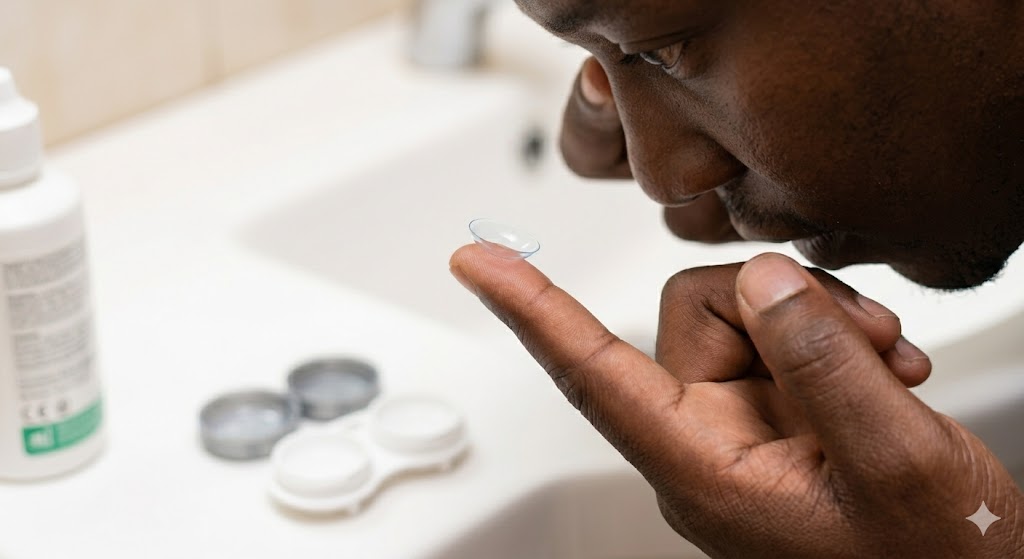
This environment makes it easier for harmful bacteria to grow.
According to a peer-reviewed study on severe eye infections, “the incidence of contact lens‐related keratitis ranges from ~ 2–20 cases per 10 000 wearers” each year.
Frames and lenses, on the other hand, never touch the eye surface, keeping the risk of these serious infections near zero.
Aside from infection risks, contacts can easily mess with the natural tear film that keeps eyes wet.
For Kenyans commuting through dusty roads or working in air-conditioned offices, this often leads to constant irritation. Medical research tracking eye surface health notes that “estimates suggest that between 15% and 55% of contact lens wearers experience symptoms consistent with dry eye” across different settings.
This drying effect explains why many lens wearers end up with itchy, red eyes by evening.
Sun protection and the daily cost
Another health factor is protection from the sun. Kenya sits right on the equator, meaning people face high levels of ultraviolet (UV) light all year round.
Most modern prescription glasses feature built-in UV coatings that block these harmful rays, protecting both the eye and the skin around it. Contact lenses, even the ones with built-in UV filters, only cover the centre of the eye, leaving the surrounding areas completely exposed to sun damage.

While lenses are highly convenient for sports and active days, they demand careful daily cleaning. Maintaining monthly lenses means buying multi-purpose solutions that can cost upwards of Sh1,000 a bottle, along with regular case replacements. Skipping these hygiene steps can lead to painful corneal ulcers.
Standard glasses require a higher one-time cost, but they need very little daily care and bring no risk of infection.