Advertisement
Lydia Wanjiru reacts emotionally to exposé on exploitation of underage girls
05th August, 2025 11:57 AM

Lydia Wanjiru, a survivor of sexual abuse, has spoken out powerfully following the release of a harrowing documentary exposing the exploitation of underage girls.
Her raw and emotional reaction, shared online on Tuesday, August 5, 2025, is now sparking important conversations about victim-blaming and the dangerous normalisation of abuse within families and communities.
“Is it really a good morning?” she began. “Most of us who were sexually abused by our relatives always get stray bullets like, ‘You seduced him,’ ‘What were you wearing?’ ‘What were you doing in his room?’” Wanjiru’s words lay bare the secondary trauma many survivors face — not just from the abuse, but from the judgement that follows, often from those closest to them.
Responding to a clip of an older woman casually admitting to avoiding certain areas to continue selling children unnoticed, Wanjiru did not hold back. “Where is your moral instinct?” she asked. “Avoiding a certain area not to get caught — to sell children?”
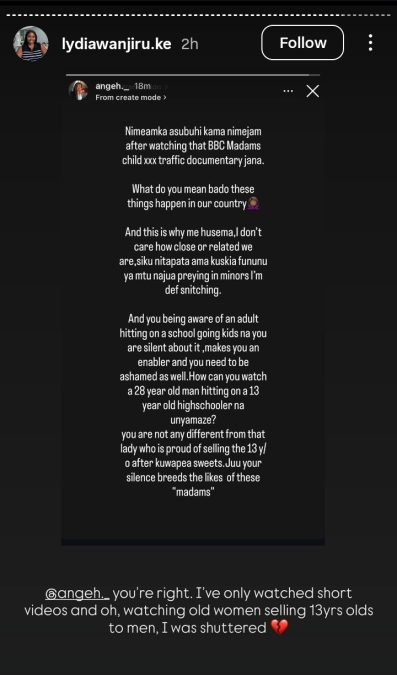
She drew parallels between the women in the video and figures familiar in many Kenyan homes. “These are the relatives,” she said. “The same women selling 13-year-olds to old men are our moms, aunts, and sisters. That’s why they question the victim instead of the abuser.”
Lydia’s past experience
In a past interview with Lynn Ngugi in 2024, Lydia opened up about her experience. She said, “He was drunk, he followed me and assaulted me. Nobody from my family has ever asked me how I feel about that night. No one checked up on me emotionally or physically.”
Wanjiru’s statement is resonating with many, as Kenyans grapple with the revelations brought forward by the documentary. Her words underscore a critical truth that abusers are often protected by a wall of silence upheld by those expected to protect them.
As conversations around the viral footage continue to build, Wanjiru’s boldness has added urgency to the call for cultural change. Her voice joins a growing demand for accountability not just for the perpetrators, but for the relatives, neighbours, and community figures who enable abuse through denial, silence, or active participation.