Advertisement
Ruto reaffirms plan to build church at State House despite backlash
14th September, 2025 02:21 PM

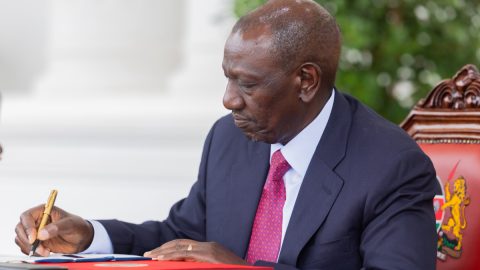
President William Ruto has maintained his stance to build a permanent church in State House, Nairobi, amid growing dissent from rights group organisations.
The Head of State has also promised to establish more places of worship, even as his critics continue with their own onslaught, including petitioning him over his church plan.
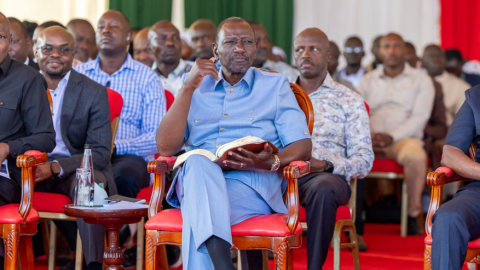
Speaking on Sunday, September 14, 2025, during a service at the State House Chapel, Ruto reiterated his commitment to enhancing worship facilities for those within the State House compound.
It is worth noting that the head of state had earlier dismissed reports that the planned church would cost taxpayers Ksh 1.2 billion, clarifying that the project will be privately funded and at a much lower cost.
“Here at State House, God will bless us to get a better place for worship. We will not have some people worshipping from outside since we will have a bigger place,” he said.
“I am confident that God will make provisions for us to have a place where we can worship Him in this compound.”
Ruto expressed gratitude to those managing the current chapel, applauding their efforts in facilitating regular worship services.
“We are very happy that we have a place to worship here at State House,” he said, adding that he believed God’s blessings were evident in the country’s recent rainfall and improved agricultural yields.
“All I ask from all of you is to work hard in whatever you do,” the president told the congregation.
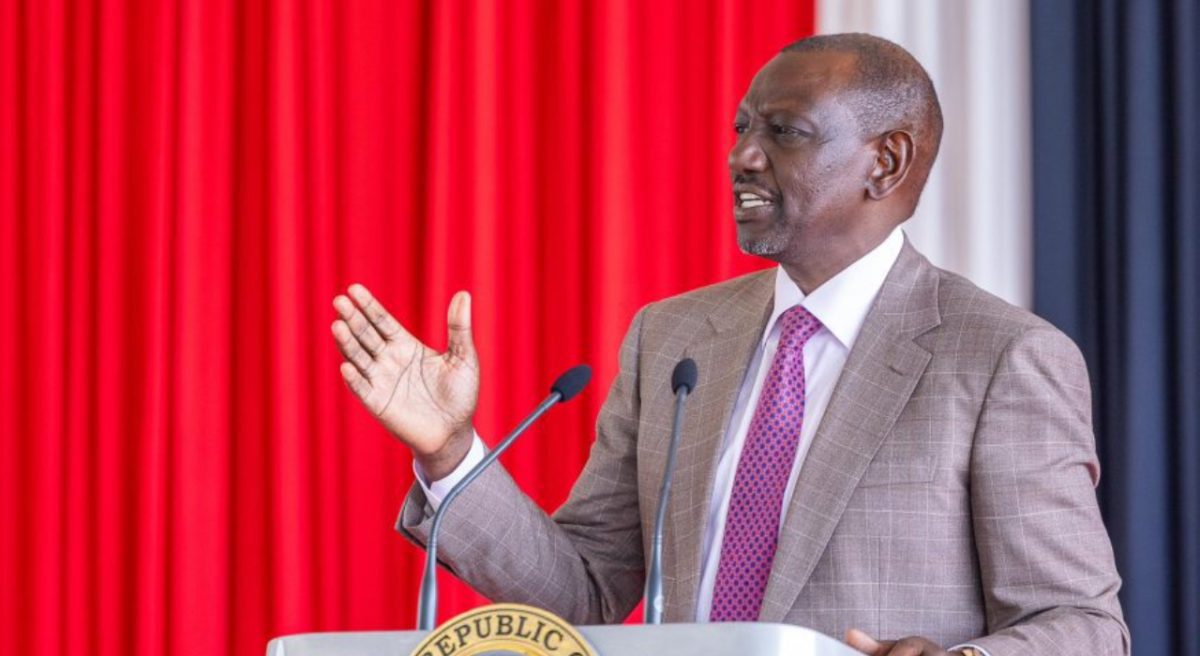
Ruto’s plan to build a church at the State House raised uproar with opposition leaders questioning the legality and motive behind the move, calling it a distraction from pressing national issues.
The legal battle
Even as Ruto insists on continuing with his plan, the push has hit a legal roadblock.
The legal experts condemned the move as unconstitutional and discriminatory. They argue the planned 8,000-seat structure poses a security risk and undermines the secular nature of the state.
The petitioners argue that constructing a religious facility on public grounds, particularly within the State House, blurs the line between government functions and spiritual practice, potentially undermining Kenya’s constitutional commitment to religious neutrality.
Rights groups, including the Kenya Human Rights Commission (KHRC) and Transparency International (TI), along with two others, filed a case to stop Ruto’s plan to build a church in the State House.
High Court Judge E.C. Mwita issued a conservatory order barring the government from proceeding with any construction of a permanent church, or any religious structure, within the grounds of State House or any other State Lodge.
The order is in place until November 18, 2025, pending the outcome of a constitutional petition challenging the initiative.
The suit, filed against the Katiba Institute and the State Law Office, raises critical concerns about the constitutional principle of the separation of State and religion.