Advertisement
New scientific proposals aim to curb malaria by treating mosquitoes
22nd May, 2025 08:26 AM

Malaria remains one of the world’s deadliest infectious diseases, killing nearly 600,000 people every year, most of them children under five in Africa.
Despite years of progress through insecticide-treated bed nets, medicines, and vaccines, the disease continues to pose a major public health challenge, especially as mosquitoes become increasingly resistant to insecticides.
Now, scientists at Harvard University have developed a new approach that could strengthen the fight against malaria. Instead of only killing mosquitoes, researchers have discovered two anti-malaria drugs that can kill the malaria parasite inside the mosquito, preventing it from spreading the disease to humans.
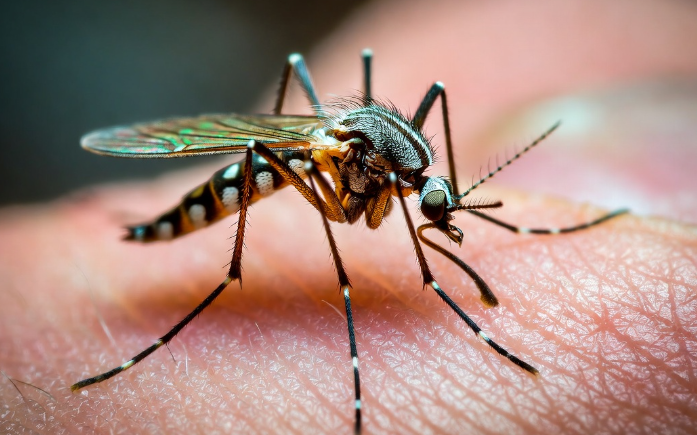
The researchers hope the drugs can eventually be used to treat mosquito bed nets. When mosquitoes land on the nets, they absorb the drugs through their legs. Even if they survive, the malaria parasites inside them are destroyed, meaning the insects can no longer transmit the disease.
For years, insecticide-treated bed nets have been one of the most effective tools for preventing malaria. The nets protect people while they sleep and kill mosquitoes that come into contact with them. However, growing resistance to insecticides has reduced their effectiveness in many malaria-endemic countries, creating an urgent need for new solutions.
“We haven’t tried to directly kill parasites in the mosquito before because we were focused on killing the mosquito,” said Dr Alexandra Probst, one of the lead researchers. She added that relying only on insecticides is “no longer cutting it.”
To develop the new treatment, the research team analysed the malaria parasite’s DNA to identify its weaknesses while it develops inside mosquitoes. They then screened dozens of drug compounds before selecting 22 for laboratory testing. Two of those drugs completely eliminated the malaria parasites in infected mosquitoes.
The findings, published in the journal Nature, also showed that the drug coating remained effective on bed net material for up to one year. Researchers believe the parasite is less likely to develop resistance because only a small number of parasites live inside a mosquito compared to the billions found in an infected person.
The innovation is still in its early stages and has only been tested in laboratories. The next phase of research will involve field trials in Ethiopia to determine whether the treated bed nets can reduce malaria transmission in real-world settings.
If the trials are successful, future mosquito nets could combine insecticides with anti-malaria drugs, providing a powerful new weapon in the global effort to reduce malaria infections and save lives.
Author
William Muthama
William Muthama is a digital journalist with a focus on entertainment, human interest, and current affairs. Share stories: [email protected]/ [email protected]
View all posts by William Muthama