Advertisement
Morara offers refunds to contributors, clarifies intentions behind fundraiser
25th July, 2025 01:25 PM
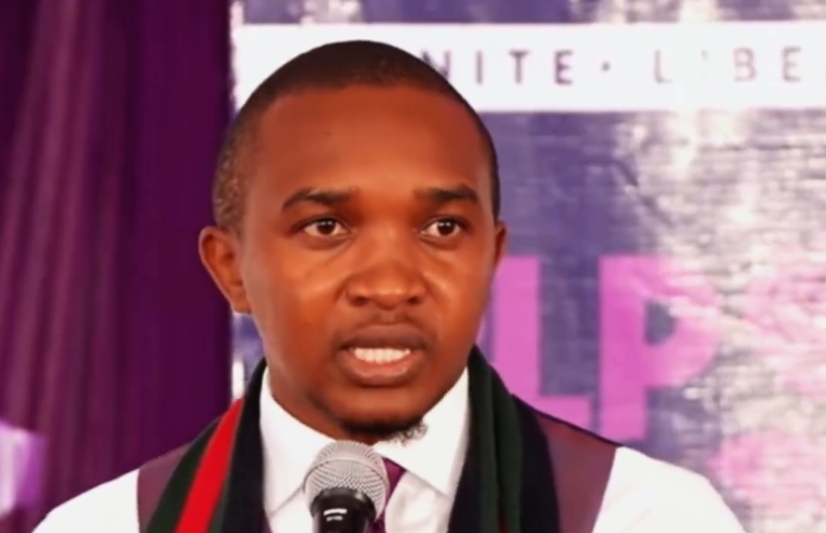
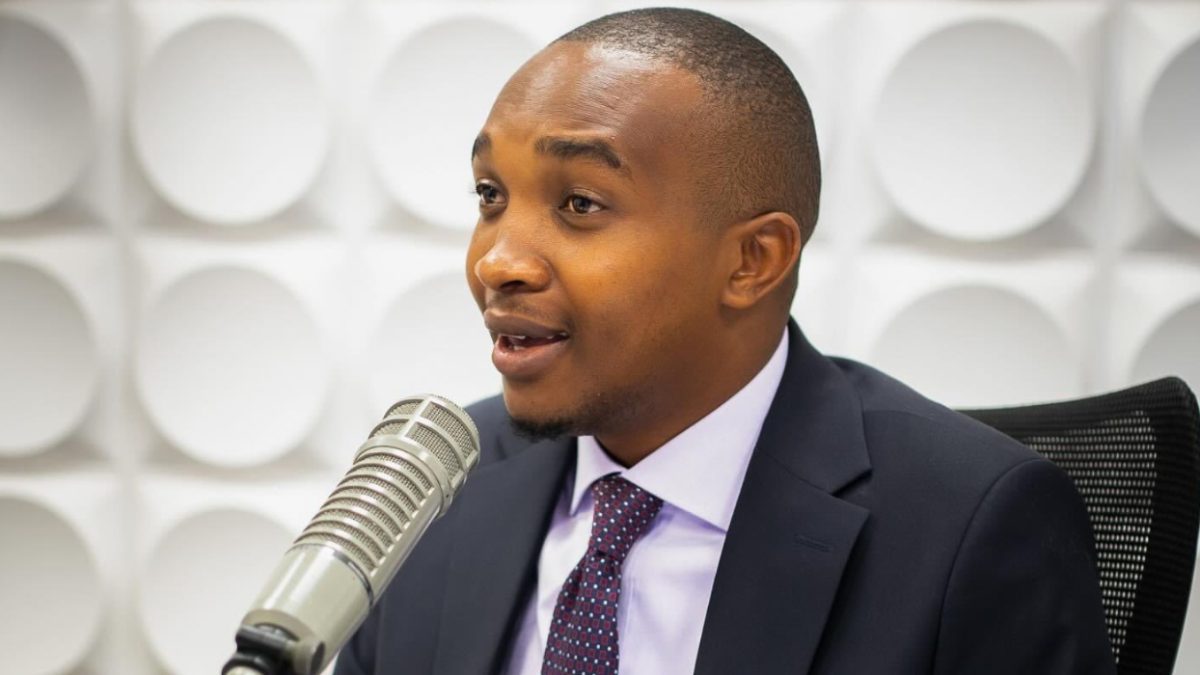
Activist Morara Kebaso has stirred debate in Kenya’s civic and political space with a bold offer to refund contributions raised for his civic education campaigns.
In a statement issued on Friday, July 25, 2025, Kebaso said he is ready to return funds to any contributor who may have interpreted his efforts as politically motivated.
“If you need a refund for any contribution you made to me when I was raising funds, kindly reply below with the Mpesa message or check your Mpesa statement and recover the Mpesa ref. code. I would like to refund any Kenyan that may have thought that the contributions were a motivation for me to seek leadership,” he posted on X.
Kebaso had raised over Ksh500,000 to purchase a public address system aimed at exposing stalled government projects. His move, reported by Kenyans.co.ke in September 2024, attracted widespread support—and, later, speculation about future political ambitions.
Pushback on transparency
Kebaso’s refund offer appears to address growing scrutiny around civic fundraisers and campaign financing, particularly as the 2027 General Election approaches. The activist dismissed claims of personal enrichment, explaining the burden of managing public contributions.
“That is why politicians prefer to spend their own money and recover it through tenders and deals. It is very difficult to start explaining to the public that you spent the money they raised to hire security to attend a public event so that you don’t leave with a broken leg. They feel it’s unnecessary, but you know your life depends on it,” he stated.
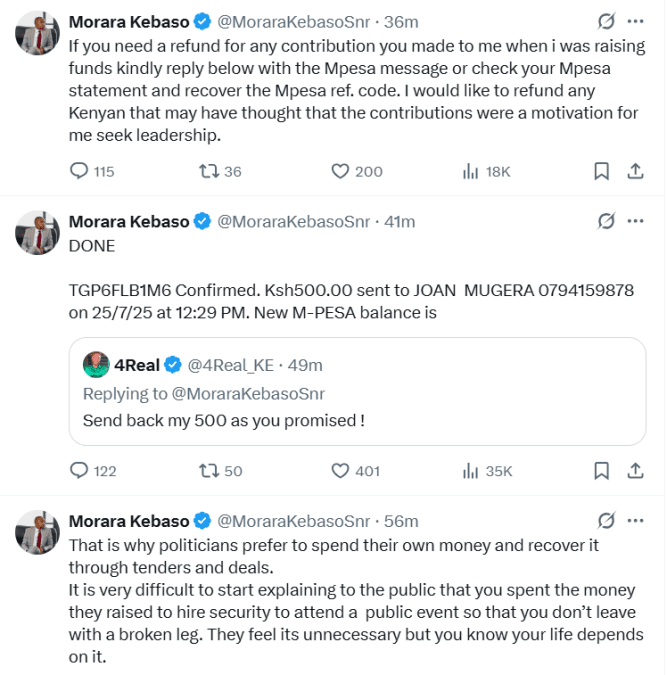
His comments reflect frustration over public misunderstanding of security-related spending, a cost he says is often dismissed as wasteful despite being essential.
Raises security concerns over full-time disclosure
Kebaso also used the platform to raise concern over the push for real-time transparency in campaign financing, warning that such disclosures may endanger candidates and activists.
“Accountability for campaign funds should be balanced against the security risks it poses. When you inform everyone on everything you have done to the very last detail, you are not just informing your supporters; you are also informing your enemies,” he said.
He cited examples such as the purchase of bug detectors or vehicle servicing at AutoXpress, arguing that publicising such details could expose candidates to sabotage or physical harm.
“In my opinion, full accountability should be done after elections, not before. It’s not to escape the responsibility of accountability but also to avoid exposing the candidate. That is a conversation we need to have,” he added.
His stance comes in contrast to former Chief Justice David Maraga, whose presidential bid under the ‘Reset, Restore, and Rebuild’ banner has embraced a model of full transparency. Maraga’s campaign raised over Ksh500,000 within two days, with his team promising a live public fundraising ticker.
Kebaso’s remarks have sparked mixed reactions online, with some users hailing his honesty and others questioning his emotional readiness for political life. His offer, however, adds a new dimension to the ongoing national conversation around ethical fundraising, safety, and leadership.