Advertisement
Gachagua warns govt against probing diaspora money transfers, calls it harassment
10th August, 2025 08:52 AM

Former Deputy President Rigathi Gachagua has strongly criticised the Central Bank of Kenya’s (CBK) newly launched Remittances Household Survey (RHS), warning that the government should not probe into the private financial transactions of Kenyans living abroad.
He accused President William Ruto’s administration of harassing diaspora families who send money back home to support their loved ones amid failing public services.
Speaking from the United States on Sunday, August 10, 2025, Gachagua questioned the rationale behind the CBK’s plan to visit homes receiving international remittances and gather detailed information from family members about how much money is being sent.
“I don’t understand what is wrong with Ruto. When I was here in the US earlier this week, the CBK issued a circular saying they want to go to homes where you send money and talk to your mothers, your uncles, and your brothers to find out how much money you send them,” Gachagua said.
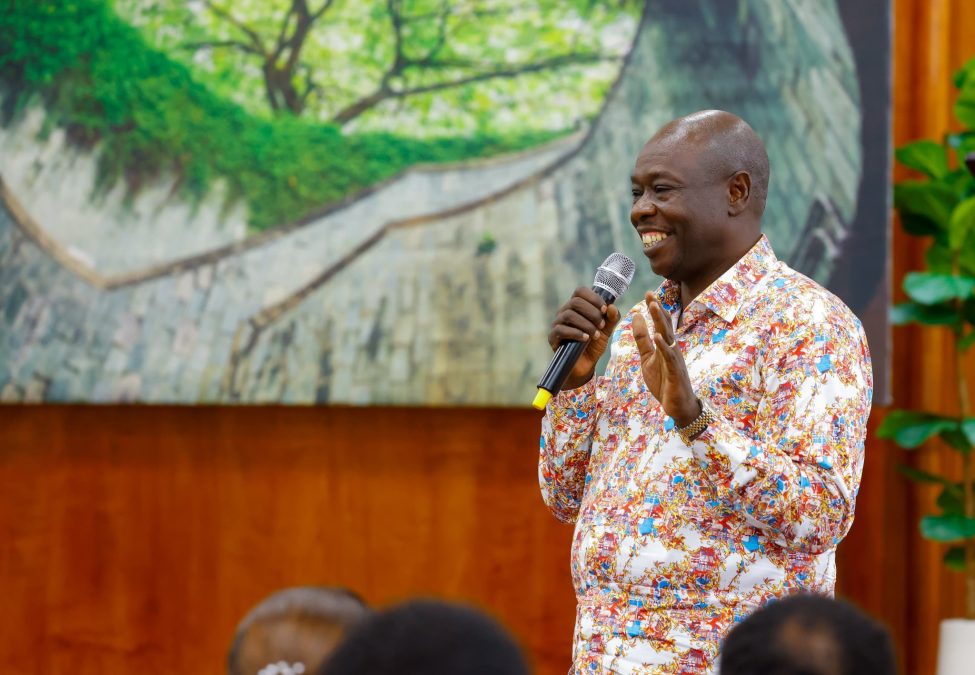
Gachagua described the survey as intrusive and unnecessary, particularly since diaspora remittances are often sent to compensate for the government’s failure to provide adequate healthcare and education.
“You guys have already been taxed, and you are helping your mothers because Ruto’s hospitals are not working. You are helping your brothers by sending money because the education system has failed,” he said.
He expressed outrage that the government wants to interrogate families receiving this financial support.
He insisted that President Ruto ought to speak directly to diaspora Kenyans rather than pry into the private lives of households reliant on remittances.
“Yet the president is asking to go to homes and get data on the money that you send. Tell your mothers and your fathers that it is illegal; they should not divulge any information to anybody. If William Ruto wants to know how much money you send home, he should come here and talk to you. Ruto, do not harass our parents. Do not harass our poor people back home, whose only help is their people in diaspora, because your country is not working,” he said emphatically.
Gachagua highlighted that the need for diaspora remittances is a symptom of systemic failure in Kenya’s public institutions.
He also warned against excessive government involvement in the personal lives of citizens, stressing the proper role of the state.
“If your country were working, they would not need to send money back home. They need it themselves. That is intrusive,” he added. We do not want too much government in people’s lives. The work of the government is to build roads and such,” he concluded.
The CBK’s Remittances Household Survey, launched in partnership with the Kenya National Bureau of Statistics (KNBS) and Financial Sector Deepening Kenya (FSD Kenya), aims to collect data on the amounts received through formal and informal channels, how the funds are used, and challenges faced by recipients.
“The support is received in the form of money (cash) and/or in-kind (non-cash) without requiring the recipient to provide corresponding items of economic value (good or service),” the statement reads in part. Remittances also include support sent by households in Kenya to non-resident households outside Kenya,” the CBK statement read.
Author
Steve Ireri
Steve is a senior writer with over four years of experience in digital journalism. His focus is on the showbiz and human interest stories. Emails: [email protected] , [email protected]
View all posts by Steve Ireri