Advertisement
FIFA World Cup matches in US face heightened terrorism risks
11th May, 2026 10:22 AM
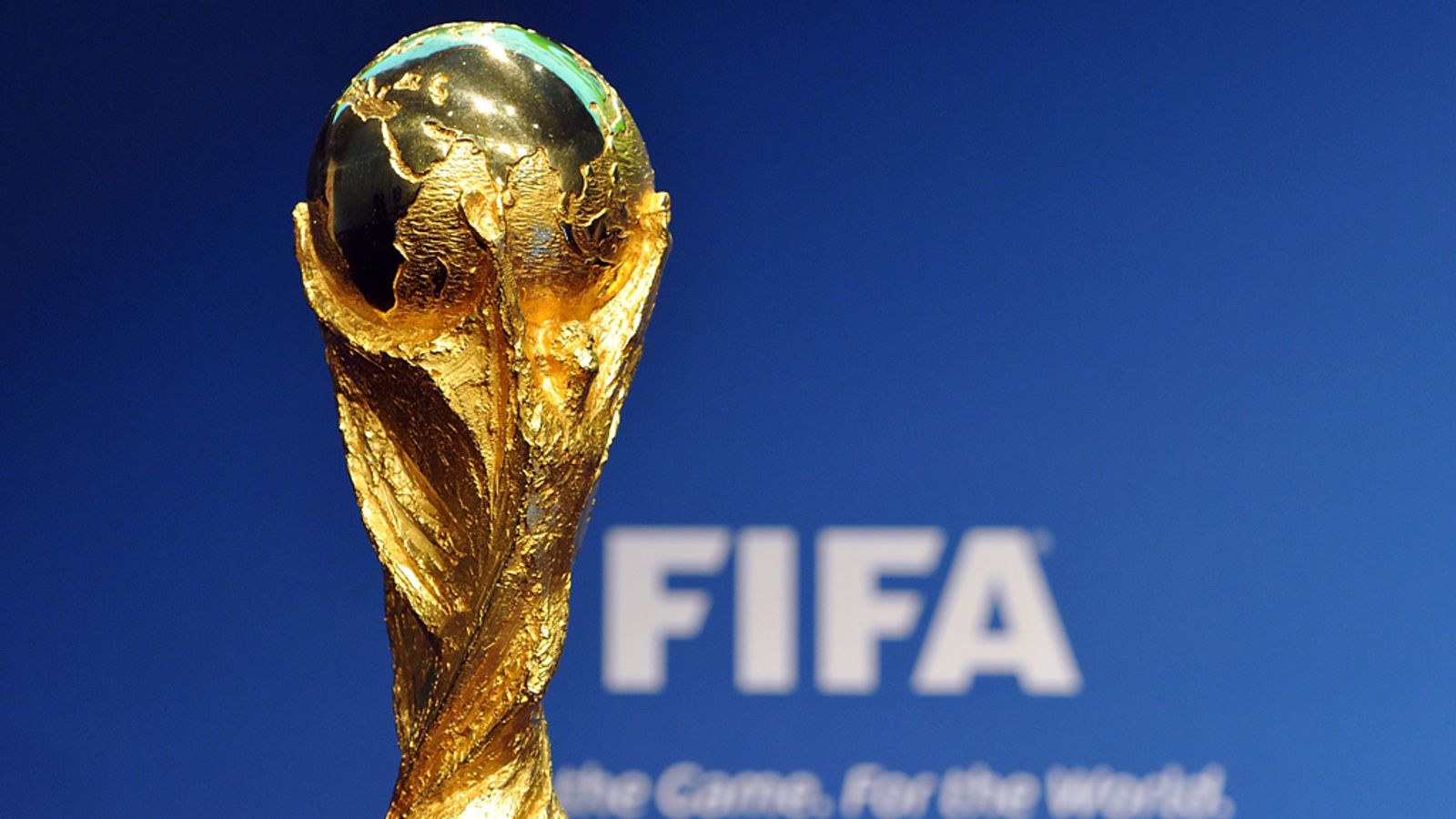
FIFA World Cup matches set to be held across the United States face heightened terrorism risks, with experts warning that vulnerabilities are being amplified by the U.S.-Israel conflict with Iran and a depletion of counter-terrorism expertise within federal law enforcement.
The biggest threat stems from homegrown violent extremists—often lone actors who may have become radicalized online by extreme political views or jihadists such as the Islamic State (ISIS)—according to four counter-terror experts interviewed.
“We need to protect not only each venue, but all the other links in the chain that get to the point of the game,” said Javed Ali, associate professor at the University of Michigan, who previously served in the FBI, Department of Homeland Security and as National Security Council senior director for counter-terrorism. “There are just so many games.
There’s only so many resources to deploy to try to buy down risk against a number of different threats.”
Scale and Complexity
In March, the FBI held a large residential training exercise on domestic threats, bringing together agents from across the country who work in domestic terrorism ahead of major national security events such as the World Cup.
When FBI agents at the meeting discussed the scale and complexity of securing the tournament, they were “alarmed, because there’s a lot that needs to be dealt with,” said one member of federal law enforcement in attendance, who spoke on the condition of anonymity. “It will be hard to control, given the environment and the number of locations of matches and watch parties across the United States. There is a very real possibility that something bad will happen.”
Although the U.S. is experienced in securing large-scale stadium events such as the NFL Super Bowl, experts say the sheer number of World Cup matches will require an unprecedented level of coordination, vigilance, and stamina. The tournament will last about six weeks, with 104 matches in the U.S., Canada, and Mexico.
The U.S. will host 78 matches across 11 major cities.
Funding and Special Designations
The Department of Homeland Security (DHS) has announced that only the final—at MetLife Stadium in East Rutherford—will be designated as a ‘National Special Security Event’ (NSSE).
This triggers a centralised federal operation led by the U.S. Secret Service. Other matches will be designated with Special Event Assessment Ratings (SEAR) 1 or 2, the highest risk rankings requiring federal law enforcement deployment.
FEMA has allocated approximately Ksh 83.1 billion to support security and emergency preparedness for the World Cup. While stadiums are considered “hard targets,” experts are more concerned with “soft targets,” including hotels, transportation hubs, and fan gatherings.
All 11 host cities will host official FIFA fan festivals. Thousands of additional watch parties at bars and venues will extend crowds well beyond official sites.
“We’re still going to have densely populated crowds waiting outside of stadiums. There will be the vulnerability of drones, which are ubiquitous and easily mastered by individuals or non-state groups,” said Colin Clarke, director of research at the Soufan Group.
Communication Breakdowns
Experts say the challenge lies in ensuring coordination across agencies. Tracy Walder, a former CIA and FBI special agent, noted that lapses often occur when Homeland Security, the FBI, and regional police fail to communicate effectively. She cited the 2024 assassination attempt against Donald Trump and the January 6, 2021, Capitol siege as examples of such breakdowns.
The World Cup is especially vulnerable due to the current conflict with Iran.
The potential for an Iran v. United States match in Texas on July 3, coupled with the expected presence of the Saudi royal family in Houston, raises additional concerns due to longstanding regional rivalries.
“You have the Saudi royal family in close proximity to where Iran and the United States would be playing; it’s like adding gas on the fires,” said the federal source.
However, some experts, like Javed Ali, believe concerns over “sleeper cells” may be overblown, noting that Iran-backed plotters have historically needed to co-opt the criminal underworld to carry out attacks rather than using embedded networks.