Advertisement
Python named Jodie Foster first snake to receive pioneering cancer treatment
21st August, 2026 07:45 PM
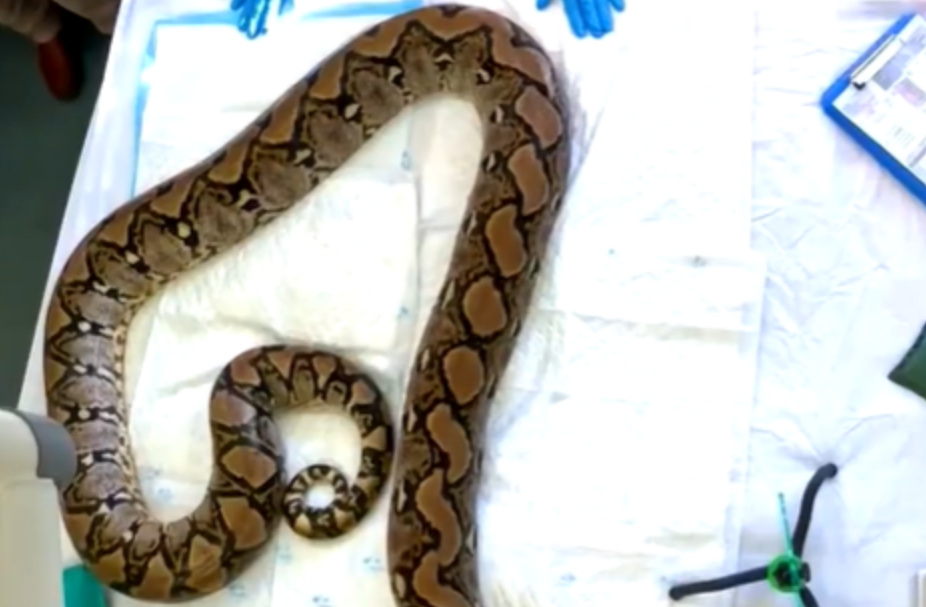
A 15ft (4.5-metre) python is believed to be the first snake in the world to be given a pioneering, life-saving cancer treatment normally used on humans.
The 50kg reticulated python, named Jodie Foster after the Hollywood star, has just turned 23 and lives at Chester zoo. Keepers first became concerned that she may be unwell when she began eating less and spending more time inactive in her habitat.
She was diagnosed with a fibrosarcoma – a malignant tumour – in her jaw, which was removed with surgery but later returned and began to invade her jawbone.
With her life at risk, she underwent electrochemotherapy. Now, months after the procedure, she is said to be eating normally and “back to her usual bright and feisty self”.
Pythons can unhinge their jaws to swallow prey many times the size of their head, and in the months since her surgery zoo staff have observed that Jodie continues to strike, grip and swallow food without difficulty.
Ian Ashpole, a veterinary officer at the zoo, said: “When the tumour came back and started destroying part of her jawbone, we knew more surgery on its own probably wasn’t going to be enough.
“We were facing the possibility of losing her as the tumour made it more and more difficult for her to eat, so we worked with cancer specialists to see whether we could adapt electrochemotherapy for a snake. As far as we’re aware, this is the first time it’s ever been used in one.”
Jodie, whose name derives from when she first arrived and staff noticed her paperwork was marked “JF” – shorthand for “juvenile female” – is so big that no single operating table would have been able to accommodate her. Two were pushed together, making a platform the size of a double bed.
She was anaesthetised in her own habitat and carefully carried to the zoo’s veterinary centre where she underwent the 90-minute procedure.
Ashpole first removed the tumourous mass as well as part of Jodie’s diseased jawbone, before electrochemotherapy was administered to target any remaining cancerous cells.
Electrochemotherapy combines the cancer drug bleomycin with a series of carefully controlled electrical pulses delivered directly to the tumour site. The pulses temporarily make cancer cells more permeable, allowing the drug to enter more effectively.
Jose Alvarez Picornell, of the University of Liverpool’s department of small animal clinical science, said: “Electrochemotherapy is an emerging treatment and this was the first time it had been used in a snake. The success of this treatment is a testament to the power of collaboration. By working closely with Ian, we were able to develop a plan that not only benefited Jodie Foster but will also contribute to the wider veterinary community.”
A final check this week confirmed that Jodie remained free of any signs of the cancer returning.
Picornell added: “We will be formally publishing details of the procedure so that veterinary colleagues around the world can learn from and build upon our approach. This has been a very special career highlight for me and a fantastic opportunity to expand the work we do within the department to support high-quality veterinary and translational research.”