Advertisement
Experts decry limited funding for universities
05th February, 2026 05:03 PM
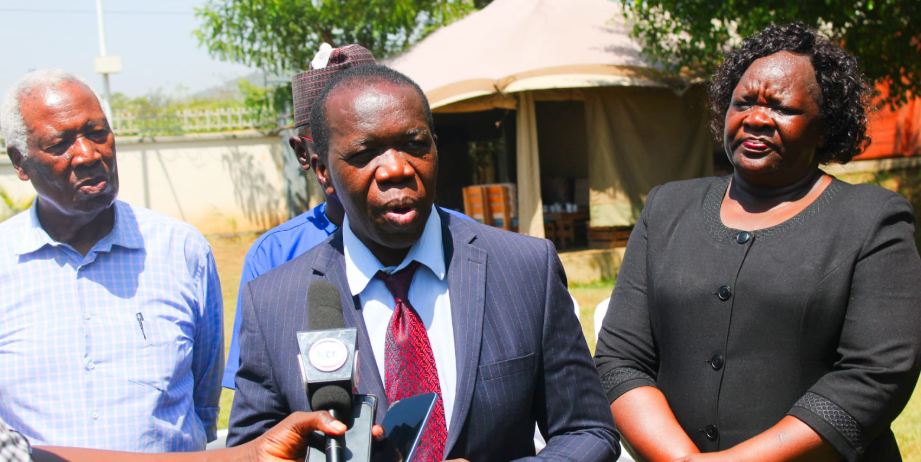
Kenyan universities are grappling with limited funding, weak coordination, and overreliance on donor support, challenges that scholars say continue to hinder research, innovation, and the commercialisation of ideas despite the country’s growing pool of academic talent.
Speaking during a science and innovation workshop on Thursday, February 5, 2026, Masinde Muliro University of Science and Technology Vice Chancellor Solomon Igosangwa noted that although the government has implemented measures to combat corruption at the university level, chronic underfunding remains a major obstacle to meaningful research.
He noted that while university professors are employed with the understanding that 70 per cent of their work should focus on research and 30 per cent on teaching, the reality on the ground is the opposite, due to insufficient funding.
“Research is largely limited by one major factor, which is funding, while in countries like the United States, systems are put in place to ensure that professors can easily access research funds. Locally, limited resources from the Exchequer mean professors struggle to secure funding, which affects research output.” Prof. Solomon.
The Vice Chancellor said that Masinde Muliro University has attempted to bridge the gap through internal mechanisms, including setting aside a portion of school fees to support research and strengthening collaboration with other institutions.
He added that advancements in technology have improved coordination among researchers, noting that last year alone the university recorded several innovations within the county.
However, he observed that innovation remains limited nationally due to inadequate resources.
“I am appealing for improved funding, especially for young people, to unlock innovation,” he said.
Echoing similar concerns, Dr. Carren Otieno, a lecturer in botany and microbiology at Rongo University, said over-reliance on donor funding continues to stall promising projects, leaving many ideas unimplemented.
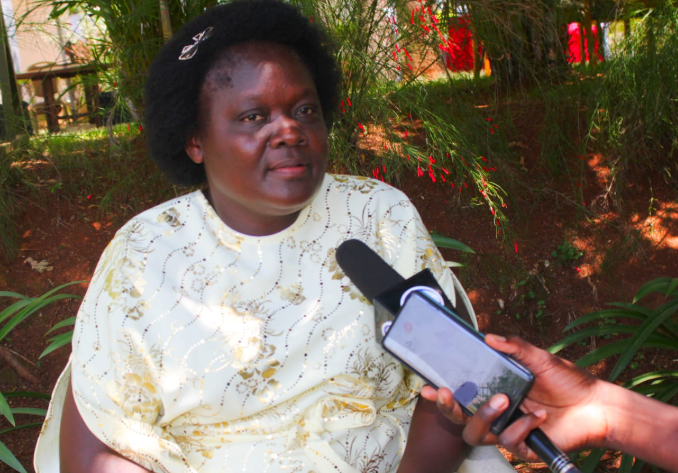
“Students come with brilliant ideas, but due to insufficient local funding, they graduate and leave those ideas behind and the same happens to faculty research, which ends up in libraries instead of being commercialised.”She said.
She noted that the workshop aimed to explore ways of ensuring research outputs are not wasted but translated into practical solutions, noting that commercialisation requires strong support from government, the private sector and development partners.
According to Otieno, nearly 70 per cent of research funding in Kenya comes from external donors, a situation she said must change if the country is to build a sustainable innovation ecosystem.
She also pointed out a disconnect between academia, industry and government, which she said often leads to duplication of funding and poor coordination.
“People do not know what others are doing across institutions, which results in repeated funding for similar projects instead of collaboration,” she said.
Otieno called on the government to establish committees to assess ongoing research and innovation activities in universities and communities, adding that institutions are now incorporating the Competency-Based Curriculum (CBC) by engaging primary and secondary school learners during innovation and career fairs.
“We want to mentor learners early so that when they join university, they already have ideas that can be nurtured and commercialised,” she said.
She further appealed for increased support to researchers and students, arguing that adequate funding could spur industries that address challenges such as unemployment, climate change, agriculture and health.
Also speaking at the forum, Patrick Owili, a programme manager at the African Population and Health Research Centre, said his organisation is supporting the State Department for Science, Research and Innovation by mapping Kenya’s research landscape.
“The research and innovation landscape in Kenya is largely unknown. We are assessing where the country stands across regions, including Western, Coastal, Central, North Eastern and Eastern,” he said.
He noted that stakeholder consultations are ongoing to identify gaps, including policy misalignment and challenges in the funding process, while also ensuring that young innovators are included in discussions shaping the future of science and innovation in the country.