Advertisement
Reparations for Africa: Passaris’s call at the Pan-African Parliament shouldn’t be ignored
26th July, 2025 07:20 AM
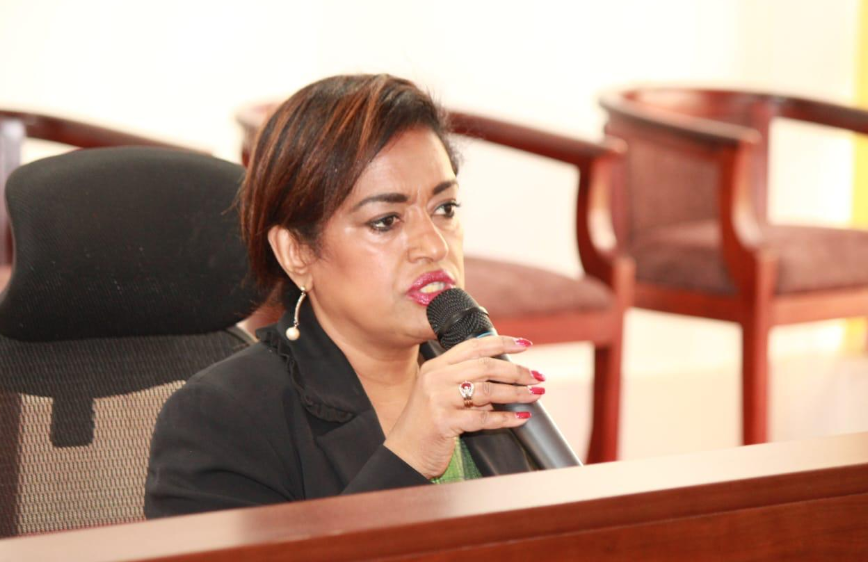
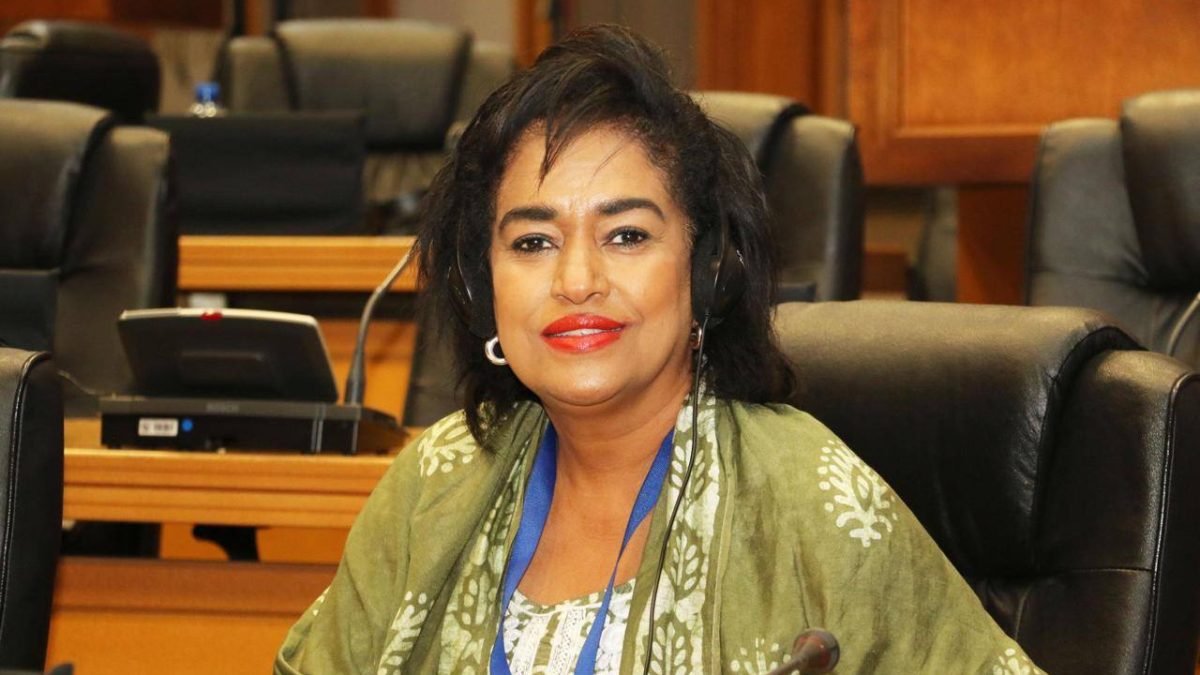
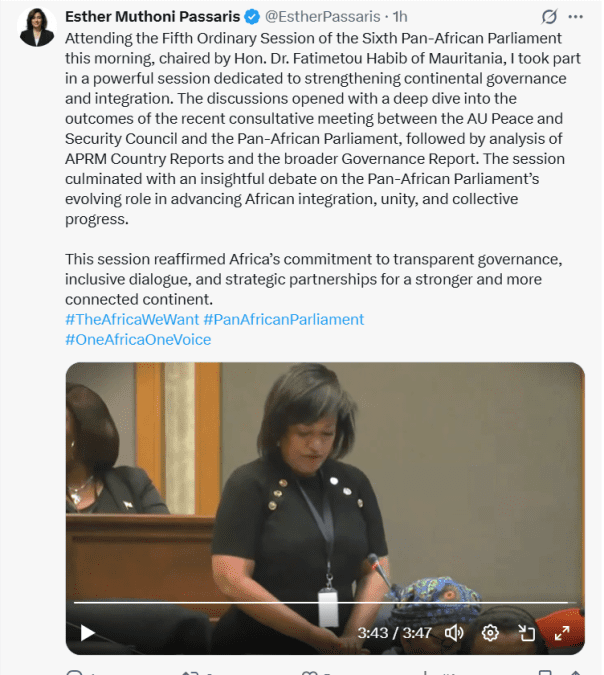
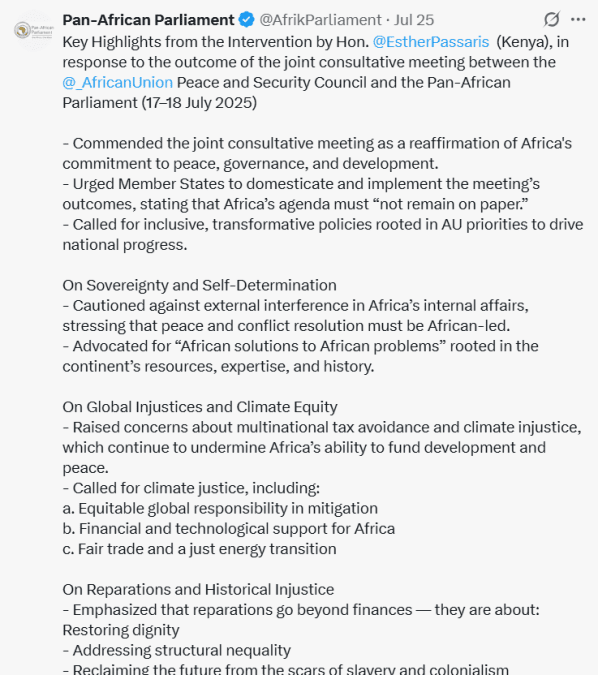
On July 25, Nairobi Woman Representative Esther Passaris stood before the Fifth Ordinary Session of the Sixth Pan-African Parliament (PAP) in Midrand, South Africa, and delivered a powerful call for reparations and historical justice.
Her remarks were made during a special sitting convened under the African Union’s 2025 theme, “Justice for Africans and People of African Descent through Reparations,” and were a timely reminder that Africa cannot afford silence in the face of a painful legacy.
While the session addressed routine parliamentary matters—including peace, integration, and governance—Passaris’ speech stood out for its clarity and courage.
She invoked the continent’s traumatic history with the transatlantic slave trade, colonisation, and modern forms of exploitation. “Millions of our people were forcibly taken from their homes… subjected to unspeakable horrors,” she said, urging African legislators and diplomats not to forget.
Yet amid the pain, she celebrated African resilience, noting the continent’s capacity to overcome and rebuild. She emphasised that reparations are not solely about money but about dignity, responsibility, and the rewriting of a future that is just and inclusive. “We, as Africans, will not be silent… we demand justice, we demand reparations, we demand healing,” she concluded.
Pan-African moment
Passaris’ message is not new, but its revival is timely. It is rooted in the deep tradition of Pan-Africanism—a movement born from the global Black experience of oppression and designed to promote unity, self-determination, and liberation.
From Henry Sylvester Williams’ Pan-African Conference in 1900 to the landmark 1945 Congress in Manchester, Pan-Africanism has always positioned reparative justice as central to African dignity.
The 1945 meeting, attended by future leaders including Ghana’s Kwame Nkrumah and Kenya’s Jomo Kenyatta, pushed for an end to colonial rule and marked the ideological beginning of modern African nationalism. In East Africa, PAFMECA’s campaigns in the late 1950s laid further groundwork, while the 1963 formation of the Organisation of African Unity (OAU) brought together 32 independent states to champion continental sovereignty and cooperation.
Though the OAU has since transitioned into the African Union, the mission has remained constant: to secure the continent’s voice in global affairs and defend its people against exploitation. In this regard, Passaris’ speech is a logical continuation of the Pan-African legacy. The reparations debate is not external to African unity—it is fundamental to it.
Across the continent and diaspora, voices calling for reparations have grown louder. Zimbabwean philosopher Joshua Maponga and American Pan-Africanist Umar Johnson are among those advancing the cause, connecting historical injustices to modern systemic inequality. These efforts echo through Passaris’ call to action. She warned of multinational tax avoidance, climate injustice, and ongoing structural exclusion as contemporary chains binding the continent.
Time for real action
The African Union has made notable moves in recent years. The 2023 Accra Reparations Conference, held in partnership with Caribbean nations under the CARICOM alliance, was a breakthrough. It acknowledged not only the shared history of slavery but also the need for cross-continental solidarity. The formal inclusion of the African diaspora as the AU’s “Sixth Region” also signalled a deeper recognition of historical ties.
However, challenges remain. Chronic underfunding continues to undermine the AU’s capacity to follow through on major decisions. PAP Chairperson Refilwe Mtshweni-Tsipane admitted during the session that budget constraints weaken the institution’s global authority. At a time when international resistance to reparations is hardening—particularly from Western powers—it is critical that African governments allocate internal resources and political capital to sustain momentum.
Passaris’ proposals were rooted in this understanding. She called on member states to fully implement the outcomes of AU-PAP consultative meetings and integrate reparations into national policy frameworks.
She pushed for the strengthening of the African Peace and Security Architecture (APSA) and the African Governance Architecture (AGA), arguing that sustainable peace and justice cannot be achieved without addressing past and present injustices.
She also called for empowering youth, women, and vulnerable populations to drive change. Inclusive governance and transparent resource management, she argued, would go further in liberating Africa than any external assistance. Her point was simple but profound: reparations must restore not only economic stability but also self-worth.
Kenya’s place
Kenya, with its rich history of anti-colonial resistance, cannot afford to sit out of the reparations discourse. The country’s historical wounds—from the Mau Mau struggle to land dispossession and ethnic marginalisation—mirror those across the continent.
While the British government offered compensation to a few Mau Mau survivors in recent years, such payments have done little to address structural injustices still lingering in the post-independence era.
As one of Africa’s most politically stable and diplomatically active nations, Kenya is well placed to take a leadership role. This would involve not only supporting AU frameworks but also beginning domestic conversations about reparative justice.
Public education, cultural reclamation, and historical audits could help shape a more informed and just society. This is not about retribution. It is about responsibility.
The AU’s 38th Summit is around the corner. If Passaris’ message is to bear fruit, African leaders must leave rhetoric behind and pursue policy reforms that reflect a shared understanding of historical truth. Reparations must not remain trapped in speeches and communiqués—they must find expression in law, budget, and practice.
The road to reparations is long and fraught, but the cost of inaction is heavier. Africa cannot heal what it refuses to confront. In Passaris’ words, “We must build a continent that is just, equitable, and inclusive.” That begins by honouring the past—and refusing to let history repeat itself through silence.