Advertisement
Small decisions that seem harmless but collectively contribute to corruption
08th July, 2026 12:00 AM

When people hear the word “corruption,” they often think of high-profile scandals involving politicians or large corporations.
What we may not clearly know is that corruption can also take root in everyday actions that many people dismiss as harmless or “just how things work.”
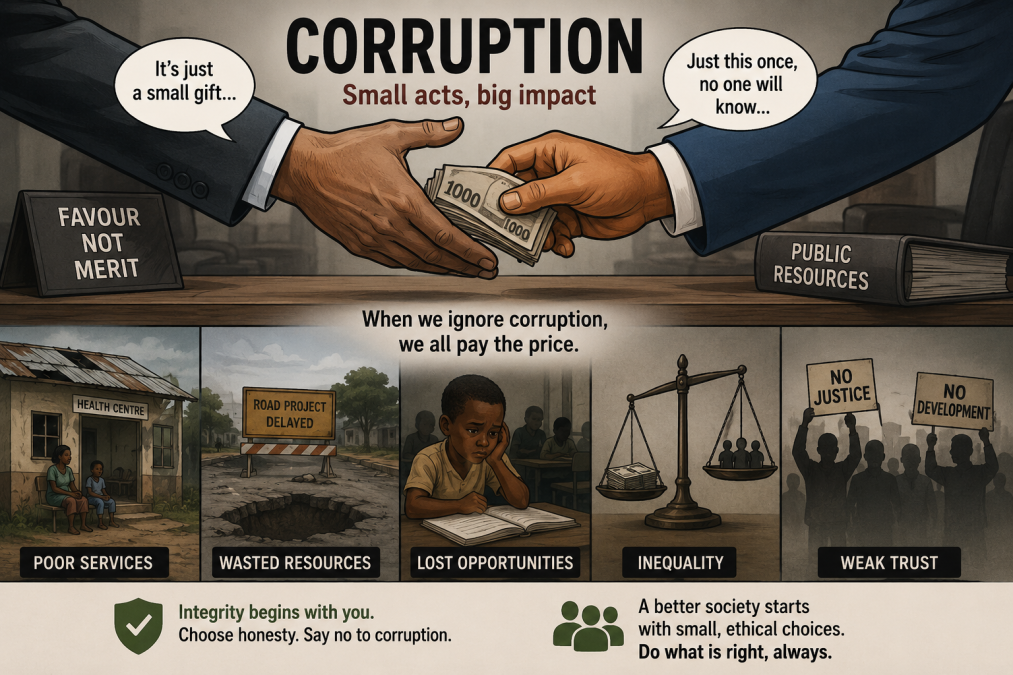
Individually, these actions may seem minor; collectively, however, they can create a culture where dishonesty becomes accepted, fairness is undermined, and trust in institutions begins to erode.
Paying to skip the line
Whether it is offering money to receive a service faster or using personal influence to jump a queue, these shortcuts may benefit one person while disadvantaging everyone else waiting their turn.
Over time, they can make fairness seem optional rather than expected.
Using personal connections for unfair advantage
Networking is a normal part of life, but there is a difference between getting advice from someone you know and receiving opportunities that bypass a fair process. When jobs, contracts, or admissions are awarded based on connections instead of merit, qualified people may be unfairly excluded.
Looking the other way
Witnessing unethical behavior and choosing not to report it can allow problems to grow.
People may stay silent out of fear, inconvenience, or the belief that one complaint would not matter.
Yet accountability often begins when individuals speak up through appropriate channels.
Being dishonest in small ways
Falsifying receipts, exaggerating expenses, cheating on taxes, or claiming benefits you are not entitled to may seem like victimless acts.
However, these practices can reduce resources available for public services and encourage a culture where dishonesty is tolerated.
Giving “tokens of appreciation”
In many cultures, giving gifts is a meaningful way to express gratitude.
However, gifts offered before or during a decision-making process or when they are intended to influence an outcome can create conflicts of interest or the appearance of favoritism.
Understanding the difference between genuine appreciation and undue influence is important.
Accepting “that’s just how things are”
Perhaps the most damaging habit is believing corruption is unavoidable.
When unethical behaviour becomes normalised, people may stop expecting transparency and accountability.
This mindset can make meaningful change more difficult.