Advertisement
How retailers use price anchoring to trick shoppers during clearance sales
17th August, 2026 08:49 PM

Walking into a supermarket or clothing store and spotting a bright tag with a crossed-out Ksh3,000 next to a Ksh2,100 price feels like a quick financial win.
Saving Ksh900 sounds great on paper, but that discount sticker is often a clever marketing tactic known as price anchoring.
Retailers display a high original reference price to make the final figure look like a massive deal, even when the higher price was artificially inflated or rarely charged in practice.
How the price tag trick works
This tactic plays on simple human psychology and behaviour. People naturally focus on the very first number they see when deciding whether something is cheap or expensive.
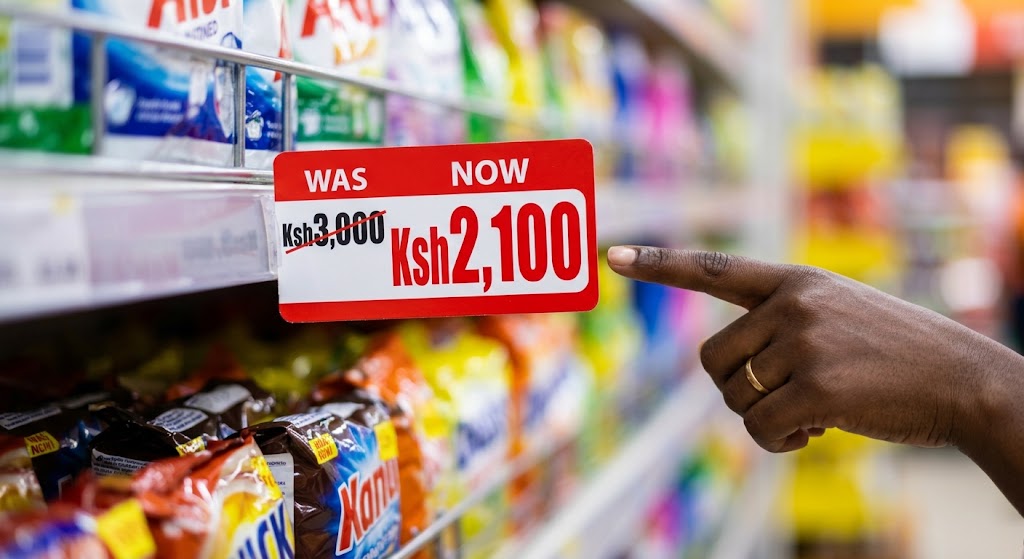
When a store displays a slashed price tag, the higher original figure becomes a mental anchor that shifts how a buyer views the deal. Retailers know that shoppers rarely evaluate prices in isolation, relying instead on quick comparisons to make fast buying decisions during clearance sales.
Peer-reviewed research shows exactly why this simple strategy gets people to spend money. In a study published on December 1, 2004, in the Journal of Consumer Research, researchers Itamar Simonson and Aimee Drolet demonstrated that “purchase, but not selling, prices are influenced by arbitrary anchors.”
Once a price tag establishes a high starting point, shoppers automatically measure the current value against that higher figure. This effect makes ordinary prices feel like extraordinary savings, tempting shoppers to buy items they never planned on getting.
Simple ways to outsmart clearance pricing
To protect household finances during retail sales, budget-conscious consumers must look at the actual final price rather than the advertised percentage discount.
A 30 percent discount on a household item marked down from Ksh10,000 to Ksh7,000 still requires paying Ksh7,000 out of pocket.

If that item was not on the original shopping list before entering the shop, buying it does not save Ksh3,000; it simply removes Ksh7,000 from the family wallet.
Outsmarting sales tricks comes down to checking prices across different shops or online platforms to confirm whether reference prices are genuine.
Focusing on personal household needs rather than slashed price tags prevents impulse spending and keeps hard-earned money in household savings.