Advertisement
Why KWS translocates animals that stray into human territories
16th September, 2026 05:25 PM
When wild animals wander into farmlands and residential areas, balancing human safety and wildlife protection becomes an urgent priority.
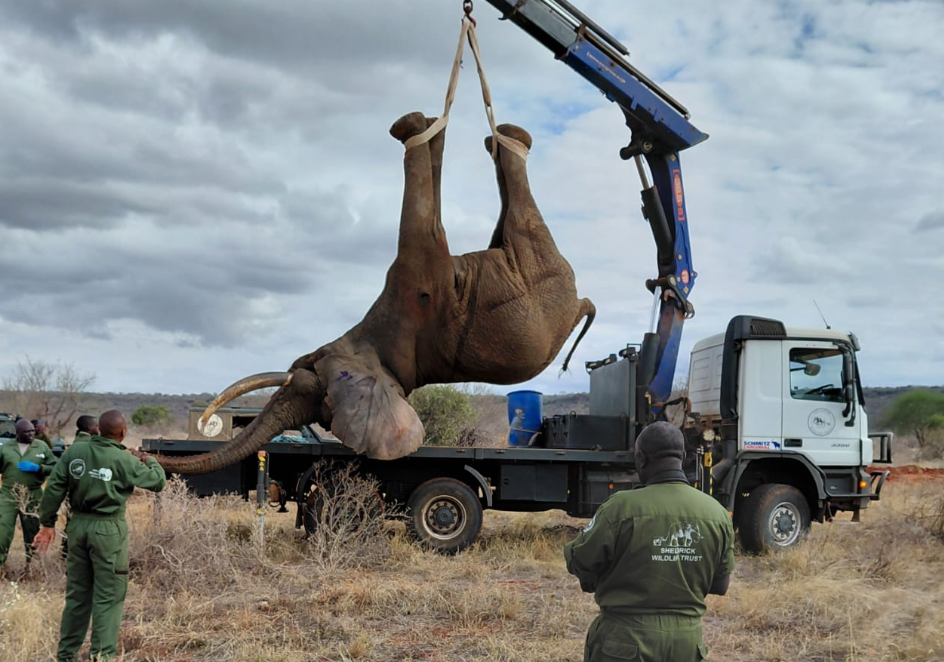
A recent operation by Kenya Wildlife Service (KWS) on September 16, 2026, highlighted this balance after officers safely moved a persistent bull elephant that kept breaking through farm fences in Tsavo.
Why translocate?
When a large animal repeatedly wanders into human settlements, local communities face crop destruction, financial loss, and serious safety risks.
Leaving these animals in populated areas often leads to hostility and retaliatory attacks from humans, putting both people and wildlife in grave danger.
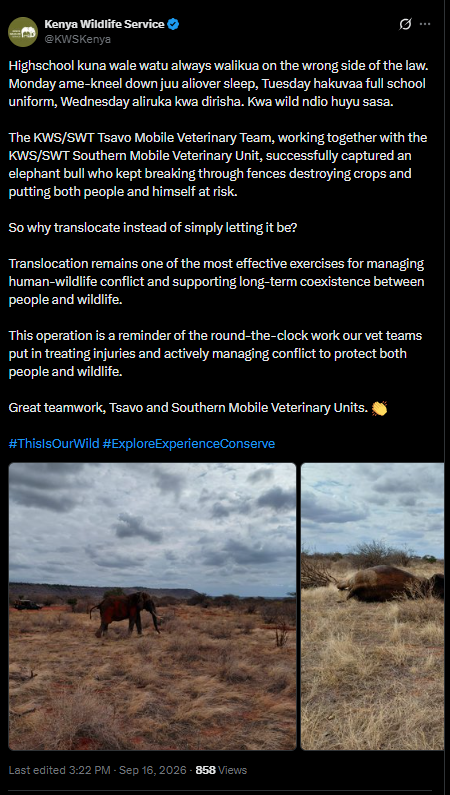
So why translocate instead of simply letting it be? As KWS explains, “Translocation remains one of the most effective exercises for managing human-wildlife conflict and supporting long-term coexistence between people and wildlife.”
Moving a crop-raiding animal to a safer ecosystem, away from people, protects human life and property without resorting to lethal measures.
Scientific studies support this management strategy. A peer-reviewed paper published in Pachyderm notes that “translocation aims to reduce human-elephant conflict in the area and to prevent any retaliation toward the elephants.”
Relocation offers stray animals a fresh start where they can roam in expansive national parks without clashing with local communities.
How translocation happens
Relocating a multi-ton wild animal requires careful planning and coordination from start to finish.
The process begins with tracking teams identifying and monitoring the target animal using ground patrols or aerial surveillance. Once located in a suitable spot, specialised veterinary officers immobilise the animal using darting rifles loaded with sedatives.
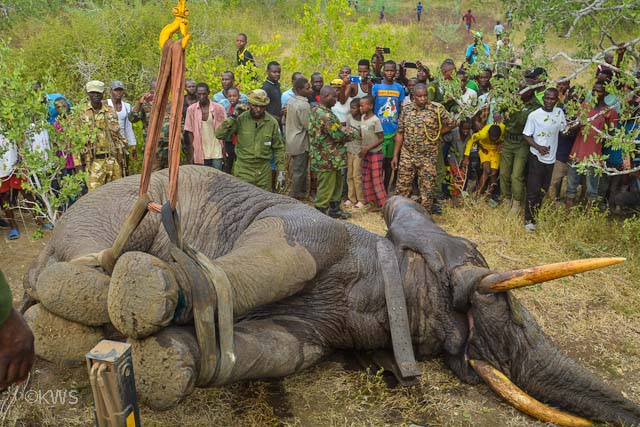
After sedation takes effect, veterinary teams inspect the animal, cover its eyes to reduce stress, and monitor its breathing. Heavy cranes and trucks then lift and secure the animal inside a transport crate.
Once loaded, drivers move the animal to its new location, where vet teams administer a reversal agent to wake it up safely inside the new park.
As KWS noted, “This operation is a reminder of the round-the-clock work our vet teams put in treating injuries and actively managing conflict to protect both people and wildlife.”