Advertisement
Partial lunar eclipse: How and when Kenyans can see the celestial event on Friday, August 28
27th August, 2026 01:11 PM
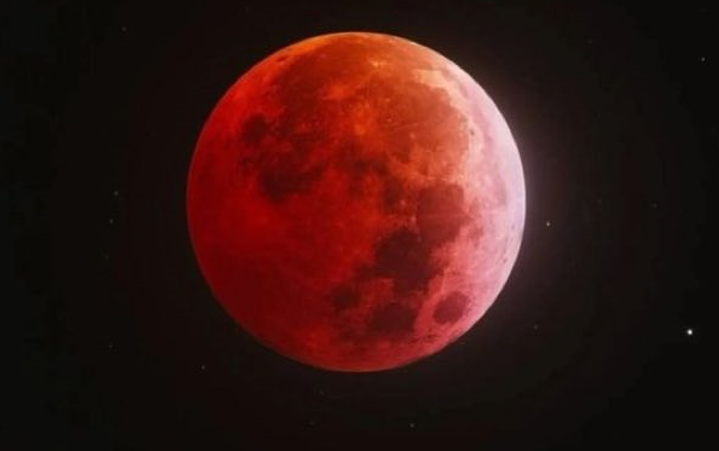
Kenyans will have an opportunity to witness a partial lunar eclipse in the early hours of Friday, August 28, 2026, according to information shared by the Kenya Space Agency (KSA).
“A partial lunar eclipse will be visible in Kenya in the early hours of Friday, August 28, 2026,” KSA said on Thursday, August 27,2026.
The celestial event will occur as the Moon moves through Earth’s shadow, creating a partial eclipse visible from parts of Africa, including Kenya. The event is also expected to be visible across other parts of Africa, Europe and the Americas.
When will it be visible?
According to the KSA, the eclipse will begin at approximately 4:23am in East African Time, and the partial phase is expected to run from about 5:33am to 8:52am, although visibility from Kenya will be limited because the Moon will set as the Sun rises.
For Kenyan observers, the eclipse will therefore remain visible until approximately 6:30am.
Astronomical calculations also place the maximum of the eclipse at around 6:28am in Kenya, with the Moon already very low on the western horizon.
This means early risers will have the best chance of catching the event before daylight becomes too bright and the moon disappears below the horizon.
“The eclipse will begin at approximately 4:23 am EAT, entering its partial phase from 5:33 am to 8:52 am. In Kenya, visibility ends at around 6:30 am as the moon sets and the sun rises,” KSA added.
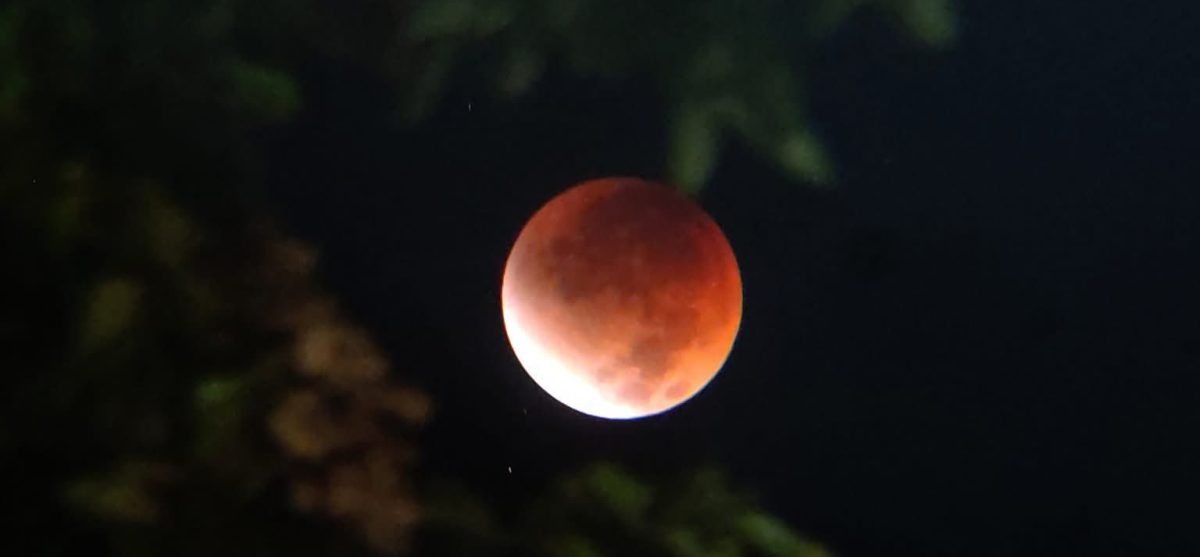
How and where to watch
Those hoping to see the eclipse should find a location with a clear, unobstructed view of the western sky.
Buildings, trees and hills could block the Moon because it will be close to the western horizon during the final visible stages.
Unlike a solar eclipse, a lunar eclipse is safe to view with the naked eye, so no special protective glasses are required.
However, binoculars or a telescope can provide a closer look at the Moon as Earth’s shadow gradually covers part of its surface.
“No special glasses are needed to observe a lunar eclipse. Find a clear, unobstructed view towards the western sky and enjoy the celestial show,” KSA added.
Why does a lunar eclipse happen?
A lunar eclipse occurs when Earth passes between the Sun and the Moon, causing Earth’s shadow to fall across the lunar surface.
During a partial lunar eclipse, only part of the Moon enters Earth’s darkest shadow, known as the umbra. The rest remains outside the umbra, meaning the Moon does not become completely dark.
The August 28 eclipse is expected to be particularly deep globally, with about 96 percentof the Moon’s disc entering Earth’s umbral shadow at maximum eclipse.
For Kenyans, however, only the early stages and part of the eclipse will be visible before the Moon sets.
So, if the skies are clear, set your alarm early, face west and look towards the Moon before sunrise on Friday morning.