Advertisement
Research suggests effects of childhood screen time could last a lifetime
04th June, 2026 09:02 PM

When kids spend time on screens, they miss out on the socialisation, motor and sensory experiences that are vital in childhood.
Kara Alaimo is a professor of communication at Fairleigh Dickinson University and advises parents, students and teachers on how to manage screen time. Her book “Over the Influence: Why Social Media Is Toxic for Women and Girls and How We Can Take It Back” was published in 2024.
Need another reason not to give your kid screens? It may permanently alter their brains, according to a new paper that reviewed and reported on current literature.
A lot of what happens in childhood profoundly affects the skills and challenges people have later in life, according to the conceptual paper published Tuesday in the journal Brain Health.
The researchers found that our sensory experiences, movement and social relations growing up, along with our culture and environment, profoundly and sometimes irreversibly determine who we become.
The authors call this concept the “criticome,” which is the first time it has been given a name, said Dr. Julio Licinio, coauthor of the review and a distinguished professor of psychiatry at the State University of New York’s Upstate Medical University in Syracuse, New York.
“The main takeaway is that there is a critical window of development that goes from birth all the way up to 25 years,” Licinio said. What is imprinted on the brain then will “determine who you are for the rest of your life.”
Those assertions raise a big question: How does all the time young people spend on screens affect their development and who they become?
This review can’t answer this question, Licinio said. That insight will require decades of research. But he doesn’t suggest parents wait until then to act.
Kids become less interested in things that used to be considered fun, such as playing with friends without screens, going to the beach or riding bikes, she said. But these are the kinds of activities that develop the socialisation, motor and sensory experiences that the research has found are vital in childhood.
Less screen time and more people
Licinio’s advice to parents is to get their children off screens. Instead, ensure kids spend more time interacting with other humans — whether it’s with you or other kids.
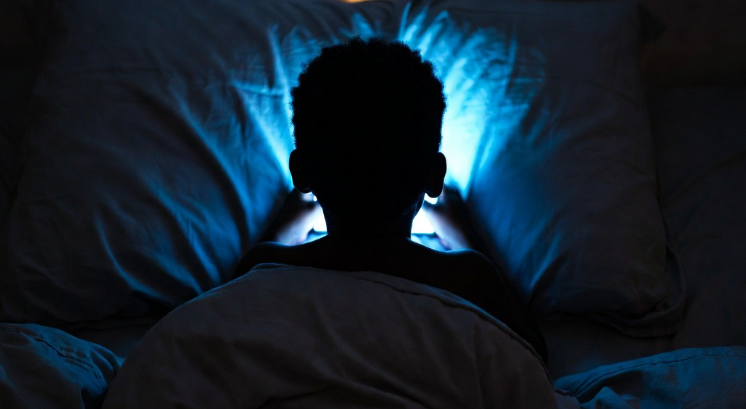
While this research focused on the psychological effects of childhood experiences, using screens is also physically detrimental, Licinio said. “It’s a major contributor to childhood obesity,” he said. “Not only do you decrease physical activity, but a lot of children are eating when they’re watching.”
Early exposure to devices matters
When I speak to students in schools about their screen use, I encourage them to think about what else they could be doing with all the time they spend on screens. Would it make them happier or healthier?
This research suggests the question is important because if parts of the brain that control functions, including language and speech, such as the Broca area, aren’t used in childhood, they can’t easily be built later.
Childhood is a critical time to learn a foreign language, the researchers pointed out. Try doing it as an adult, and you won’t be as fluent.
The same is true for lots of skills. How did Wolfgang Amadeus Mozart become a musical genius? One reason was his exposure to music at a young age, according to the study.
Sure, he practised and had advantages such as access to musical instruments, but he also had the neural foundations to excel at music that the authors report can only be established in youth.
That’s why childhood is a crucial time to expose kids to things like music, art and languages — and spending time learning about them is far better than passing time on digital devices.
You can take away screens
When I speak to parent groups about how to handle kids’ screen time, people often tell me it’s too late to take kids’ screens away, or it just can’t be done. But that’s not true.
This study adds to a growing body of research suggesting we should get our kids off screens. Last month, the US Surgeon General’s office released an advisory warning that children who spend more time on screens are more likely to have physical health problems, mental health problems, behavioural problems, family conflicts, lower academic performance and worse relationships with their peers.
Worrying that your child will blow up if you take a screen away isn’t a reason not to do it, Greenberg said. In fact, if your child is dependent on a screen and will lash out if you take it away, “that may even be more of a reason to do it,” she said.

But don’t blame kids for their reactions when that happens. “It’s not because the kid is being defiant or acting out or not listening to you,” Greenberg said. “It’s because they’ve been given something that’s addictive, and then you’re taking it away.”
Don’t blame yourself for that, either. “We’re all catching up with the technology and understanding its impact,” Greenberg said.
Instead, I tell parents to explain to kids that when we get new evidence, we need to reconsider what we think and do. Otherwise, if we hold onto beliefs and behaviours even when circumstances change, we’ll make uninformed decisions that could harm us and others.
Most parents didn’t have all this data when they got their kids digital devices and let them join apps. So, now is a good time to sit down and discuss what changes you’ll make because of this new information.
Don’t remove tech without a plan
If taking away screens is going to be ugly, start with a plan, Greenberg said. You don’t have to do it right this second, she said. Instead, think about when you might have the best chance of success.
Kids who have spent a lot of time on screens may not have the ability to play on their own yet, she said.
Can you hit the beach or a pool this summer? That might be a good time to start, she said.
Make plans for what you can do to fill in that time while you help your child to build those skills, whether it’s playing board games, learning to ride a bike or volunteering where your community needs you.
Having extra family members around and seeking help from a professional can also be beneficial if you have the resources, Greenberg said.
And remember, they’re watching what you’re doing on screens, too. Teaching kids to think critically and have fun offline will be far better skills to encode in their brains for the rest of their lives than scrolling.