Advertisement
Wine for beginners: Your guide to getting started in Nairobi
05th June, 2026 01:13 PM

For a lot of Kenyans, wine sits in an awkward middle space.
It is everywhere. On restaurant menus, at house parties, at work events. Yet it can feel like a world with its own secret language, one you were never handed the dictionary for.
Words like tannins, terroir, and finish float around conversations, and the pressure to pick the right bottle without looking lost can be enough to send you straight back to a beer.
But wine does not need to be intimidating. At its core, it’s a fermented grape drink, and enjoying it well is a skill anyone can pick up one sip at a time.
The words you actually need to know
You do not need a full glossary. A handful of terms will carry you far.
Dry means the wine has little to no sweetness – most table wines are dry.
Sweet wines retain more of the grape’s natural sugar.
Tannins are the drying, slightly grippy sensation you feel on your gums when drinking red wine; think of the feeling after biting into an unripe banana.
Acidity is the bright, mouth-watering sharpness – higher in whites, lower in reds.
Body describes how heavy or light the wine feels in your mouth, from light-bodied (like water) to full-bodied (like whole milk).
Finish is simply how long the taste lingers after you swallow.
Those six words will let you hold your own in any wine conversation.
How to ‘taste’ wine
Tasting wine properly is less about performance and more about paying attention.
Researchers from Applied Sciences have noted that “the combination of the different human senses in a controlled fashion during food/drink experiences can provide more enjoyment to consumers”, which is really just science’s way of saying: slow down and use your whole body.

Start by looking at the colour. Deeper reds tend to be bolder; paler whites tend to be lighter.
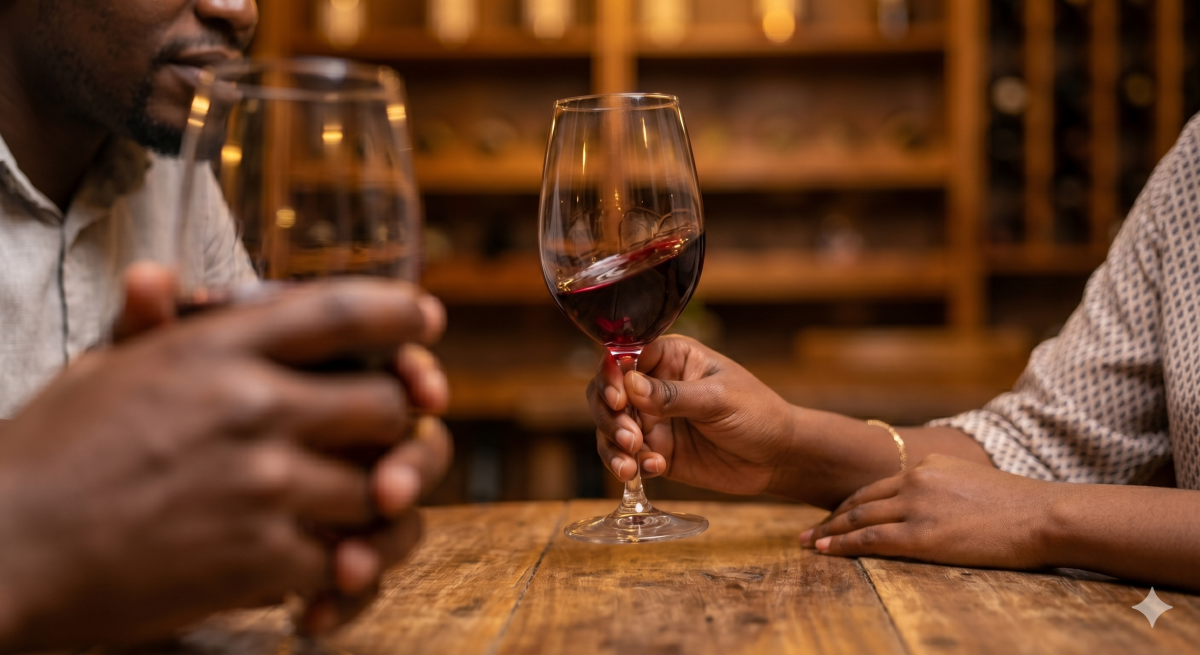
Then swirl gently (this releases aroma), bring the glass to your nose, and inhale slowly. Before you even taste, your brain is already building a picture.
When you do sip, let the wine sit for a second before swallowing. Ask yourself: is it dry or sweet? Is it light or heavy? Does it taste of fruit, earth, oak, or something else?
You don’t need the right answers. The point is to start noticing.
Where to start in Nairobi
The good news is that Nairobi has made wine increasingly accessible. Supermarkets in major malls now stock decent entry-level bottles, typically imported from South Africa, which has some of the most consumer-friendly wines on the continent, as well as Chile, Spain, and Italy.

Budget between Ksh 1,000 and Ksh 1,800 for a first bottle and you will be in perfectly respectable territory.
Wine bars and restaurants often offer wine by the glass, which is the smartest way to explore without committing to a full bottle. A glass typically costs between Ksh600 and Ksh1,200.
The only rule worth following at the start: if you enjoy it, it is a good wine.