Advertisement
Khalwale faces possible Senate sanctions after clash with Kakamega official
06th October, 2025 12:22 PM
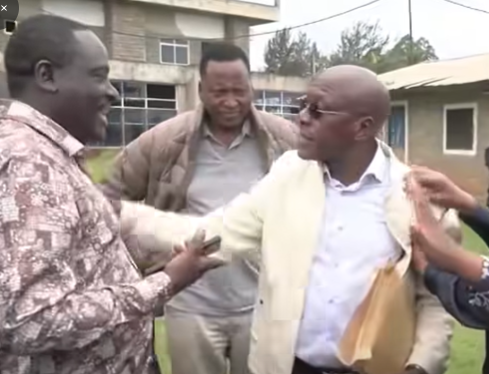
Kakamega Governor Fernandes Barasa has called on Senate Speaker Amason Kingi to take disciplinary action against Senator Boni Khalwale, following a heated confrontation with a county official on Friday.
The disciplinary action, if taken, comes with several consequences for Khalwale.
Also Watch: Senator Khalwale demands arrest of DIG Lagat over death of blogger Albert Ojwang
The Senate Speaker has limited but clearly defined powers to discipline members whose conduct breaches parliamentary decorum.
Under the Parliamentary Powers and Privileges Act, the Senate Speaker can take several procedural steps to address misconduct.
Referral to the Committee on Powers and Privileges
When a senator’s behaviour is deemed disorderly or in contempt of the Senate, the Speaker may refer the matter to the Committee on Powers and Privileges for investigation.
Also Watch: Barasa urges treasury to extend IFMIS deadline as Savula slams shoot-to-kill directive
The committee is empowered to summon witnesses, review evidence, and recommend appropriate disciplinary measures.
Suspension from Senate Sittings
If the committee finds that a senator has violated House rules, the Senate may adopt a motion to suspend the member from its proceedings or revoke certain privileges.
A recent precedent was the suspension of former nominated Senator Gloria Orwoba for 79 days following recommendations by the same committee.
Public apology or retraction
In less severe cases, the Senate Speaker may direct the senator to issue a formal apology or retract statements that breach parliamentary rules.
Such measures are designed to preserve decorum and uphold institutional integrity without escalating political tensions.
Political realities
The Senate Speaker’s authority is not absolute. Any disciplinary process must follow due procedure, including fair hearing provisions under parliamentary standing orders.
Furthermore, disciplinary actions may face legal challenges in court, as seen in previous cases where judicial intervention halted parliamentary sanctions.
Political considerations also weigh heavily. Decisions by the Speaker often navigate a delicate balance between enforcing discipline and maintaining harmony within party and coalition lines.
Barasa’s statement
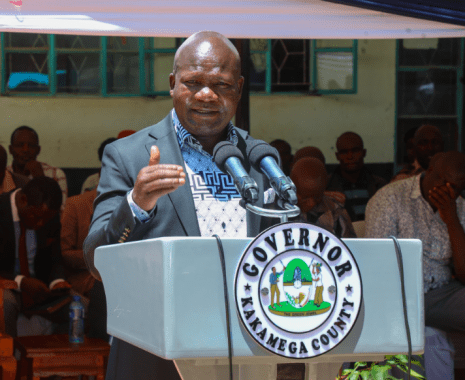
In a statement shared Saturday, October 4, 2025, Kakamega governor Fernandes Barasa criticised Khalwale’s conduct towards County Executive Committee Member for Finance, Benjamin Andama, describing the senator’s actions as “regrettable and abhorrent.”
“The County Government of Kakamega welcomed the Senate Devolution Committee in good faith, with the full expectation that the inspection and any interrogations would be constructive and professional,” he said.
The governor urged the Senate to uphold its constitutional mandate and remain objective in its oversight role, warning that failure to do so would erode public confidence in the institution.
“When this objectivity is lost, the true spirit of oversight is undermined,” he said.
Barasa’s statement followed a dramatic incident on Friday during an inspection tour by the Senate Committee on Devolution and Intergovernmental Relations, which was assessing stalled development projects in the county.
The confrontation arose when the committee toured the Kakamega County Level 6 Teaching and Referral Hospital.
Tensions escalated when Khalwale engaged Andama in a verbal exchange that drew concern among senators present.
In a video shared by Khalwale on his Facebook page, the senator is seen holding an envelope and pointing at Andama, declaring: “In my lifetime, we will get you people arrested.”