Advertisement
Raila blames govt delay on NADCO report for Gen Z uprising
20th July, 2025 10:44 PM

ODM party leader Raila Odinga has attributed the government’s delay in implementing the National Dialogue Committee (NADCO) report for the eruption of the Gen Z protests that rocked the country in June 2024.
Speaking during an interview on a local media station on July 20, 2025, Raila stated that many of the issues raised by the youth during the protests were the same ones that had been brought to the table by the opposition a year earlier during their anti-government demonstrations.
“In 2023, we were in the streets and we had very concrete issues that we were raising,” Raila explained, citing electoral justice, the high cost of living, and corruption as key concerns.
According to the former Prime Minister, if the NADCO recommendations had been implemented sooner, the youth uprising that paralysed the country could have been avoided.
“Had the NADCO report been implemented earlier, we would not have ended up with the Gen Z protesters,” he said. “Because the issues that the youth were raising were very similar to the ones we were raising the previous year.”
Gen Z protests
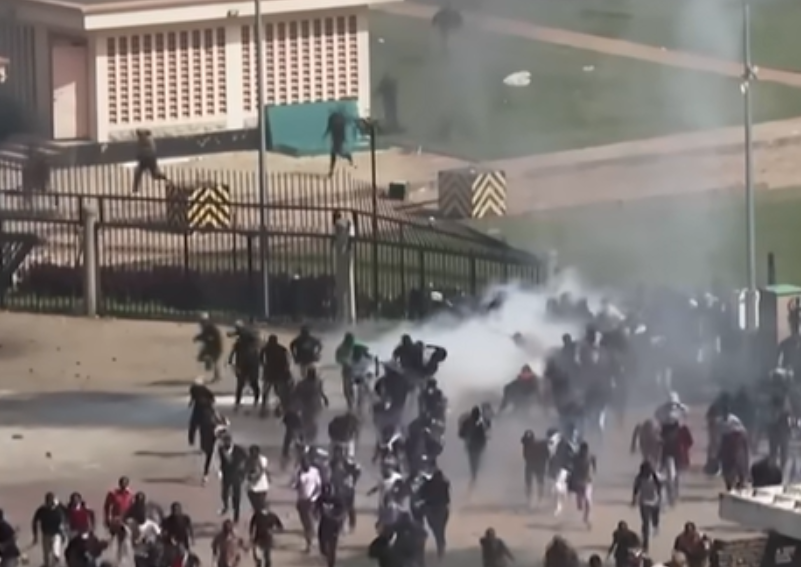
Raila described how the Gen Z protests escalated beyond previous demonstrations, with protesters storming Parliament and the Judiciary, and attempting to reach State House before being blocked by security forces.
“They stormed the Parliament. They stormed the Judiciary. And they were on their way to the State House, when they were blocked by the forces,” he recounted.

The ODM leader criticised the government’s decision to deploy the military against civilian protesters, arguing that such deployment required express parliamentary authority.
“When they overwhelmed the police, then the regime tried to bring the military. When we protested that the military cannot be deployed on civilian population without express authority of Parliament, they went to Parliament and coerced Parliament to pass it,” Raila stated.
He noted that he respected the youth’s wishes by staying away from the June 2024 demonstrations, describing their mobilisation as a continuation of the opposition’s push for change.
“They said they were out to finish the job. They asked me to stay home. And I did respect their wishes that I stay home,” he remarked.
NADCO process
Raila further recalled that the 2023 opposition-led protests came at a heavy cost, resulting in the loss of “about 70 people” before the international community intervened to facilitate a political truce between him and Ruto.
“We did come out clearly saying that change must come in the country. And all in all, we lost about 70 people at that time,” Raila mentioned.
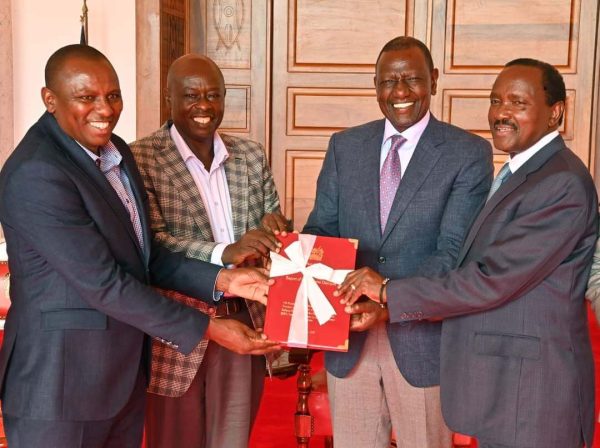
He revealed that the outcome of those protests was the formation of a bipartisan team led by Kalonzo Musyoka and Kimani Ichung’wah to address the disputed issues and produce what became known as the NADCO report.
“They came up with what we call the NADCO report,” Raila said. “We said the NADCO report needed to be implemented. It was taken to Parliament, but there was quite a bit of prevarication.”