Advertisement
Nearly half of people with diabetes unaware they have the condition, study shows
09th September, 2025 08:32 AM
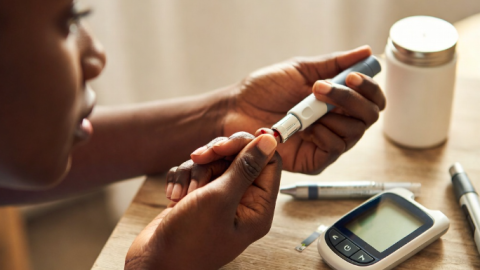
Caption:Global study reveals 44% with diabetes are undiagnosed. VIDEO/K24TV When was the last time you had your blood sugar checked? It might be worth looking into, a new study says.
Forty-four per cent of people age 15 and older living with diabetes are undiagnosed, so they don’t know they have it, according to data analysis published Monday in the journal The Lancet Diabetes & Endocrinology.
The study looked at data from 204 countries and territories from 2000 to 2023 in a systematic review of published literature and surveys. The findings at the global level are for people aged 15 and older.
“The majority of people with diabetes that we report on in the study have type 2 diabetes,” said Lauryn Stafford, the lead author of the study.
Around 1 in 9 adults live with diabetes worldwide, according to the International Diabetes Federation. In the United States, 11.6 per cent of Americans have diabetes, according to 2021 data from the American Diabetes Association.
“We found that 56 per cent of people with diabetes are aware that they have the condition,” said Stafford, a researcher for the Institute for Health Metrics and Evaluation. “Globally, there’s a lot of variation geographically, and also by age. So, generally, higher-income countries were doing better at diagnosing people than low- and middle-income countries.”
Younger people don’t know they have diabetes
People under 35 years were much less likely to be diagnosed if they had diabetes than people in middle age or older. Just “20 per cent of young adults with diabetes were aware of their condition,” Stafford said.
Routine screenings aren’t promoted as much for young adults as for older adults. Many larger organisations, like the American Diabetes Association, suggest annual routine screenings for adults 35 and older.
“You can survive with elevated glucose levels for many, many years,” Stafford said. “People end up getting diagnosed with diabetes only at the point where they have complications,” which are more common in older adults.
Depending on how long a person has had diabetes before it’s discovered, the health impacts may vary.
“Diagnosing diabetes early is important because it allows for timely management to prevent or delay long-term complications such as heart disease, kidney failure, nerve damage, and vision loss,” said Rita Kalyani, chief scientific and medical officer at the American Diabetes Association. She was not involved in the study.
Around one-third of adults are diagnosed with diabetes later than their earliest symptom, according to a 2018 study.