Advertisement
Nairobi accord: EAC-SADC forge unified front for peace in DRC
01st August, 2025 06:59 PM
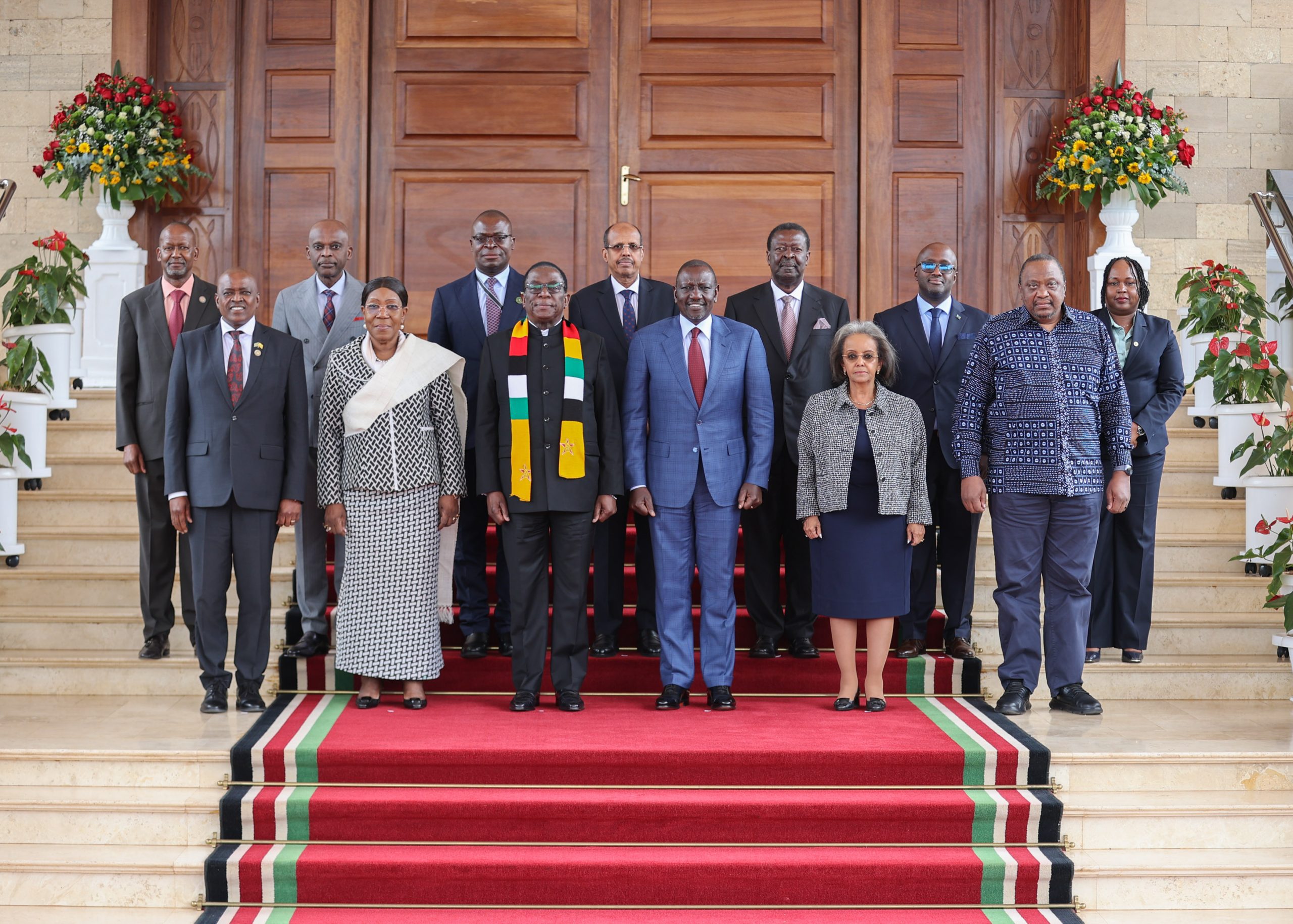
In a landmark move for African diplomacy, EAC, SADC, and AU leaders met in Nairobi to unify efforts toward ending the conflict in eastern DRC.
The meeting of the co-chairs of the Joint EAC-SADC Summit with the newly appointed panel of facilitators has laid the groundwork for a single, African-led peace initiative that observers are calling the continent’s most coordinated mediation effort in a generation.
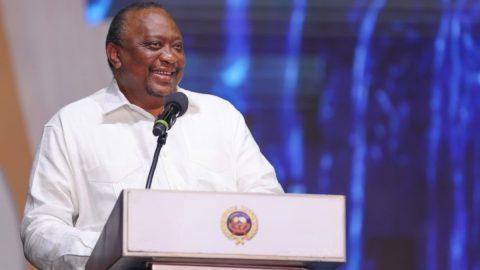
Convened in a spirit of unity and urgency, the Nairobi meeting was co-chaired by Kenyan President William Samoei Ruto, Chairperson of the EAC, and Zimbabwean President Emmerson Dambudzo Mnangagwa, Chairperson of SADC. Joining them was a formidable Panel of African statespersons, including former presidents Olusegun Obasanjo (Nigeria), Uhuru Kenyatta (Kenya), Catherine Samba-Panza (CAR), Sahle-Work Zewde (Ethiopia), and Mokgweetsi Masisi (Botswana), all tasked with shepherding the mediation process.
“We must seize this opportunity to harmonise our strengths. This is about more than just the DRC; it’s about charting an African path to peace, one that prioritises African agency, African voices, and African solutions,” the communique released on Friday, August 1, 2025, after the talks read.
The Nairobi mandate
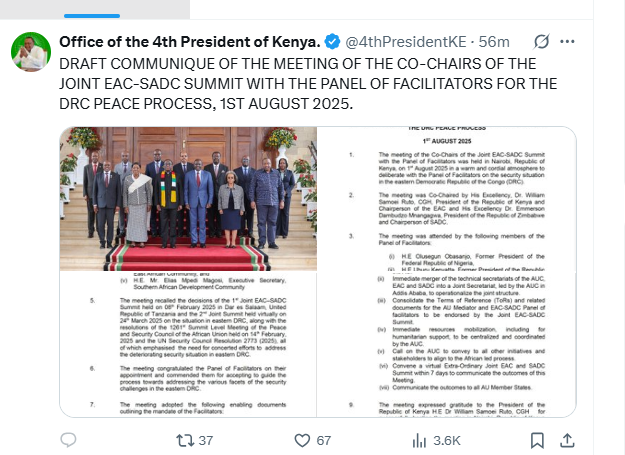
The communique issued after the high-level meeting confirmed several groundbreaking decisions: the immediate merger of the Nairobi and Luanda peace tracks into a unified mediation framework and formation of a Joint Secretariat, anchored by the African Union Commission (AUC) in Addis Ababa.
It also pushes for the Consolidation of terms of reference for the five-member panel of facilitators, ensuring accountability to both the Joint Summit and the AU and the launch of a Resource Mobilisation Framework to channel humanitarian aid and funding for peacebuilding.
The decisions signal a strategic pivot: from fragmented regional efforts to an integrated continental push for peace. The move echoes the AU’s 2025 resolution (UNSC 2773), which had urged African blocs to synchronise efforts and restore trust among stakeholders in eastern DRC.
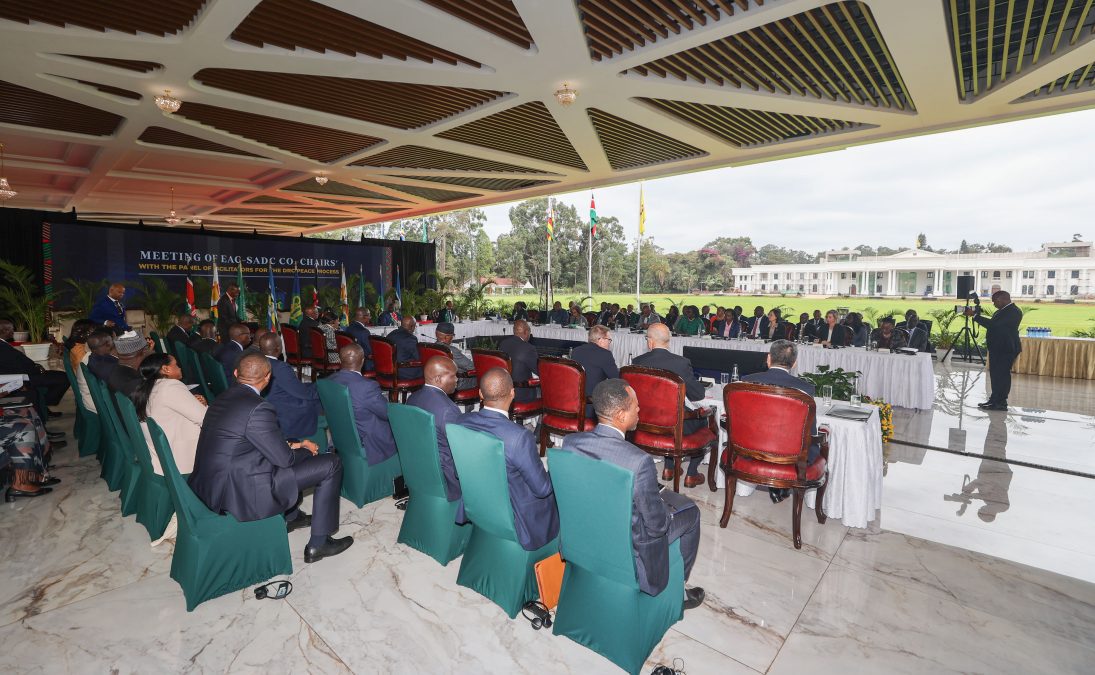
Former President Catherine Samba-Panza, speaking on behalf of the Panel, remarked: “This is a rare moment where history, political will, and leadership converge. We must act with precision and compassion. The people of eastern Congo deserve no less.”
EAC-SADC truce
For years, eastern DRC has been mired in a complex web of armed conflicts involving over 100 militia groups, fueled by mineral wealth, historical grievances, and regional tensions. Previous mediation efforts, though noble, suffered from overlap, competition, and lack of coordination between the EAC’s Nairobi Process and the SADC-backed Luanda Process.
Today’s joint framework breaks that deadlock.
“The urgency of the situation leaves us no room for parallelism or division. We are determined to speak in one voice and act as one hand,” SADC Chair Mnangagwa.
The communique also directs the AUC to immediately inform all stakeholders, including the UN and international donors, to align under the African-led process. An Extraordinary Virtual Joint Summit is expected within seven days to formalise and disseminate the resolutions.
Meanwhile, resource mobilisation will begin immediately, with a focus on humanitarian relief, demobilisation programs, and long-term stabilisation.
Unlike past summits heavy on promises and light on implementation, today’s outcome is built on a robust architecture: a clearly defined facilitation panel, operational secretariat, structured mediation process, and central resource pool.
“Let today be remembered not just for what we said, but for what we dared to do together,” it said.