Advertisement
Ledama criticises NACADA over latest ban
30th July, 2025 06:21 PM

Narok Senator Ledama Ole Kina has joined other Kenyans in expressing his opposition to the recent proposal by the National Authority for the Campaign Against Alcohol and Drug Abuse (NACADA) to ban online alcohol advertising.
In a statement shared on Wednesday, July 30, 2025, the senator argued that the proposal is not a practical solution and would have far-reaching economic consequences.
He stressed the need for a balanced approach rather than imposing outright bans, noting that such measures could affect tax revenue, disrupt businesses, and lead to potential job losses in the industry.
Senator Ledama also pointed out that any regulations regarding alcohol advertising should take into account the interests of consumers. He called on NACADA to engage with stakeholders and adopt policies that reflect the realities of a modern, secular society while promoting responsible consumption.
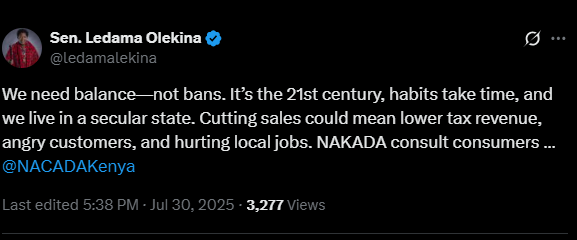
“We need balance—not bans. It’s the 21st century, habits take time, and we live in a secular state. Cutting sales could mean lower tax revenue, angry customers, and hurting local jobs. NAKADA consults consumers,” Ledama said.
NACADA
This reaction by the senator comes on the heels of NACADA coming up with sweeping reforms aimed at changing how alcohol and its products are handled.
According to the proposal by NACADA, only individuals above the age of 25 may appear in alcohol-related adverts. The authority further wants to outlaw lifestyle marketing of alcohol, saying advertising should not glamorise drinking or portray it as aspirational.

Advertising during watershed hours between 5:00 am and 10:00 pm will be prohibited. This includes content on audio-visual platforms, foreign broadcasts, and digital channels. Films, music videos, and performances that show alcohol or substance use in a positive light will be restricted from appearing in print and electronic media.
The policy will also make it illegal to advertise or sponsor events targeting people under the age of 21. Alcohol marketing at schools, universities, or youth-related events such as sports, entertainment, or arts competitions will be banned entirely. Outdoor alcohol advertisements will be subjected to stricter regulations, including a ban on adverts within 300 metres of schools, hospitals, residential areas, and government buildings.
In addition, all alcohol advertisements will be required to present only factual information. They will be forbidden from emphasising the strength or merits of alcohol, undermining abstinence, or portraying drinking as a lifestyle.
Alcohol manufacturers
Packaging regulations are also set to change. Alcohol manufacturers will be required to display clear health warnings and ingredient lists. A minimum packaging size of 250 millilitres will be introduced to help eliminate the production and sale of cheap, high-alcohol sachets and small bottles.
Lastly, the policy proposes an overhaul of alcohol licensing in Kenya. Only the national government will be allowed to issue licences for the manufacture, import, export, and distribution of alcohol. The number and location of outlets will be restricted, particularly in residential areas and educational institutions.