Advertisement
Butita to NACADA: Banning influencers would not solve alcohol abuse
30th July, 2025 05:55 PM

Kenyan comedian, scriptwriter, and filmmaker Eddie Butita has come out against the National Authority for the Campaign Against Alcohol and Drug Abuse (NACADA)’s recent proposal to ban online alcohol advertising and restrict the use of celebrities, influencers, and public figures in alcohol marketing.
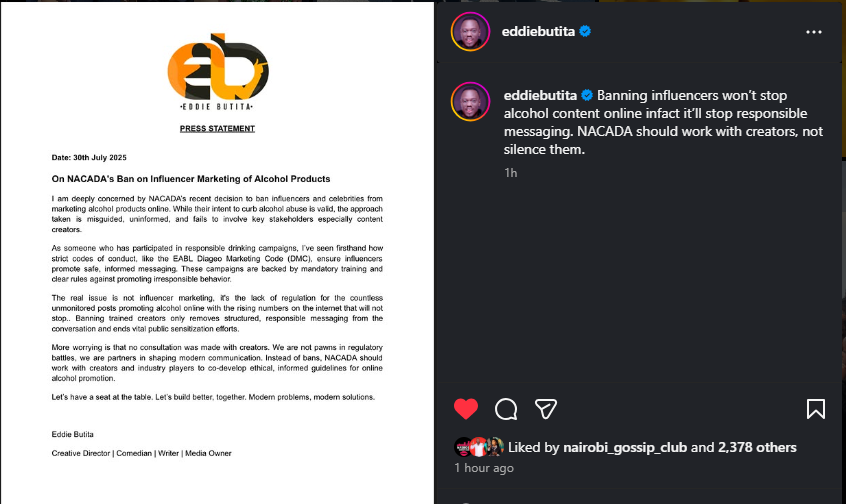
In an official statement posted on his official social media page on Wednesday, July 30, 2025, Butita called the move misguided, uninformed, and exclusionary.
“I am deeply concerned by NACADA’s recent decision to ban influencers and celebrities from marketing alcohol products online. While their intent to curb alcohol abuse is valid, the approach taken is misguided, uninformed, and fails to involve key stakeholders, especially content creators,” Butita stated.
He went on to explain that influencers and content creators have played a significant role in promoting responsible alcohol consumption through structured campaigns.
“As someone who has participated in responsible drinking campaigns, I’ve seen firsthand how strict codes of conduct, like the EABL Diageo Marketing Code (DMC), ensure influencers promote safe, informed messaging. These campaigns are backed by mandatory training and clear rules against promoting irresponsible behaviour,” he added.
Butita pointed out that the real problem lies in unregulated, random content on the internet, not professionally run campaigns.
“The real issue is not influencer marketing, it’s the lack of regulation for the countless unmonitored posts promoting alcohol online, with the rising numbers on the internet that will not stop,” he said. “Banning trained creators only removes structured, responsible messaging from the conversation and ends vital public sensitisation efforts.”
The popular entertainer also raised concerns about the lack of consultation between NACADA and the creative industry.
“More worrying is that no consultation was made with creators. We are not pawns in regulatory battles, we are partners in shaping modern communication,” he said.
Adding;
“Instead of bans, NACADA should work with creators and industry players to co-develop ethical, informed guidelines for online alcohol promotion. Let’s have a seat at the table. Let’s build better, together. Modern problems, modern solutions.”
Stringent measures
Butita’s statement comes on the same day the Ministry of Interior unveiled a tough new national policy on alcohol and drug abuse. The proposals aim to combat the rising cases of substance abuse by introducing sweeping restrictions on the sale, marketing, and consumption of alcohol.
According to the policy, online sales and home deliveries of alcohol will be banned. Hawking and vending machines will also no longer be permitted to distribute alcohol. Alcohol will not be sold in supermarkets, petrol stations, restaurants, or in residential areas and near learning institutions.
The proposals seek to raise the legal drinking age from 18 to 21. Individuals under the age of 21 would be prohibited from accessing alcohol-selling outlets, even when accompanied by adults. Additionally, anyone accompanied by a child or found with offensive weapons will be barred from purchasing alcohol.
NACADA also wants to ban the use of public figures such as musicians, actors, athletes, media personalities, and influencers in alcohol advertising.
According to the proposal, only individuals above the age of 25 may appear in alcohol-related adverts. The authority further wants to outlaw lifestyle marketing of alcohol, saying advertising should not glamorise drinking or portray it as aspirational.
Advertising during watershed hours between 5:00 am and 10:00 pm. will be prohibited. This includes content on audio-visual platforms, foreign broadcasts, and digital channels. Films, music videos, and performances that show alcohol or substance use in a positive light will be restricted from appearing in print and electronic media.
The policy will also make it illegal to advertise or sponsor events targeting people under the age of 21. Alcohol marketing at schools, universities, or youth-related events such as sports, entertainment, or arts competitions will be banned entirely. Outdoor alcohol advertisements will be subjected to stricter regulations, including a ban on adverts within 300 metres of schools, hospitals, residential areas, and government buildings.
In addition, all alcohol advertisements will be required to present only factual information. They will be forbidden from emphasising the strength or merits of alcohol, undermining abstinence, or portraying drinking as a lifestyle.
Packaging regulations are also set to change. Alcohol manufacturers will be required to display clear health warnings and ingredient lists. A minimum packaging size of 250 millilitres will be introduced to help eliminate the production and sale of cheap, high-alcohol sachets and small bottles.
Lastly, the policy proposes an overhaul of alcohol licensing in Kenya. Only the national government will be allowed to issue licenses for the manufacture, import, export, and distribution of alcohol. The number and location of outlets will be restricted, particularly in residential areas and educational institutions.