Advertisement
KWS calls for vigilance as bushmeat poaching persists
18th July, 2025 11:08 AM
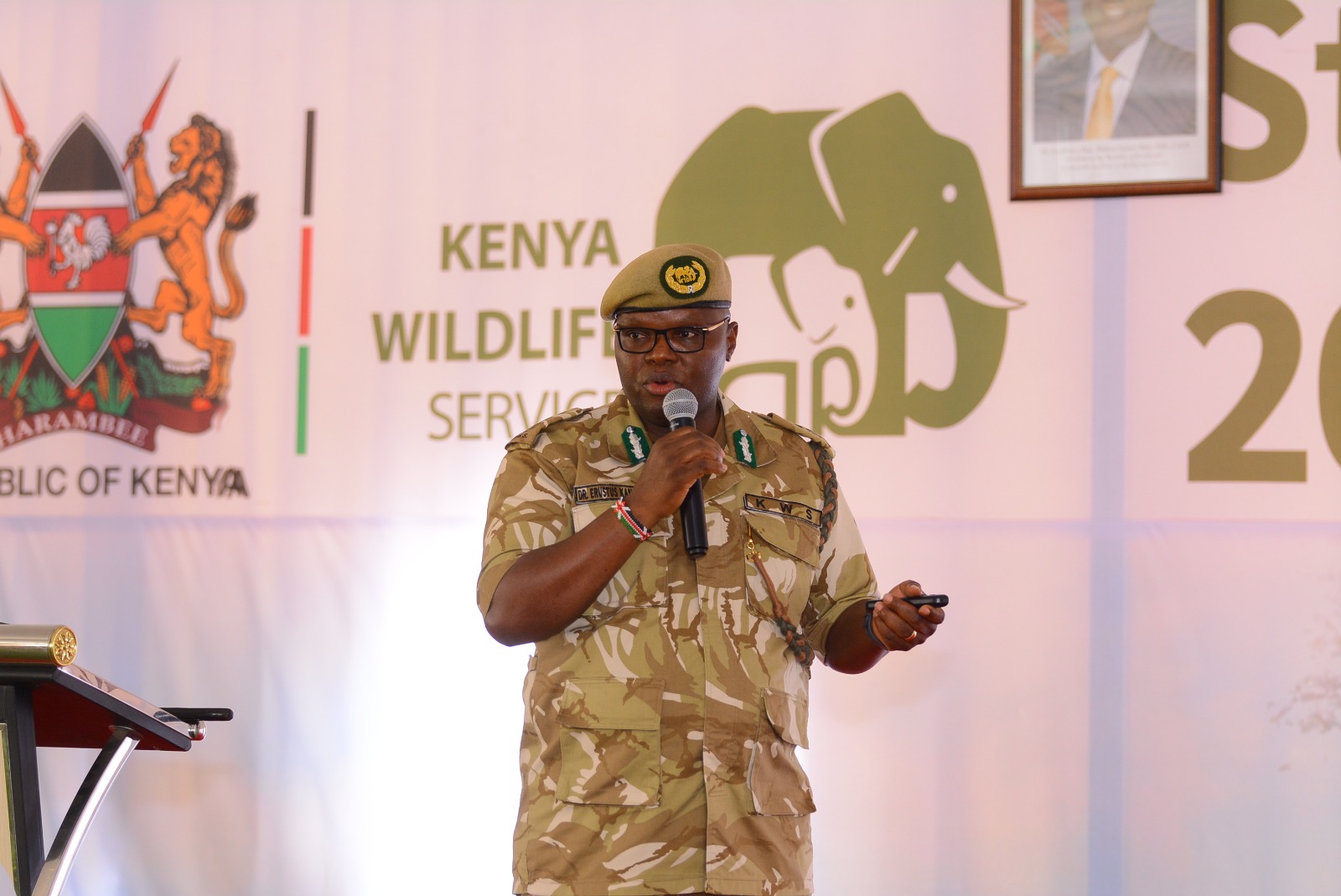
The Kenya Wildlife Service (KWS) has sounded the alarm over the rising threat of bushmeat poaching after a dramatic rescue operation in Meru National Park saved a young female buffalo from a deadly wire snare.
The incident occurred on Thursday evening near the Lower Mughwango Swamp when Mohammed Boru, Head Guide at Elsa’s Kopje Meru, spotted the distressed buffalo struggling to move. Her hind leg was trapped in a wire snare attached to a heavy log, a cruel poaching tactic designed to exhaust and kill wildlife.
“Every step was agonising. She was slowing down. She was suffering,” Boru recounted in an X post dated July 18, 2025.
The KWS team, working alongside the Sheldrick Wildlife Trust (SWT) Meru Mobile Veterinary Unit, responded swiftly. With daylight fading and a massive herd of over 200 buffaloes nearby, rescuers had to act quickly but carefully to avoid stampeding the animals.
“Through patience and skill, the team created a safe window to dart and treat her. Remarkably, the herd stood calmly nearby, as if watching over her, sensing that help had arrived,” KWS said in a statement.
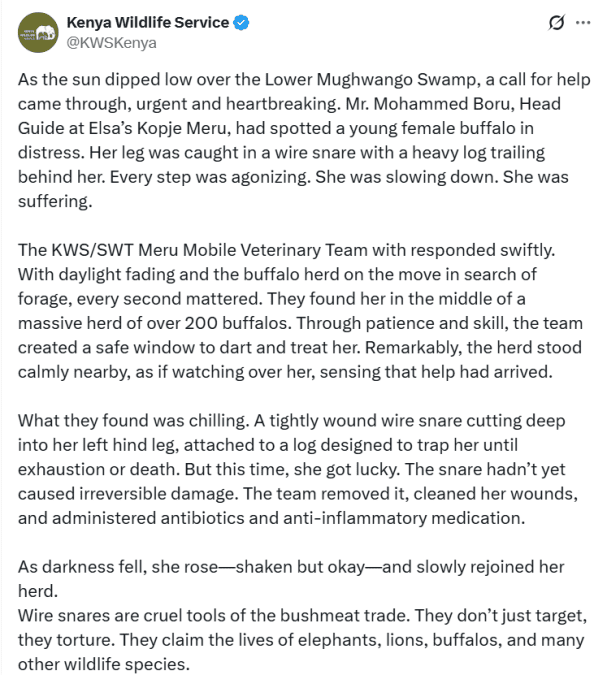
Upon close inspection, the veterinary team found that the snare had cut deep into the buffalo’s left hind leg. Fortunately, the injury was not yet fatal. The team successfully removed the wire, cleaned the wounds, and administered antibiotics and anti-inflammatory drugs. As night fell, the buffalo rose to her feet—shaken but stable—and rejoined her herd.
KWS says the incident is a stark reminder of the brutality of bushmeat poaching, which continues to threaten Kenya’s wildlife. Wire snares are commonly used by poachers targeting animals for meat. However, these traps are indiscriminate, injuring and killing elephants, lions, buffaloes, and many other species.
“Wire snares are cruel tools of the bushmeat trade. They don’t just kill; they torture. They cause slow, agonizing deaths and pose a major conservation challenge,” KWS warned.
The wildlife agency is now calling on the public to report any cases of animals in distress. KWS has urged communities to use the toll-free line 0800 597 000 or WhatsApp 0726 610509 to report emergencies.
“This rescue was a success, but the broader fight against poaching continues,” KWS added, appealing for increased vigilance and support from the public to help protect Kenya’s natural heritage.
Kenya remains a global conservation hotspot, but officials warn that continued poaching could erode decades of wildlife protection efforts.