Advertisement
KWS rescues injured giraffe trapped in wire snare at Athi Kapiti Ranch
08th July, 2026 11:42 AM
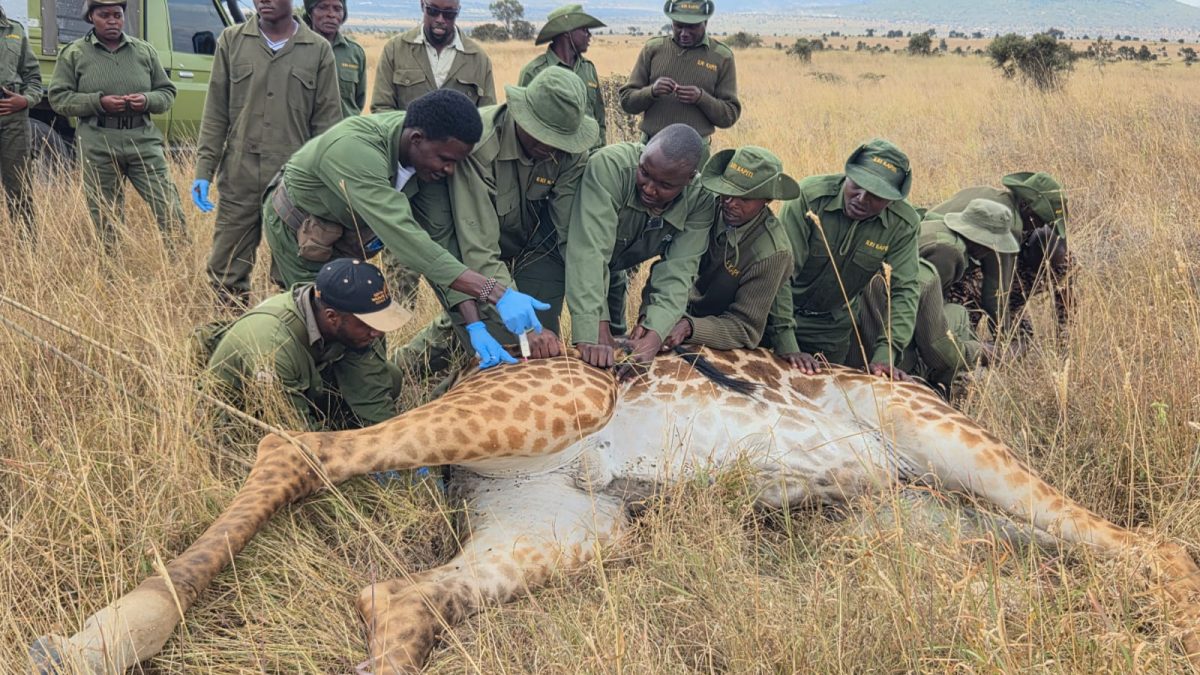
The Kenya Wildlife Service (KWS) has rescued and treated an adult male Maasai giraffe after it was found with a wire snare tightly wrapped around its right hind limb at the ILRI Athi Kapiti Ranch.
In a statement posted on their X page on Wednesday, July 8, 2026, the KWS said the Headquarters Veterinary Unit responded after an alert was raised over the animal’s condition, moving quickly to the ranch to remove the plain wire snare and treat the injury.
According to KWS, the giraffe has a good chance of recovering following the treatment.
“Responding swiftly, the KWS HQ Veterinary Unit safely removed the snare, treated the injury, and gave this magnificent giraffe a second chance,” KWS said in an update on the rescue.
A threat hidden in the wild
Wire snares remain one of the dangers facing wildlife in Kenya, especially in areas where animals move between protected parks, conservancies and private ranches.
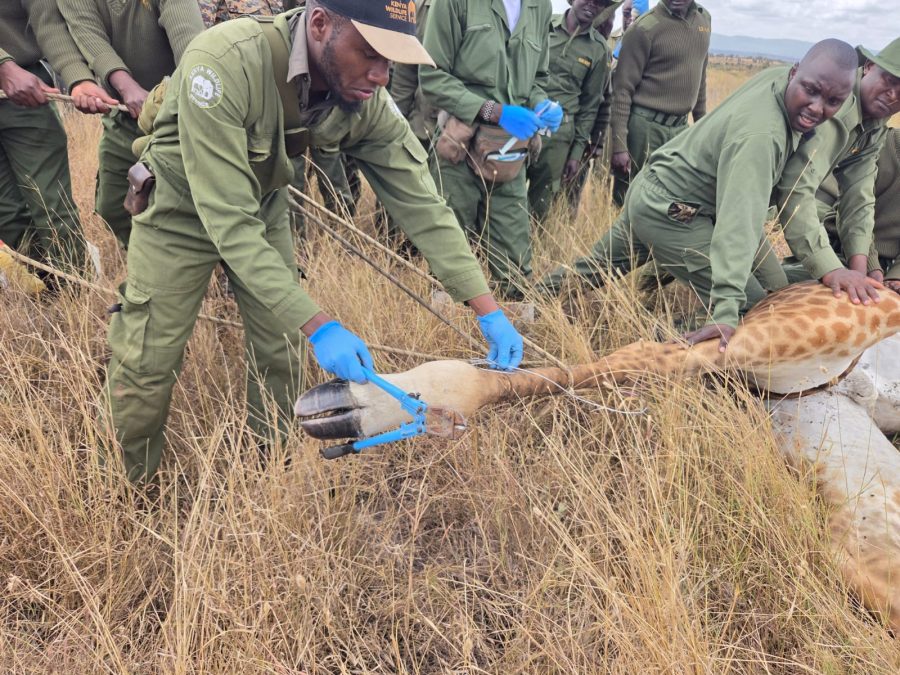
The devices are often set illegally to trap animals, but they do not discriminate. Large animals such as giraffes, zebras, antelopes and elephants can become caught in them while moving through grazing areas.
In many cases, a snare can tighten around an animal’s leg, neck or body as it struggles to break free. If not discovered in time, the injury can lead to severe wounds, infections or death.
The rescue at Athi Kapiti Ranch has once again drawn attention to the role played by wildlife veterinary teams in responding to emergencies involving injured animals.
KWS said its veterinarians work around the clock to treat wildlife caught in snares, injured in human-wildlife conflict incidents or affected by other threats in their habitats.
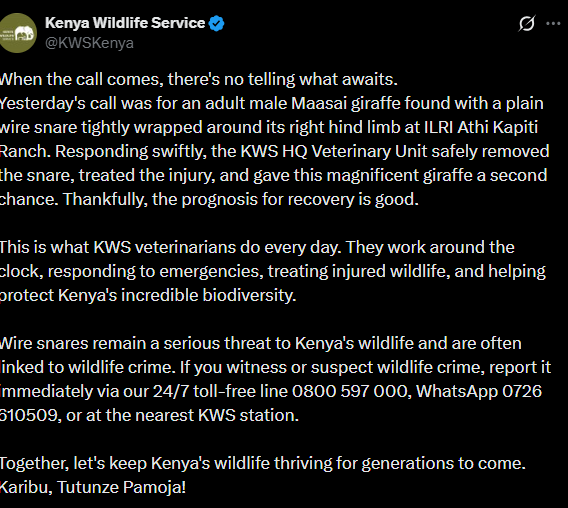
“This is what KWS veterinarians do every day. They work around the clock, responding to emergencies, treating injured wildlife, and helping protect Kenya’s incredible biodiversity,” the agency said.
Why Athi Kapiti matters
The Athi Kapiti ecosystem is an important wildlife dispersal area linking Nairobi National Park with the wider Amboseli ecosystem. It supports a range of wildlife species, including Maasai giraffes, zebras, antelopes and ostriches.
The International Livestock Research Institute has previously noted that its Kapiti conservancy hosts dozens of wildlife species, including Maasai giraffes, while regular wildlife counts help track animal populations and movement in the area.
However, the ecosystem continues to face pressure from habitat loss, fencing, infrastructure development, poaching and changing land use.
KWS has identified poaching and habitat fragmentation among the threats affecting giraffes in the Nairobi-Athi Kapiti ecosystem, making quick reporting of injured wildlife and suspected crime important.

Public urged to report wildlife crime
KWS has urged members of the public to report any suspected wildlife crime, including illegal snares, poaching and injured animals. Members of the public can contact KWS through its 24-hour toll-free line 0800 597 000, WhatsApp line 0726 610509 or report to the nearest KWS station.
The successful rescue offers a reminder that early action can make a difference for wildlife caught in dangerous traps. KWS said protecting wildlife requires cooperation between conservation officers, landowners and members of the public.