How Nepal’s Gen Z used gaming app Discord to pick prime minister
By Al Jazeera, September 15, 2025As Nepal burned on Thursday, September 11, 2025, after two days of deadly unrest that ousted a government accused of corruption, thousands of young people gathered in a heated debate to decide their nation’s next leader.
To them, the country’s mainstream politicians across the major parties were discredited: 14 governments representing three parties have taken turns at governing since 2008, when Nepal adopted a new constitution after abolishing its monarchy.
But in the wake of a brutal crackdown on protesters by security forces that killed at least 72 people, their trust in the country’s political system itself had been shattered. They wanted to select a consensus leader who would steer the country of 30 million people out of chaos and take steps towards stamping out corruption and nepotism. Just not in the way countries usually pick their heads.
So, they chose Nepal’s next leader in a manner unprecedented for any electoral democracy, through a virtual poll on Discord, a United States-based free messaging platform mainly used by online gamers.
The online huddle was organised by Hami Nepal, a Gen Z group behind the protest with more than 160,000 members.
Hami Nepal ran a channel on the platform called Youth Against Corruption, where a fiery debate on the country’s future brought together more than 10,000 people, including many from the Nepali diaspora. As more people tried to log in and failed, a mirrored livestream was held on YouTube to allow about 6,000 more people to see the debate.
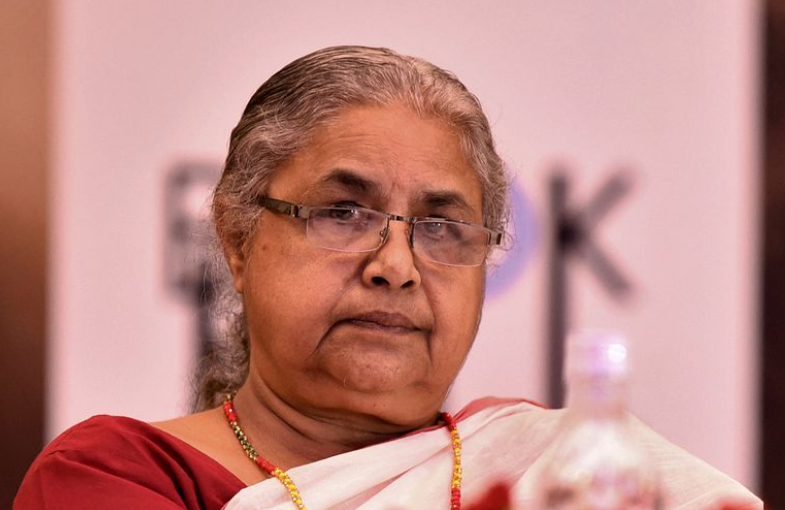
After hours of debate that included difficult questions for protest leaders and attempts at reaching out to potential prime minister candidates in real time, the participants chose former Supreme Court Chief Justice Sushila Karki to lead Nepal. The 73-year-old took the oath of office as the country’s interim prime minister on Friday, September 12, 2025.
But Nepal’s transition is only beginning, say analysts, and the approach protesters took to choose the country’s leader only underscores how a chaotic new experiment in democracy appears to be underway, with rewards as well as risks.
Trying to figure it out together
The Discord debate was a revolutionary counter to the traditional practice of politicians choosing leaders behind closed doors, which had displayed little transparency, say supporters of the Discord approach.
Discord enables users to connect through texts, voice calls, video calls and media sharing. It also allows communication through direct messages or within community spaces known as servers. It was one of the platforms banned by the government earlier this month alongside two dozen other popular applications, including Instagram, Twitter and YouTube.
The ban, protesters said, was the last straw that spiralled into a nationwide movement against Prime Minister KP Sharma Oli’s government. The demonstrators accused it of being unrepresentative of young people, as well as of widespread corruption and nepotism.
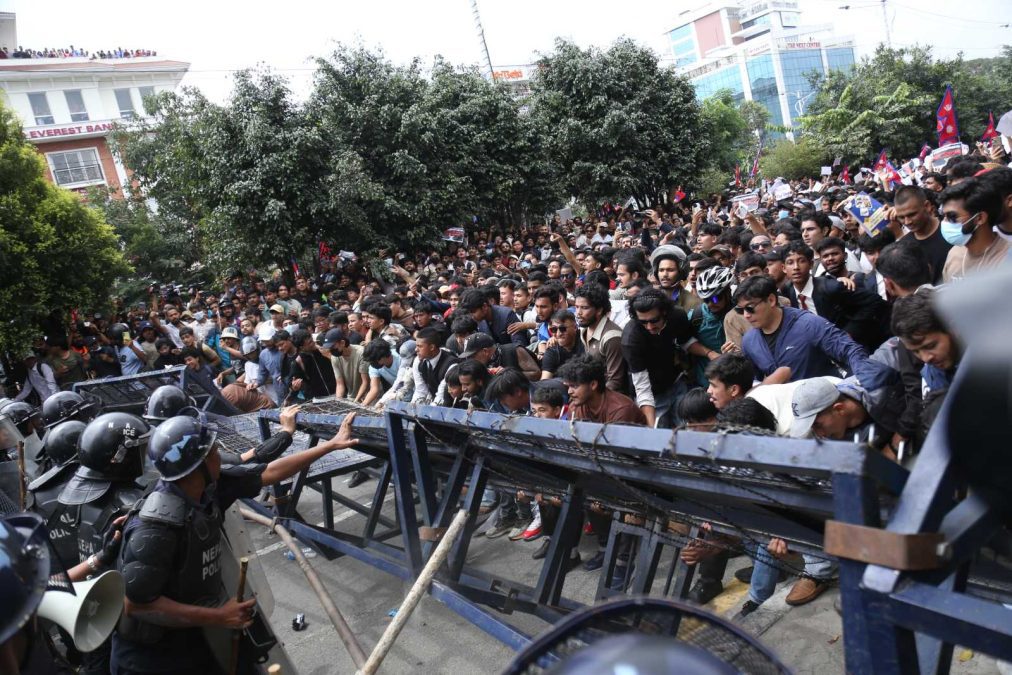
Tens of thousands of young protesters hit the streets on Tuesday, September 9, 2025, torching government buildings, including the parliament and residences of top politicians, and forcing Oli to resign. President Ramchandra Paudel dissolved parliament and called for a general election.
By then, Nepal’s Gen Z protesters had turned to Discord to decide who should lead their nation until March 2026. The social media ban was lifted after the killings earlier in the week.
Virtual polls on mobile screens allowed participants to nominate their interim leader in real time, marking a radical experiment in digital democracy.
“People were learning as they went,” said 25-year-old law graduate Regina Basnet, a protester who had then joined the Discord debate. “Many of us didn’t know what it meant to dissolve parliament or form an interim government. But we were asking questions, getting answers from experts, and trying to figure it out together.”
The discussion revolved around a wide range of issues Nepal must battle now, including jobs, police and university reforms, as well as the state of government healthcare, as the moderators urged the participants to focus on the main question before them: the next leader.
Five names were shortlisted for the final voting: Harka Sampang, a social activist and mayor of the eastern city of Dharan; Mahabir Pun, a popular social activist running the National Innovation Centre; Sagar Dhakal, an independent politician who ran against the powerful Nepali Congress leader, Sher Bahadur Deuba, in 2022; advocate Rastra Bimochan Timalsina, also known as Random Nepali on his YouTube channel, who has been advising the Gen Z protesters; and Karki.
The situation that I have come in, I did not wish to come here. My name was brought from the streets,” she said in an address to the nation after assuming office. “We will not stay here more than six months in any situation. We will complete our responsibilities and pledge to hand over to the next parliament and ministers.”
Many people who took part in the Discord debate also suggested Balen Shah, the popular rapper-turned-mayor of Kathmandu, as their choice for interim prime minister. The Hami Nepal moderators informed the participants that they could not reach Shah, who later posted his endorsement of Karki on social media.
The Gen Z organisers also debunked claims that former King Gyanendra had met the protesters. It was found that an old video of Nepal’s last monarch interacting with youngsters was being shared on social media.
It was also discovered that multiple social media handles and profiles claiming to be the “official” youth movement had contributed to some confusion on the ground. A Gen Z leader was even seen calling a Nepalese military officer on the phone, warning him against potential royal interference in the formation of the next government.
Rana, the journalist, said the protest leaders made good use of technology, “something that Gen Z is best at”.
“This is the future. We can either remain in the days of giving speeches on stages with mics or get used to talking freely on online platforms,” he told Al Jazeera.
“Gen Z is naive, but that’s to be expected. They are young, but they have shown a willingness to learn, and that’s the important part.”