Advertisement
EACC Survey: Most Kenyans believe corruption will end if culprits are jailed
05th August, 2025 06:46 PM

A majority of Kenyans believe that corruption and unethical conduct in the country would significantly reduce if those found guilty were sent to jail.
This is according to the 2024 National Ethics and Corruption Survey released by the Ethics and Anti-Corruption Commission (EACC) on Tuesday, August 5, 2025.
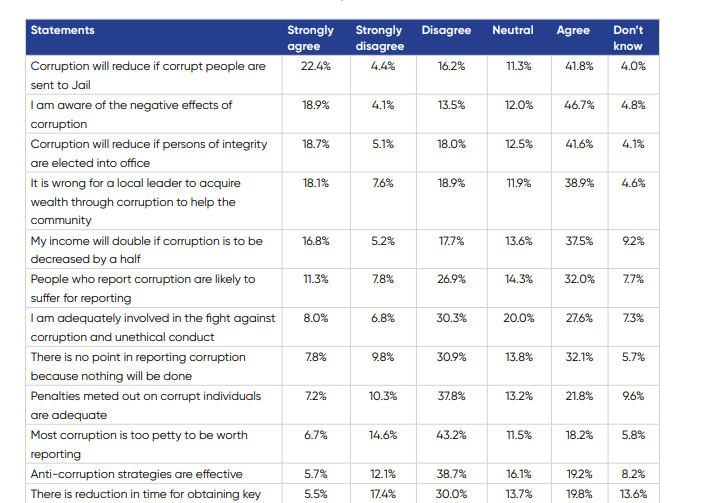
The report shows that 22.4 percent of respondents strongly agreed that imprisoning perpetrators of corruption would help curb the vice.
An equal proportion, 18.7 percent, strongly agreed that increased public awareness of the negative impacts of corruption and electing leaders of integrity would also help reduce unethical practices.
Another 18.1% strongly rejected the idea that it is acceptable for a local leader to enrich themselves through corruption for the benefit of their community.
“ Twenty-two percent of the respondents (22.4%) strongly agreed that unethical conduct and corruption will reduce if the culprits are sent to jail, 18.7 percent strongly agreed that they were aware of the negative effects of unethical conduct and corruption, 18.7 percent strongly agreed that unethical conduct and corruption will reduce if persons of integrity are elected into office, and 18.1 percent strongly agreed that it is wrong for a local leader to acquire wealth through corruption to help the community,” the report showed.
Other findings
However, the survey also revealed deep public scepticism about the commitment of elected officials to tackling corruption.
“26.4 percent of the respondents strongly disagreed that there is demonstrated credible intent by Members of Parliament to tackle causes and effects of corruption effectively, and 24.1 percent strongly disagreed that there is a reduction in the real costs of obtaining key government services.”
Similarly, 21 percent strongly disagreed that there is demonstrated credible intent by MCA’s to tackle causes and effects of corruption effectively, 20.4 percent strongly disagreed that it is right for an election candidate to give a small gift in exchange for a vote, 19.4 percent strongly disagreed that there is demonstrated credible intent by governors to tackle causes and effects of corruption effectively and 19.3 percent strongly disagreed that unethical conduct and corruption are acceptable ways of doing things/culture.