Advertisement
EACC boss David Oginde defends lighter fines slapped on some high-profile cases
12th August, 2025 09:09 AM
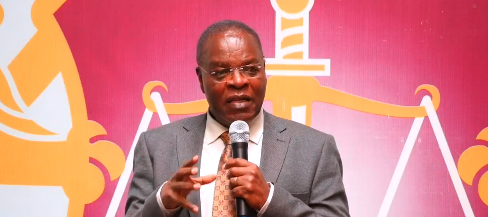
The Ethics and Anti-Corruption Commission (EACC) chairman, David Oginde, has explained why those involved in high-profile graft appear to pay lighter fines.
Speaking to one of the local TV stations on Tuesday, August 12, 2025, Oginde said the practice is not meant to be “a slap on the wrist” but part of a legal process known as plea bargaining.
“It is not normally a slap on the wrist when a person who stole huge money is forced to pay a portion of it,” Oginde said.
“This is something called plea bargaining. It is where a person has accepted, yes, there is a wrong that happened, and prosecutors and lawyers can enter into a bargain to prevent the case from dragging on in courts for years.”
How plea bargaining works
Oginde gave a practical example, saying, “Let’s say, for instance, one stole Ksh500 million and at the moment you don’t have it, what do we do? We agree on how you will pay the money in instalments.”
He added that the commission focuses on recovering what was taken by checking whether a suspect could have legally acquired the property in question.
“If we do the mathematics and calculate and establish that you couldn’t manage to put the property using your legal financial ability, then we recover it,” he explained.
Focus on recovery, not revenge
Oginde stressed that this process allows recovery without unnecessarily destroying livelihoods.
“You continue to live your life, and we recover the wealth,” he said.
He noted that while the public often sees such settlements as letting suspects off lightly, they are a practical way to ensure that stolen money or property is returned to the people.
“Our aim is not just to punish but to get back what belongs to the public,” he said.
Oginde concluded by assuring Kenyans that the EACC uses “clear calculations and legal checks” to ensure that the process is fair, transparent, and beneficial to the country.