Advertisement
Role of social media and technology in shaping Kenya’s third liberation movement
08th July, 2025 07:02 AM

Kenya stands at the cusp of a transformative era—one driven not by the barrel of a gun or fiery political rhetoric, but by the ingenuity of its youth and the boundless reach of technology.
The Third Liberation movement—following the fight for independence and the push for multiparty democracy in the 1990s—is unfolding in real time. It is powered by social media platforms and digital tools, fuelled by the frustrations of a generation that has turned protest into innovation.
This movement, defined by its decentralised and tech-savvy nature, is rewriting the script of civic engagement. At its heart are smart, innovative young Kenyans leveraging technology to dismantle systemic barriers.
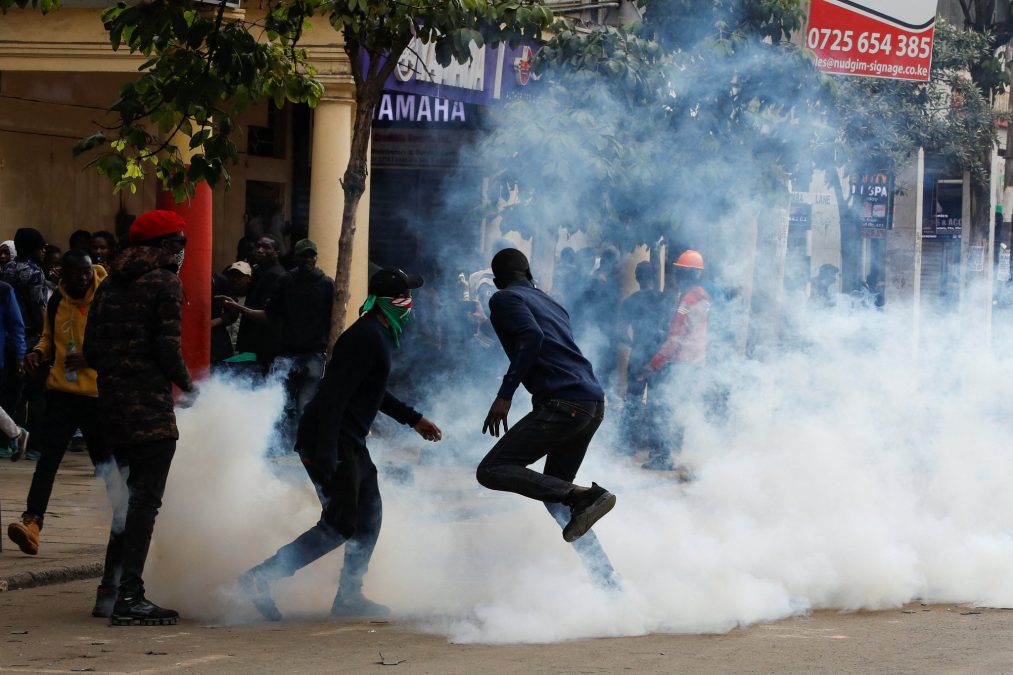
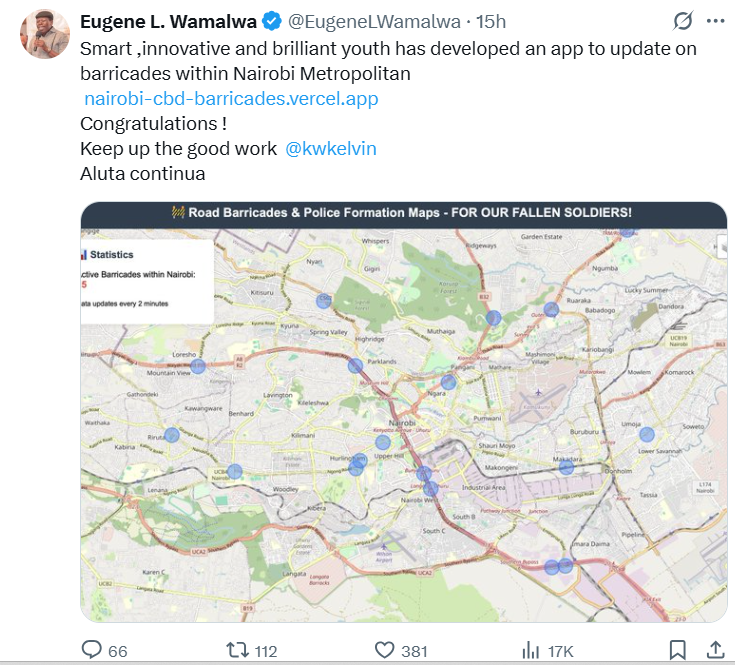
A standout moment occurred during the July 7, 2025, Saba Saba protests, when a live barricade tracking app went viral for helping Nairobi residents navigate around police roadblocks. The app—nairobi-cbd-barricades.vercel.app—symbolised a powerful shift: a generation using code and connectivity to reclaim space and amplify their voice.
Movement marked by innovation
The historical weight of Saba Saba—the day Kenya’s pro-democracy wave surged in 1990—was not lost on today’s youth. On its 35th anniversary, a tech enthusiast launched “Barricades Nairobi,” a real-time, crowdsourced platform tracking road closures and police presence across Nairobi’s CBD. The app, which updates every two minutes, quickly became a lifeline for protesters and commuters caught in the chaos.
From Thika Superhighway to Mombasa Road and Waiyaki Way, the app’s clean, interactive interface flagged flashpoints and enabled safe rerouting. Built using Vercel’s AI SDK and deployment tools, it was not just a tool but a testament to the power of local ingenuity backed by global infrastructure. The speed of its rollout—and the precision of its updates—reflected how accessible tools have democratised problem-solving. In a city effectively under siege, innovation became a form of resistance.
The app trended across platforms like X (formerly Twitter), with users such as @EugeneLWamalwa and @PropesaTV praising its developer, @kwkelvin, for outsmarting state tactics. #SabaSaba2025 and #77NiNumbers dominated timelines, feeding into a digital consciousness that traditional media could neither suppress nor spin.
A standout moment was highlighted by DAP-K leader Eugene Wamalwa, who celebrated the ingenuity of @kwkelvin, the developer behind a real-time barricade tracking app accessible via nairobi-cbd-barricades.vercel.app. Launched in the heat of the disruption, the app provided live updates on roadblocks across the Nairobi Metropolitan area, offering clarity and safety in a moment of national uncertainty.
This digital response embodied the spirit of Aluta continua—the struggle continues—resonating powerfully on the 35th anniversary of the historic 1990 Saba Saba pro-democracy protests.
Social media, third liberation
Unlike previous liberation waves led by politicians or civic organisations, this one thrives on leaderless, organic, and digital-first mobilisation. Social media platforms—particularly X, TikTok, and Instagram—have become command centres for organising, documenting, and resisting.
Viral infographics, live streams, and protest memes now carry more weight than party slogans. Youth have turned platforms into classrooms and battlegrounds, educating peers on constitutional rights, exposing injustices, and coordinating real-time strategies.
On July 7, when access to the CBD was throttled and razor-wire barricades blocked key roads, it was these platforms that helped people reroute, regroup, and rally.
Crucially, these digital spaces have also provided real-time accountability. As Deputy Inspector General Gilbert Masengeli claimed the CBD remained open, firsthand accounts and videos on X revealed otherwise.
People posted photos of blocked highways, trekked journeys, and restricted access—painting a raw, unfiltered portrait of life under state clampdown.
This is the difference: social media doesn’t just report events; it challenges power. And for Kenya’s Gen Z, it is the air they breathe—an ecosystem of resistance, creativity, and solidarity.
Coding the Future: What Comes Next?
The barricades app is more than just a clever hack. It represents the potential of civic tech in reshaping governance, accountability, and national identity. Its existence says, “We see you, we’re here, and we won’t be silenced.”
But with that potential comes pushback. Internet throttling, state surveillance, and digital intimidation have grown in tandem with tech-savvy protests.
Sabasaba 2025 revealed the state’s discomfort with a generation that no longer waits for change but codes it into existence. This only reinforces the need for digital literacy, cybersecurity training, and legal protections for online activism.
Yet access remains uneven. While urban youth in Nairobi and Mombasa wield smartphones and fibre connections, their rural counterparts are often left out. For this movement to remain inclusive, it must also confront Kenya’s digital divide.
That means investing in tech infrastructure, community training, and policies that support innovation hubs—especially in marginalised areas.
It is equally important to recognise the cultural renaissance powering this revolution. Artists, poets, and musicians have lent their voices to the movement, crafting protest anthems and imagery that echo around the globe. Social media has become their stage, and the Barricades app, with its sleek design and functionality, mirrors this fusion of art and resistance. It is technology with soul—and purpose.
In 1990, Sabasaba was a battle for democracy. In 2025, it is a digital revolution. The youth have swapped fiery speeches for code, machetes for memes, and marches for mapping tools. The barricades app stands as a beacon of this shift, built not by politicians but by ordinary Kenyans refusing to be invisible.
This is the third liberation: borderless, leaderless, and unstoppable. And as the youth continue to tweet, code, and create, one thing is certain—Kenya’s future is no longer being decided in smoke-filled boardrooms but in the fingertips of a connected, conscious generation.