Advertisement
LSK applauds newly elected Charles Kanjama and council
24th February, 2026 01:27 AM
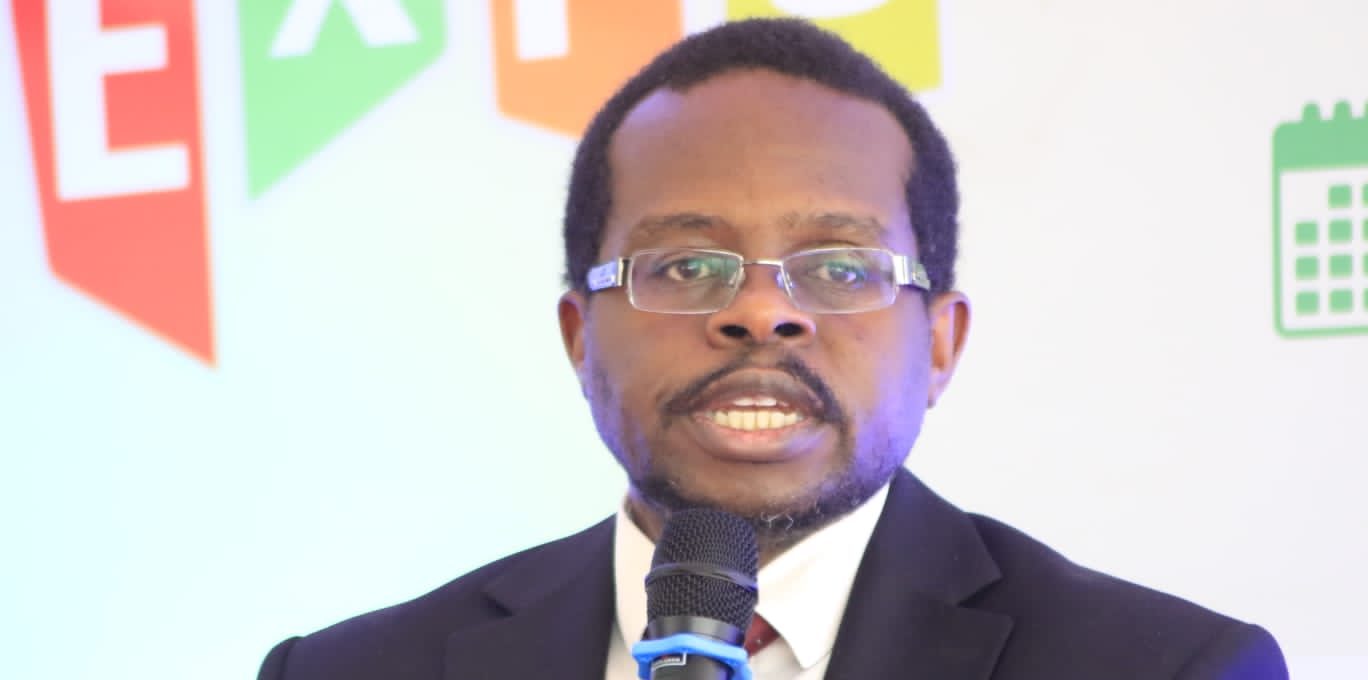
The Law Society of Kenya (LSK) has congratulated Charles Kanjama, the vice president, Nicholas Teresia Wavinye, and the newly elected council members following the successful conclusion of the LSK elections.
The council members include: K’opere Tom Oduo, Eyase Vivienne Mugwari, Wanjohi Wambugu, Kathurima Hiram Kirimi, Mutua Faith Jappann M’edeal, Omollo Hezekiah Asseso, Oyoko Sharon Adhiambo, Effie Sheila Achieng, Gachara Cynthia Muthoni, Odhiambo Wycliffe Oyoo, Mukhutsi Titus Muklanzi, Anditi Stephen Odhiambo, Bett Jackson Kiprotich, and Lweande Yvette Otieno.
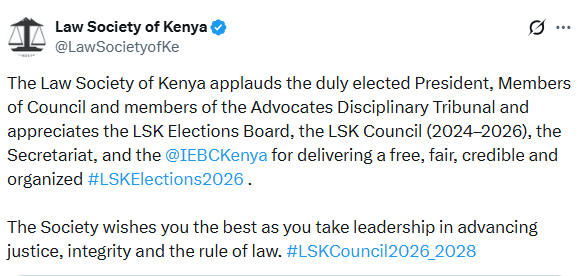
In a statement on Monday, February 24, 2026, the Society commended the LSK Elections Board, the outgoing LSK Council (2024–2026), the Secretariat, and the Independent Electoral and Boundaries Commission for facilitating a free, fair, credible, and well-organized electoral process.
“The Law Society of Kenya applauds the duly elected President, members of the Council, and members of the Advocates Disciplinary Tribunal,” read the statement in part.
LSK Elections
Kanjama was elected as the 52nd president of the Law Society of Kenya (LSK) on February 19, 2026, defeating Peter Wanyama and former LSK Vice Chairperson Mwaura Kabata to win a highly contested seat.
He takes over from Faith Odhiambo, who served as President of the Law Society following her election on March 1, 2024.
Faith leaves a legacy of being at the forefront of fighting for protesters’ right to demonstrate and picket peacefully, without being harassed by law enforcement officers, and the release of protesters detained by the police during the anti-finance bill protests in Kenya.
The Independent Electoral and Boundaries Commission (IEBC) conducted the elections, with over 18,000 registered lawyers expected to vote.
The Law Society of Kenya presidential campaigns were marked by intense scrutiny of candidates’ independence, financial backing, and professional engagements.
Senior Counsel Charles Kanjama, Peter Wanyama, and Mwaura Kabata emerged as equal contenders, each presenting contrasting visions and priorities for the society.
During the campaign, questions were raised about candidates’ perceived closeness to government institutions.

Kanjama faced criticism for his representation of the Judicial Service Commission (JSC), while Wanyama’s frequent work for county governments raised concerns about potential conflicts of interest, particularly ahead of the 2027 general elections.
Kabata, the current vice president, was also questioned over past allegations regarding case withdrawals during his tenure.
During NTV’s LSK presidential debate, Wanyama disclosed spending Ksh12 million on his campaign, funded primarily through personal contributions, support from colleagues, and a small portion from non-advocates.
On the other hand, Kanjama spent Ksh6 million, while Kabata spent Ksh5 million.
Kabata’s manifesto stressed on continuity, modernization, and sustained activism. He highlighted institutional stability, ethics, and experienced leadership.
Wanyama focused on reforms, creating economic opportunities, and practical support for young advocates, including mentoring initiatives and assistance with professional resources.
The campaign period ended on February 17, 2026, concluding weeks of intense lobbying and nationwide engagements by candidates vying to lead the legal fraternity.