Advertisement
How Ruto is using wildlife to shape Kenya’s global image
25th July, 2025 08:30 AM
As millions of wildebeest thundered across the vast plains of the Maasai Mara National Reserve, a different kind of movement was also unfolding, one that wasn’t just about nature, but about national pride and global attention.
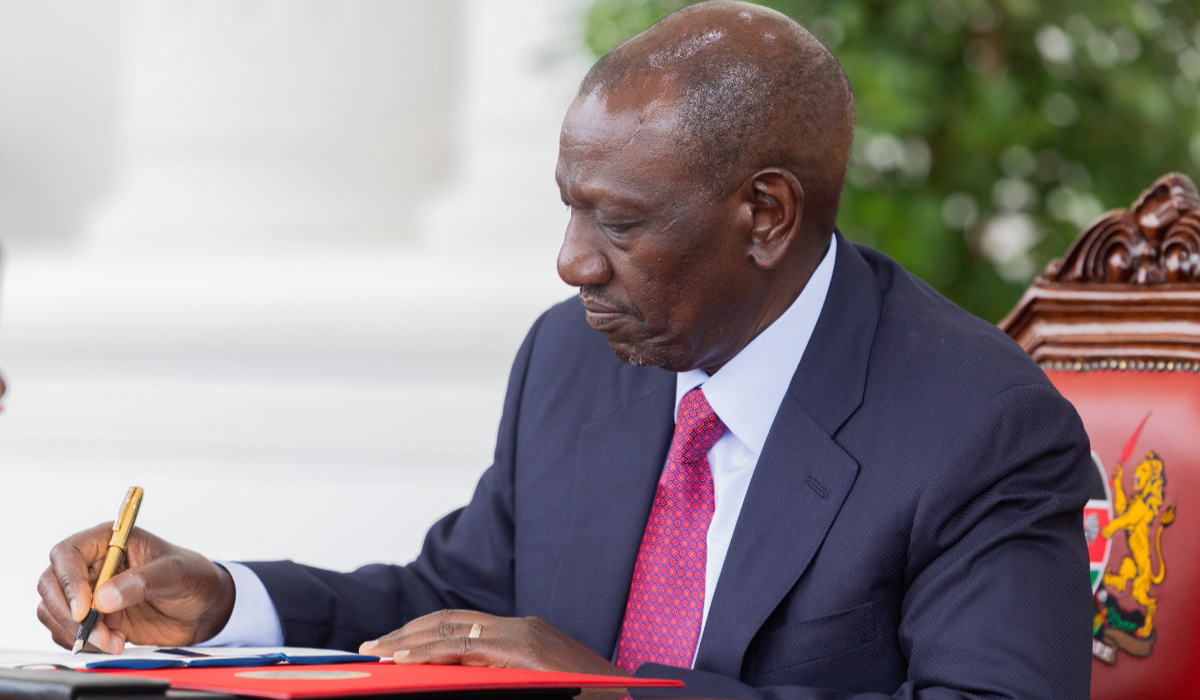
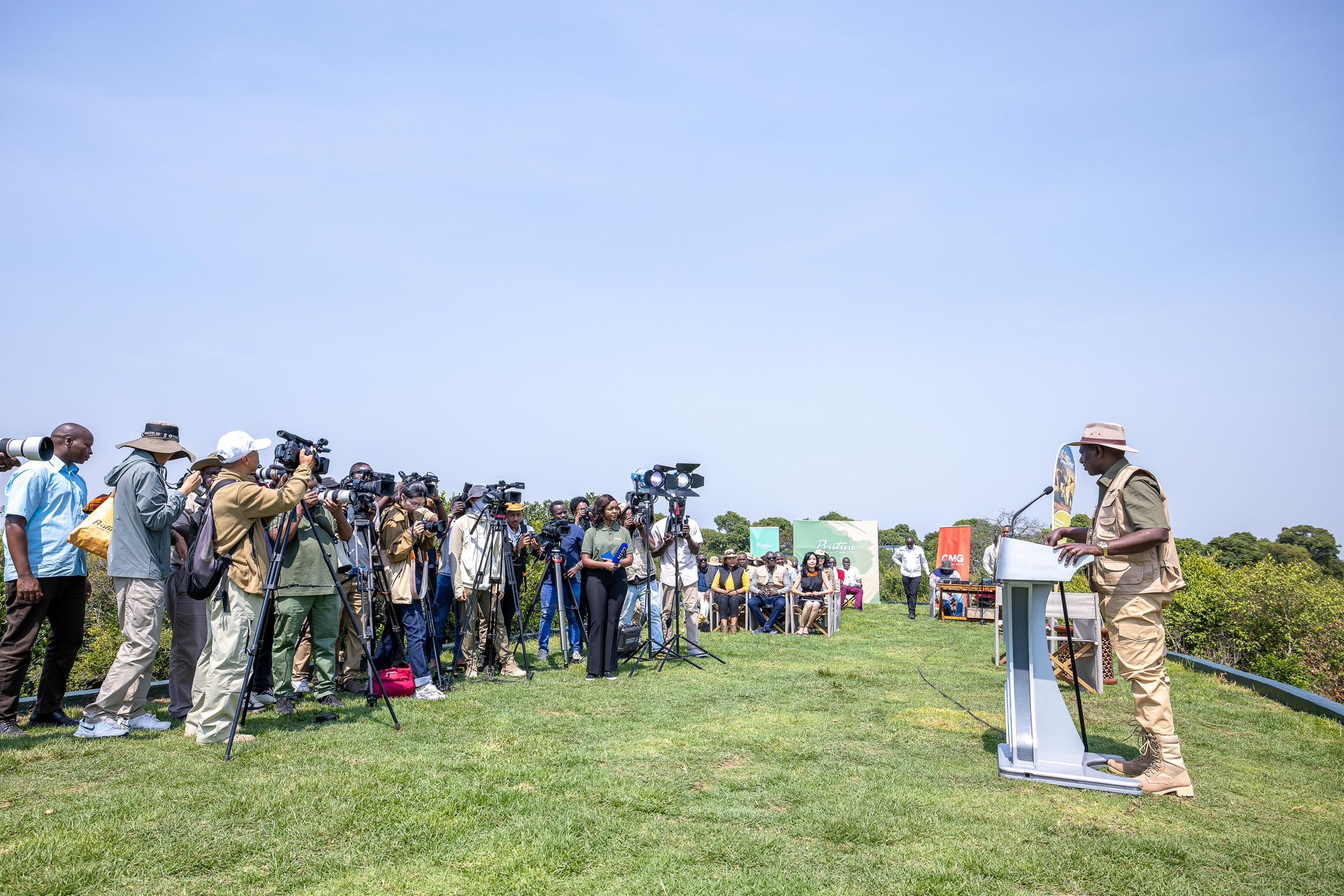
On Thursday, July 24 2025, President William Ruto stood in the heart of the Mara to officially launch the global live coverage of the 2025 Great Wildebeest Migration. But his presence wasn’t just to marvel at the spectacle. It was to signal something bigger and better: Kenya is ready to take charge of its own wildlife story, and use it to position itself on the world stage.
“This is more than a wildlife event,” Ruto said in his official statement. “We are expanding our tourism products beyond wildlife, national parks and beaches to digital innovation, sports, conferences, and culture.” It’s a bold move aimed at attracting up to five million visitors in the near future, not just to see lions and elephants, but to experience Kenya’s full identity.
What makes this year’s coverage different is the global broadcast partnership with China Media Group Africa. Kenya is now actively curating how the world sees its heritage, moving away from being a backdrop in foreign documentaries to becoming a producer of its narrative.
Tourism Cabinet Secretary Rebecca Miano echoed this during the launch: “This is more than a wildlife experience; it is a living story of Kenya’s heritage and beauty. Our story is worth sharing.”
But beyond the speeches and cameras, locals in Narok have begun to feel the shift. Many small tour operators, curio sellers, and youth content creators are now seeing new hope that local communities will benefit more directly from the tourism spotlight.
The Great Migration — often referred to as The Eighth Wonder of the world — has always been a part of Kenya. But for years, global coverage was dominated by foreign media. Now, under President Ruto’s new approach, Kenya is not just hosting the migration. It’s hosting the world.
With technology, storytelling, and diplomacy now walking hand in hand, the Mara is no longer just a wild frontier but also a global theatre, and Kenya is taking the lead role.
Not everyone’s impressed
While the government is trying to position the Wildebeest Migration as a bold tourism strategy, not everyone agrees with the ceremony.
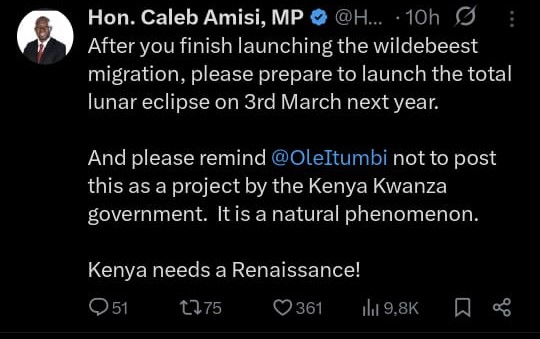
Saboti MP Caleb Amisi took to X to poke fun at the event, calling it unnecessary fanfare for a natural occurrence that happens annually without fail.
“After you finish launching the wildebeest migration, please prepare to launch the total lunar eclipse on 3rd March next year,” he wrote sarcastically.
His remarks sparked mixed reactions online. Some Kenyans sided with Amisi, arguing that resources should instead be used to improve roads, education, or healthcare in Narok and other tourism-linked regions. Others supported the idea, suggesting that transforming natural wonders into media can effectively and easily raise international awareness and attract more tourists to Kenya.
Despite the online buzz, government officials have remained focused on the bigger picture — using this globally-watched migration as an entry point into Kenya’s broader tourism revival.