Advertisement
Govt official’s forged degree saga: How employers detect fake academic credentials
08th August, 2026 08:30 AM
A recent case involving a former high-ranking government official accused of using a forged academic credential has highlighted the risks posed by fake academic qualifications in Kenya’s public and private sectors.
The episode has also renewed attention on the procedures employers can use to establish whether certificates presented by job applicants are genuine.
Checking secondary school certificates
In Kenya, verification of academic credentials can begin at secondary school level through the Kenya National Examinations Council (KNEC).
Employers can register as Verifier Organisations on the KNEC e-Certificate platform.
After approval, organisations can submit a candidate’s examination index number, examination year, full name as it appears on the certificate and a copy of the e-certificate for verification.
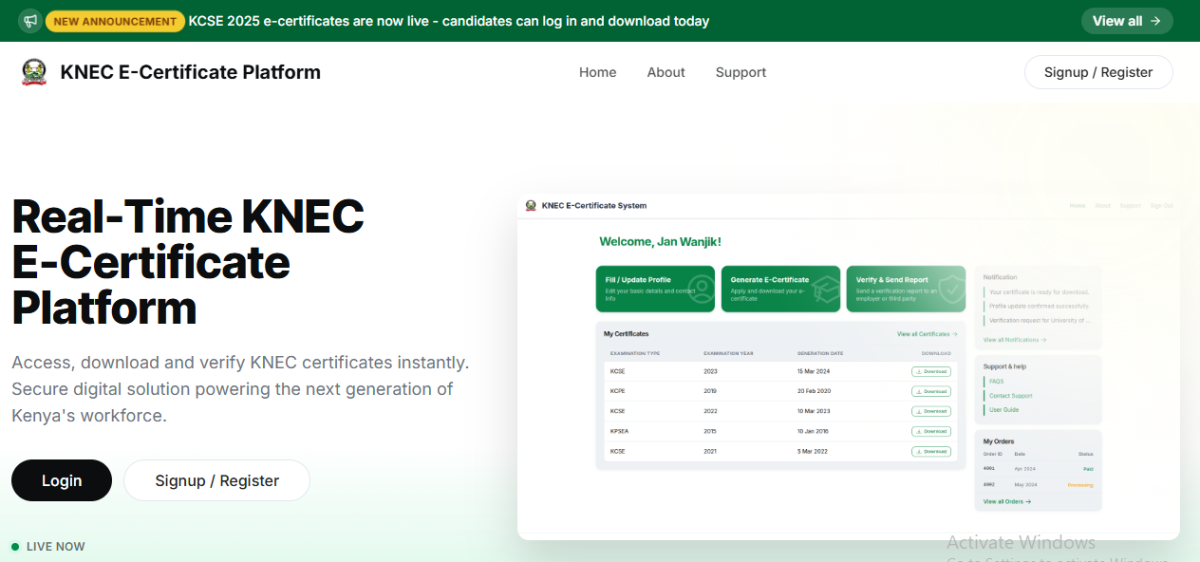
The platform contains examination records dating back to 1989 and uses security features including blockchain technology and QR codes. It also allows organisations to conduct bulk verification of certificates.
Verifying university degrees
For university degrees and other higher qualifications, employers can first check the Commission for University Education (CUE) lists of accredited institutions and academic programmes.
For foreign qualifications, CUE provides recognition and equation services through its online application process.
Applicants may be required to provide certified certificates, academic transcripts and identification documents, alongside the applicable fee.
Employers can also contact the issuing institution’s registrar directly.
The registrar can confirm whether an individual attended the institution, the programme they studied, their graduation status and the relevant dates against official institutional records.
KNQA qualification validation
The Kenya National Qualifications Authority (KNQA) provides another layer of verification through its online platform.
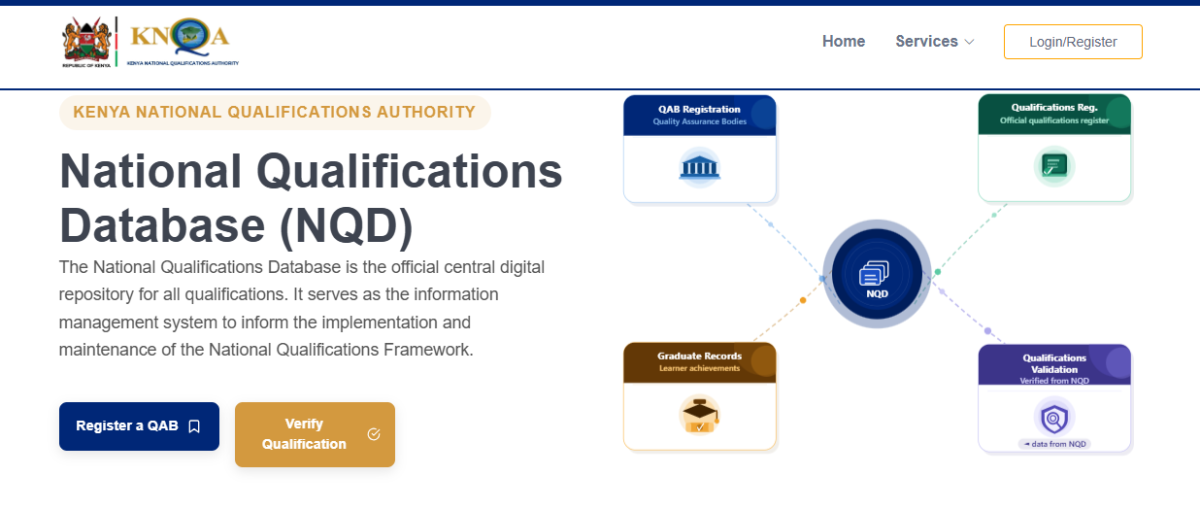
Employers and individuals can request validation of qualifications against the Kenya National Qualifications Framework. Validation helps establish the authenticity of a qualification, while alignment determines its position within the national framework.
KNQA also maintains a national qualifications database and operates the “Report Cheti Mwitu” channel for reporting suspected fake certificates.
Employers can also look out for warning signs during recruitment.
These include inconsistencies in education and employment timelines, unfamiliar institutions, conflicting dates, discrepancies between certificates and application details, or qualifications that cannot be independently verified.
For regulated professions, employers can additionally check the relevant professional bodies to establish whether an applicant is properly registered and licensed to practise.
Third-party background screening companies can also provide additional verification services, particularly for organisations handling large numbers of applicants.
Author
William Muthama
William Muthama is a digital journalist with a focus on entertainment, human interest, and current affairs. Share stories: [email protected]/ [email protected]
View all posts by William Muthama