Advertisement
How your home’s air quality is probably making you sick
25th May, 2026 12:30 PM

Most Nairobi residents spend the vast majority of their day indoors – cooking, working, sleeping – so the quality of the air inside their homes matters far more than most people appreciate.
The problem is that indoor air is often more polluted than outdoor air, and the culprits are entirely ordinary: a flat sealed against street noise, a gas cooker working hard in a cramped kitchen, a patch of damp hiding behind the wardrobe since the last rains.
The everyday things polluting your home’s air
Poor ventilation is the most overlooked problem in Nairobi flats.
When rooms are kept sealed (against cold, noise, or security concerns) gases from cooking, furniture off-gassing, and cleaning products accumulate with nowhere to go.

Gas cookers release nitrogen dioxide and fine particulate matter that irritate the lungs, and in a closed kitchen, those particles have nowhere to escape.
The rainy season deepens the problem.
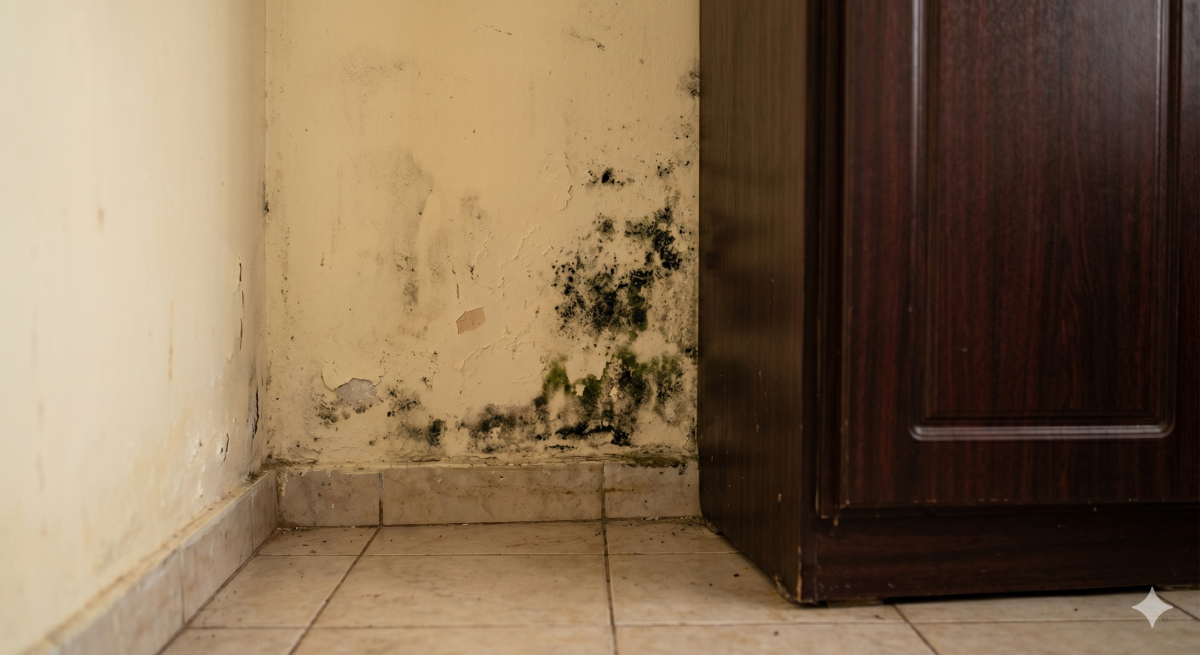
The long rains drive moisture into walls and poorly sealed windows, and that damp feeds mould – inside wardrobes, under mattresses, in bathroom corners you rarely check.
A 2024 review published in Environmental Health Perspectives found that “the available evidence described positive associations between residential dampness and mould exposure and poor mental health – in adults, associations were observed for outcomes such as depression, stress, and anxiety.”
Synthetic cleaning sprays and aerosol air fresheners add their own layer, releasing volatile organic compounds (VOCs) that linger long after the scent fades.
A 2025 study in Water, Air & Soil Pollution noted that poor indoor air quality “not only affects the physical health of indoor occupants, but also disturbs behavioural characteristics, sleeping habits, learning skills, and cognitive abilities,” which reframes that stubborn afternoon brain fog as something worth taking seriously.
What you can do about it right now
Start with ventilation. Opening two windows on opposite sides of your flat for 15 minutes each morning creates a cross-breeze that flushes out accumulated pollutants.
In compact layouts, a small desk fan pointed toward an open window works just as well.
In the kitchen, cook with a window open and a lid on the pot. If you have a gas cooker, using the extractor fan (or simply cracking a window) every time you cook is non-negotiable, not optional.
After the rains, check behind furniture and under mattresses for black spots or damp patches. A mixture of water and white vinegar clears surface mould effectively. Structural dampness is a different matter; that is your landlord’s legal responsibility to address.

Finally, swap synthetic fresheners for open bowls of bicarbonate of soda, which absorb odours without releasing chemicals.
Pothos and spider plants (widely sold at Nairobi nurseries from around Ksh150) have also been shown to absorb some airborne VOCs and are a low-maintenance addition to any room.
In a city where outdoor pollution is largely beyond your control, the air inside your home is one thing you can actually do something about.