How to make your home wheelchair accessible on a budget
By Dan Kauna, September 16, 2026Adapting a living space for a family member who uses a wheelchair does not require demolishing walls or spending millions of shillings.
A few thoughtful adjustments can turn an everyday house into an accessible, comfortable home for a wheelchair user.
By focusing on essential areas such as entryways, doorways, and bathrooms, families create a barrier-free environment while keeping costs manageable.
Creating smooth entryways and wide pathways
The journey begins at the front door. Traditional steps present the first obstacle, but installing a simple wooden or metallic ramp provides an immediate solution.
A standard ramp requires a gentle slope, ideally one metre of length for every 8 centimetres of rise, ensuring the wheelchair user ascends safely without physical strain.
For homes with minor door thresholds, small rubber ramps cost as little as Ksh3,000 and eliminate tripping hazards instantly.
Standard indoor doorways often measure 70 centimetres, which is narrow for manual and electric wheelchairs. Expanding clearance to at least 80 centimetres allows smooth passage.
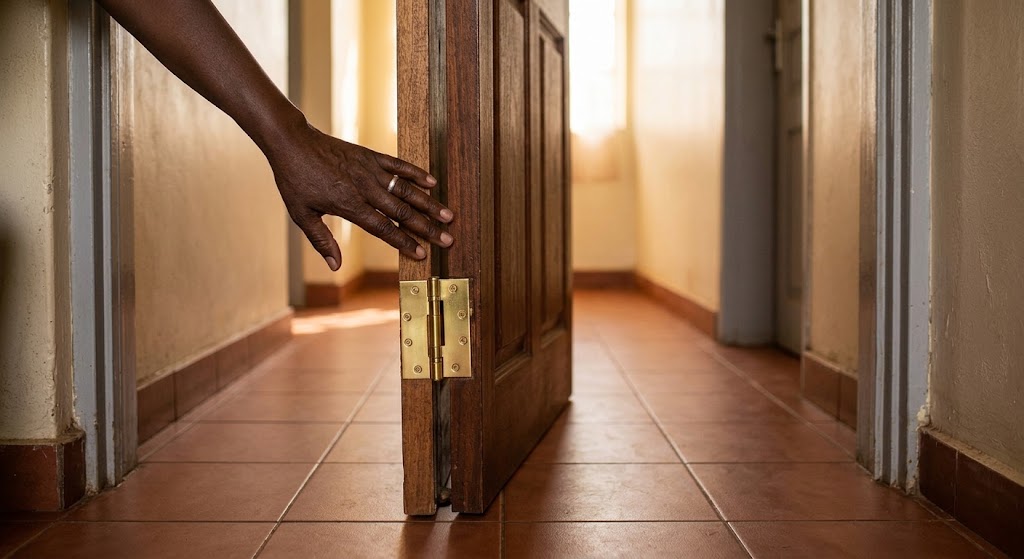
Instead of tearing down door frames, homeowners can replace standard hinges with offset swing-clear hinges. These hinges swing the door completely outside the frame, gaining up to 5 centimetres of clearance for under Ksh5,000.
Removing thick carpets and fitting smooth tiles or hard flooring also makes wheeling across rooms effortless.
Peer-reviewed research supports the physical and practical impact of these environmental adaptations.
A 2024 study in the Disability and Health Journal points out that “home modifications, such as installing grab bars and optimizing the environment, have the potential to reduce exertion and enhance safety in the home, enabling individuals to participate more in other activities.”
Adapting bathrooms and kitchen spaces for safety
Bathrooms represent the most critical area for daily independence. Converting a bathroom starts with replacing raised shower steps with a level-entry shower area or placing a sturdy water-resistant shower bench inside.
Wall-mounted grab bars anchored directly into wall studs beside the toilet and shower offer essential support. High-quality stainless steel grab bars generally cost between Ksh2,500 and Ksh6,000 each.
In kitchen areas, accessibility relies on reachable heights and clear space. Lowering key kitchen counters to around 80 centimetres or clearing out under-sink cabinetry allows a wheelchair user to roll underneath comfortably.
Replace round door handles and faucets with lever handles to enable easy operation for individuals with limited hand grip strength. Simple, targeted upgrades preserve dignity and independence without causing financial strain.