Advertisement
What watching the sunset really does for your health
28th June, 2026 09:17 PM
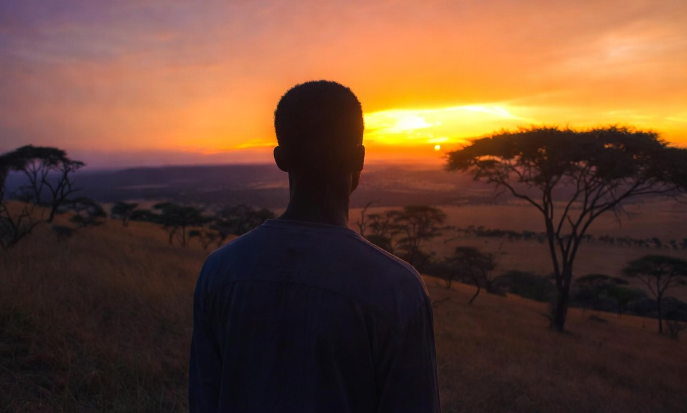
Humans appear to see sunrises and sunsets “almost like bookends”. Here’s what a dose of golden hour does for our memory, sleep and mood.
On the eve of my wedding, my parents, husband-to-be, and I watched a beautifully memorable sunset from the deck of a house in Cape Cod, Massachusetts.
Cape Cod is famous for its “golden hour” light. On a narrowing peninsula almost surrounded by water, moisture scatters the light of the Sun when it nears the horizon, creating a series of especially vivid oranges, golds and pinks that appear to melt into the sea.
That day, a storm was also approaching from the west, making the unfurling colours look almost psychedelic. While the men snapped photos of the scene, my mother and I stood and watched, shivering in the crisp September air. As we went back inside, I wrapped my mother in a hug. All our nagging pre-wedding worries seemed to have set with the sun.
When we get stuck in negative thought loops, awe-inspiring events like sunsets can demand our attention, breaking the loop and bringing us back to the present
While the release that comes with the end of a long day no doubt helped, watching the sunset likely also played a role. In fact, there’s growing evidence that sunsets – and sunrises, for that matter – can have a meaningful impact on our brain and mental health: diminishing anxiety and depression while boosting memory, creativity, sleep and even altruism.
The sunset awe effect
One of the main benefits stems from the awe a sunset inspires, which research shows can have a startling impact on many aspects of our health.
Awe is the feeling we get when we witness something immense and profound that we can’t quite comprehend. It could be a piece of art, a human achievement like watching someone give birth, or a natural wonder.
Experiencing it changes our perception, often eliciting a physical response, like tears or chills. But it’s also doing a lot more behind the scenes.
“One of the most reliable properties of awe is the feeling of being small, that one’s personal issues, problems and life are insignificant in the grand scheme of things,” says Michelle Shiota, a professor of social psychology at Arizona State University in the US and a long-time researcher of awe. “This is great for mental health because we realise that maybe some of the things causing us so much distress are not really that important after all.”
Keeping an inward focus can lead to overthinking and anxiety, but when we get stuck in negative thought loops, awe-inspiring events can demand our attention, breaking the loop and bringing us back to the present.

Research has shown that this perspective shift also inspires more prosocial behaviour, such as volunteering and a greater sense of purpose.
While awe can be found in many aspects of life, from spirituality and moral beauty to wonderful music or visual design, surveys indicate that most people find it is nature that inspires it the most. “When we ask people in the US to tell us about a time they felt strong awe, the most common category of answers is natural phenomena – typically a panoramic view of some kind,” says Shiota.
Sunsets and sunrises are the prime examples of this, according to a 2023 study, which measured over 2,500 participants’ reactions to images of different natural environments.
“Sunsets are exceptionally beautiful [and] beauty tends to elicit awe,” says Jennifer Stellar, a psychology researcher at the University of Toronto in Canada who studies the impacts of positive emotions on health and wellbeing. “[Sunsets have] a kind of beauty that is incredibly immersive, large in size and unusual, when you think about what the sky normally looks like.”
Supercharging awe
As well as making us feel better, a captivating sunset may also boost our brain power by increasing our information retention. In an age where technology-fuelled distractions abound, it’s a welcome notion.
For example, in an experiment to see whether awe helps humans better retain information, Shiota asked participants to watch three films, one of them an awe-inspiring science film. They then listened to a story and were asked to immediately recall details about it. The participants who watched the science film had by far the most accurate recall.
It’s not yet understood what’s happening in the brain to produce such an effect, says Stellar. It may be that people are more focused on what’s going on in front of them because the awe-inspiring thing has caught their attention.
Research also indicates that consistent doses of awe could provide serious mental health benefits. One study, for example, found that regularly experiencing awe helped diminish the acute and chronic stress people experienced during the COVID-19 pandemic.
In another study, researchers asked a group of older adults to try to experience moments of awe, from the glow of autumn leaves to the look of wonder on a child’s face, whilst on short weekly walks. After eight weeks, their responses to a survey about what they felt and saw on their walks were much more outwardly focused and descriptive than those of a control group, which hadn’t been asked to search for awe.
Both groups were also asked to take selfies; the awe groups’ smiles were consistently wider, and they made themselves increasingly smaller in their photos as the weeks went on, favouring their natural surroundings instead.
Catching a sunset while also on a nature walk might be like getting supercharged awe. “Nature has [health] benefits, and sunsets, which are especially awe-inspiring nature events, have their own benefits, so I would guess that sunsets [are] especially beneficial compared to non-nature events,” says Stellar.
A daily dose
Since sunsets are reliable awe-inducers, they can give us a daily dose of the health benefits awe may provide.
Experiencing awe more often also seems to have wider health benefits. In a study of 200 people, Stellar found that those who reported often experiencing positive emotions like joy and awe consistently had the lowest levels of cytokines, markers of inflammation in the body.
“People who have higher chronic levels of these tend to be at higher risk for diabetes, cardiovascular disease and depression,” notes Stellar.
It’s not known for sure why awe has this effect on cytokines. “It might be through the sense of connection people feel, since social support and connection may help reduce pro-inflammatory cytokines,” says Steller. “It may be due to its capacity to reduce stress.”
Similarly, if you’re awe-struck by the beauty of a sunset, you may find yourself more inclined to be helpful or have more compassion for those around you.
I discovered this the night before my wedding: after our sunset experience, I found myself volunteering to do a lot more than I had the day before. That, in turn, helped me feel calmer when I walked down the aisle.
A better night’s sleep
The way the sun cycle regulates our circadian rhythm may have also played a role in my more relaxed state that evening.
Exposure to sunlight’s natural progression, from sunrise to sunset, has a direct impact on our mental and physical health.
It has been shown to help regulate our circadian rhythm – the natural sleep-wake cycle that repeats every 24 hours – ultimately improving sleep quality. When the circadian rhythm is aligned with our natural environment, our brain’s pineal gland knows when and how much melatonin to produce to prepare the body for rest.
Sunrises help, too
While sunsets reduce our cortisol levels, sunrises are a natural cortisol trigger. They kick off our internal clock and block melatonin production until the sun sets, when darkness allows melatonin levels to rise again.
Witnessing the sunrise also mainlines the mood-boosting chemical serotonin in several different ways. Early morning sunlight boosts serotonin by giving us vitamin D to soak up and gives signals to receptors in our retina, kicking off internal serotonin production. Sunlight’s UV rays also make our skin produce serotonin.

While watching the sunrise is considered the stronger circadian cue, dusk’s diffused light still plays a key role as a natural timer, signalling to the body to start winding down.
Just as daytime’s blue light energises us, a sunset’s soft red and gold hues trigger the parasympathetic nerve system, reducing cortisol for a more restful sleep. Artificial light at night, in contrast, disrupts these cues, leading to poor sleep quality and a host of other maladies.
Chronically high cortisol levels can cause a host of health impacts, including depression, anxiety, cognitive impairment and cardiovascular strain.
Figueiro says regulating our light-dark exposure can counteract this, though. It’s no wonder scientists have hypothesised that we are “designed to see both sunrises and sunsets – almost like bookends”, she says.