Advertisement
Why women still succumb to cervical cancer, yet the vaccine is free
26th July, 2026 10:35 PM

Kenya introduced the HPV vaccine in 2019 for girls aged 10 to 14. But myths, misinformation and religious opposition slowed uptake. Late-stage diagnosis and limited access to treatment are the other hurdles.
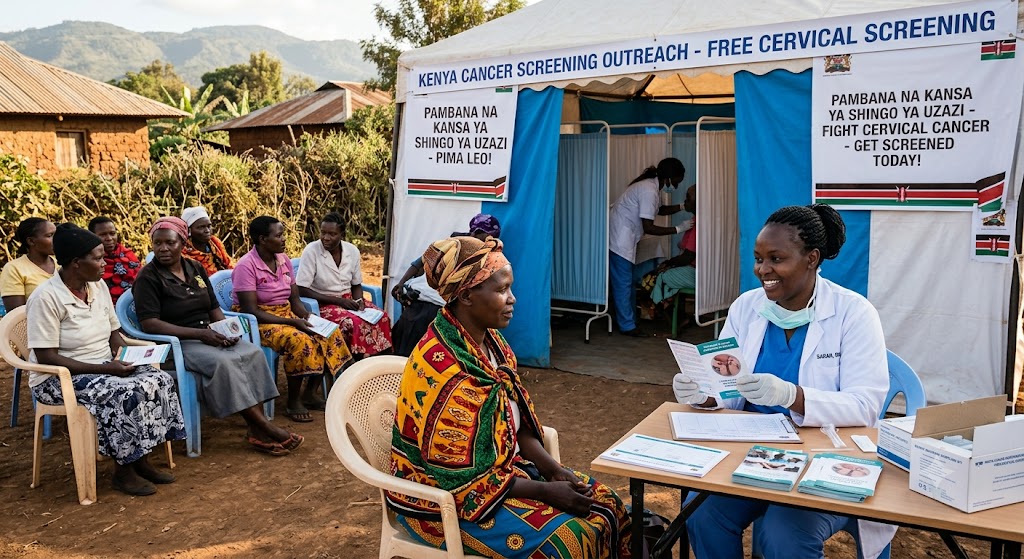
In four hours on a Saturday in Maralal, Samburu County, doctors found what a national screening gap had been missing for years: 10 women with cervical cancer, out of 700 screened, who would otherwise have gone undiagnosed until the disease had already progressed. It is a small snapshot of a much larger national picture, one where cervical cancer has quietly become Kenya’s second most common and second deadliest cancer among women.
Breast cancer remains Kenya’s leading cancer in women, with 5,822 new cases and 2,882 deaths in 2024, according to the National Cancer Institute and GLOBOCAN estimates. Cervical cancer follows closely, with 4,294 new cases recorded the same year, representing 19.6 per cent of all new cancer cases in women and 12 per cent across both sexes.
Unlike breast cancer, cervical cancer is preventable through HPV vaccination, yet it kills at a far higher rate: six in every 10 women diagnosed in Kenya die of the disease, a mortality-to-incidence ratio of about 61 per cent, compared with 49.5 per cent for breast cancer.
That high mortality, along with regional patterns across sub-Saharan Africa, is tied to late-stage diagnosis and limited access to treatment. About 70 per cent of cervical cancer cases in Kenya are diagnosed at stage 3 or 4, sharply reducing the chances of five-year survival.
In four hours, 10 women have been diagnosed with cervical cancer which would have been missed
Dr Elias Melly, CEO of the National Cancer Institute of Kenya, says the burden points to a need for greater investment in screening and treatment. “Statistics from SHA (Social Health Authority), cumulatively for screening, diagnosis, treatment [chemotherapy, radiotherapy, surgery and novel therapies] show that the cancer burden is a public health concern,” he said during a forum attended by more than 100 medics and specialists. He added that about 25 per cent of SHA reimbursements went towards these services.
The Maralal outreach, run jointly by the Digital Health Authority, SHA and the National Cancer Institute, illustrated both the scale of the gap and the value of closing it.
SHA CEO Dr Mercy Mwangangi said the camp had prevented at least 10 cases from progressing undetected. “In four hours, 10 women have been diagnosed with cervical cancer. If this camp had not taken place, these 10 women would have been missed, and the cancer would have progressed,” she said. “I’m encouraged that the 10 women have not only been screened, but also treated. Increasing screening services will enable us to reach and treat more women in good time.”
A similar outreach in January 2026 in Ngiriambu, Kirinyaga County, found 15 women with lesions that would have progressed to cancer without treatment.
No woman aged 20 – 24 in England died of cervical cancer between 2020 – 2024, for the first time in five years
The HPV vaccine offers the clearest route to reversing these trends, and England’s experience shows what sustained uptake can achieve. A study published in The Lancet in June 2026 found that no woman aged 20 to 24 in England died of cervical cancer between 2020 and 2024, the first time this has happened in a recorded five-year period.
England’s single-dose HPV programme, using the Gardasil 9 vaccine, is offered to all children aged 12 to 13, with catch-up doses available until age 25, and specialist access for high-risk groups including transgender people and gay or bisexual men up to age 45.
Coverage stands at 75.5 per cent for females and 70.5 per cent for males nationally, though the lowest-performing areas report just 61 per cent for girls and 56.9 per cent for boys.
Kenya’s experience has been markedly different. The country introduced HPV vaccination in 2019 for girls aged 10 to 14 through a two-dose schedule delivered largely in schools, but myths, misinformation and religious opposition slowed uptake.
Some parents, citing unfounded infertility concerns, withheld consent for their daughters to be vaccinated.
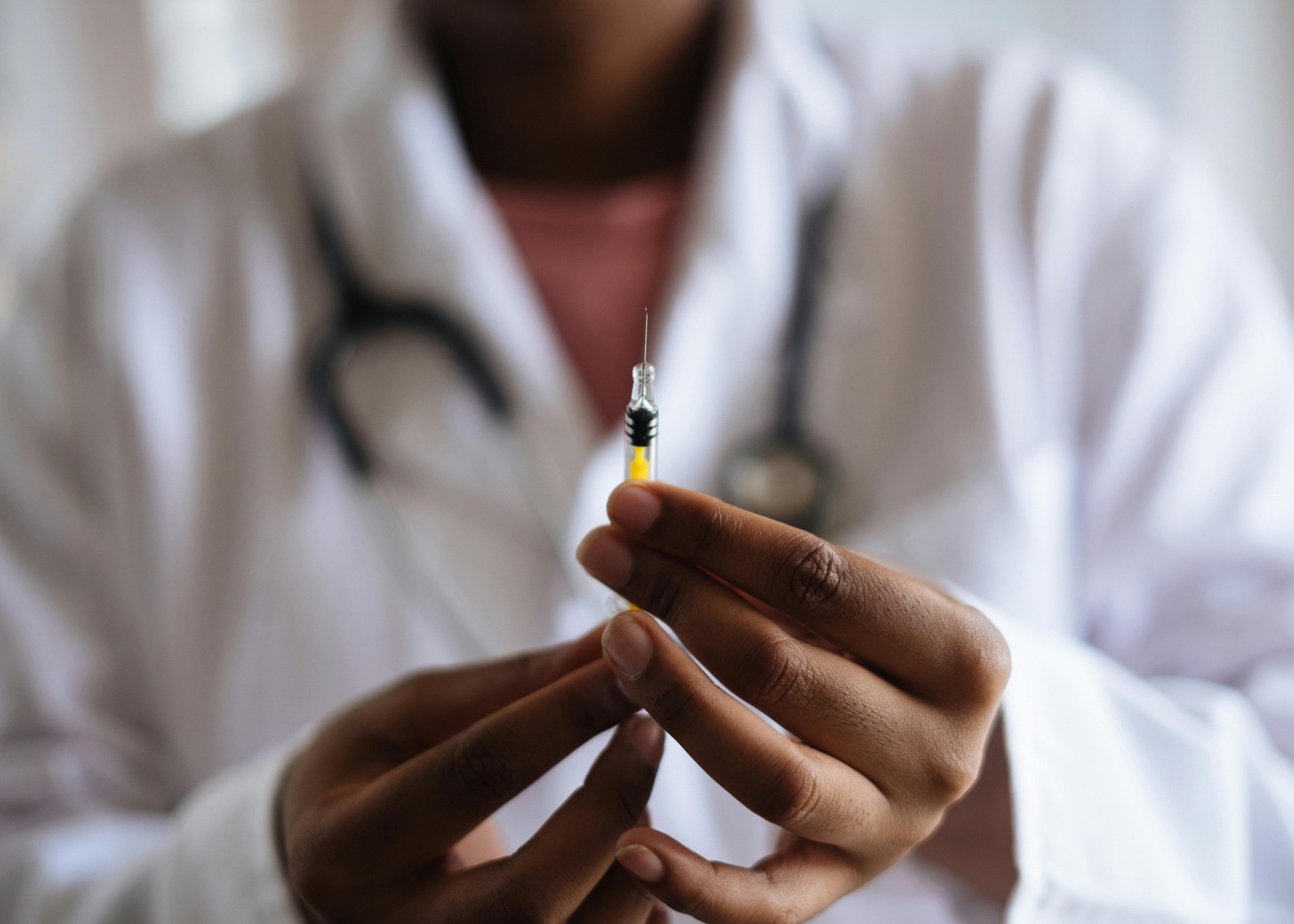
Dr Jesse Opakas, a clinical and radiation expert and Chief Medical Specialist at Moi Teaching and Referral Hospital, has pushed back on these claims. “It’s easier to vaccinate against HPV strains that cause cervical cancer in women, penile, oral and anal cancers in men than treating the disease. The vaccine is safe, has over 90 per cent success rate and is free in public health facilities,” he told Willow Health Media in a past interview.
Switching from two to a single-dose HPV regimen could raise full vaccination numbers, cut missed appointments
First-dose coverage in Kenya reached 69 per cent, but second-dose uptake fell far short, hovering between 23 and 40 per cent against a global target of 90 per cent. According to the WHO Regional Office for Africa, only a third of eligible Kenyan adolescent girls had completed both doses as of 2024.
In November 2025, the Ministry of Health (MoH), acting on advice from WHO’s Strategic Advisory Group of Experts on Immunisation, switched from the two-dose to a single-dose regimen, a move expected to raise full vaccination numbers, cut missed follow-up appointments and reduce administration costs. Under the new definition, the 69 per cent who received a first dose now count as fully vaccinated.
In January 2026, Health Cabinet Secretary Aden Duale launched Kenya’s first National Cervical Cancer Elimination Action Plan (2025 to 2030), aligned with WHO’s targets of 90 per cent of girls fully vaccinated by age 15, 70 per cent of women screened using high-precision tests by ages 35 and 45, and 90 per cent of women with cervical cancer receiving proper treatment.
Dr Ouma Oluga, Principal Secretary for Medical Services at the Ministry of Health, said at a Kenya Society of Haematology and Oncology forum that most Kenyans only receive a correct diagnosis after visiting about five health centres, a pattern he attributed to low suspicion rates and limited screening equipment and trained personnel at first points of contact.
Limited awareness, negative clinic experiences and scepticism since Covid-19 vaccine rollout key drivers of hesitancy
During the action plan’s launch, WHO said it had trained 11,000 healthcare workers nationwide to support the shift to the single-dose vaccine. MoH has cited limited awareness, negative clinic experiences and scepticism carried over from the Covid-19 vaccine rollout in 2020 as key drivers of hesitancy.
Together with the Kenya Medical Research Institute, the ministry has established a dedicated team to monitor and respond to vaccine misinformation online.
“Community Health Promoters in informal settlements like Kibra also conduct in-person sensitisation campaigns to create awareness and rebuild trust in the importance of immunisation,” Duale said.
Financing remains a looming concern. As Gavi’s vaccine subsidy tapers off, Kenya will need to shoulder a growing share of the cost. The government’s contribution rose from 46 per cent in 2024 to a projected 80 per cent in 2026, with full national responsibility due to take effect in 2027.