Advertisement
How to do lunges correctly without hurting your knees or lower back
19th September, 2026 12:51 PM

The lunge is one of the most effective bodyweight exercises for building strength in your thighs, hips, and calves.
However, doing them with poor technique frequently leads to sharp knee pain and lower back strain. A few adjustments to your step length and body posture can protect your joints while giving you maximum benefit.
Fixing your step length and knee tracking
The most common mistake when lunging is taking a step that is far too short. When your stride is tight, your front knee is forced forward at a sharp angle, placing excessive mechanical stress directly onto your kneecap.
Research published in the Journal of Orthopaedic & Sports Physical Therapy confirmed this joint strain, finding that “patellofemoral joint force and stress were significantly greater when performing a forward lunge with a short step compared to a long step” during deeper knee bends.
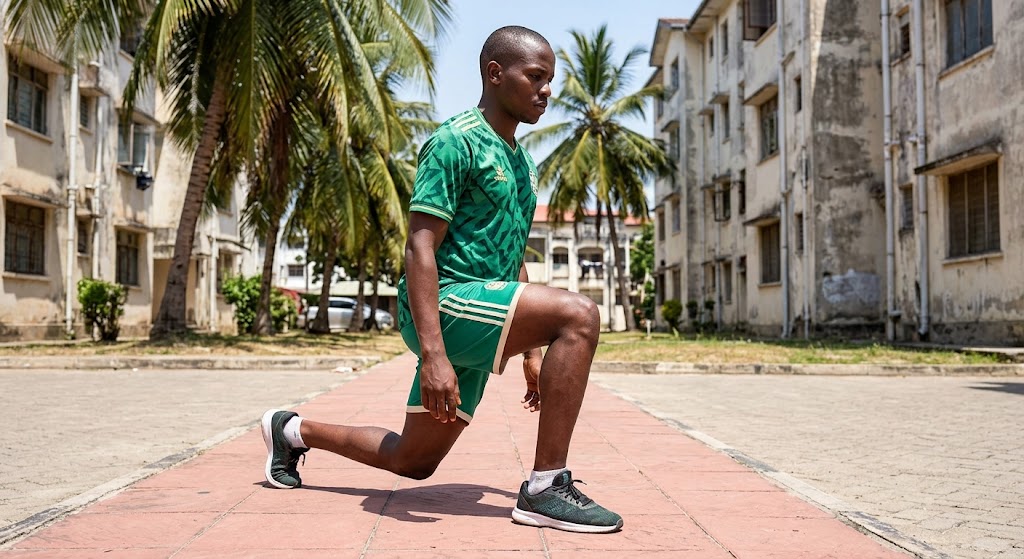
To fix this, take a generous step forward so your front shin stays mostly vertical as you lower your body. At the bottom of the movement, your front knee should align directly over your ankle and track in line with your middle toes.
Avoid letting your knee collapse inward toward your big toe, which severely strains knee ligaments. Keeping your feet hip-width apart rather than in a narrow single line provides the lateral balance needed to keep your hips level.
Maintaining torso control and a smooth movement
Your trunk posture dictates how weight is distributed across your hips and knees. Many people make the error of leaning too far back or letting their shoulders drop forward into a slouch.

Both mistakes shift unnecessary force into your lower spine. Instead, keep your chest open, engage your core muscles, and allow your torso to incline slightly forward at the hips to keep your spine neutral.
Lower your body straight down until both your front and back knees form roughly 90-degree angles. Your back knee should gently hover just above the floor rather than hitting the ground hard.
Press firmly through the middle of your front foot and heel to push yourself back up to the starting stance. Practising a static lunge in place before moving into walking lunges allows you to master your balance and correct form first.