Advertisement
Are miracle gut aids such as kombucha really good for you?
20th September, 2026 06:48 AM

If you’re a health-conscious type who reaches for products promising that boost, you may be a regular consumer of kombucha.
The form of fermented tea has been drunk for centuries in parts of Asia and is now being touted as a superfood to improve lots of aspects of health, including gut bacteria, the immune system and even lowering stress.
But where is the evidence? Is there something special in the bottles of the drink now easily available in your local supermarket?
Researchers at Aberystwyth University have led a study trying to establish what happens to a person when they drink kombucha for a sustained period of time, to see if the drink does have any measurable impact on the body.
The team conducted an eight-week randomised controlled trial on 40 healthy participants, with one set receiving a carefully controlled drink of kombucha every day, and the other a placebo of flavoured water.
The trial, published in a peer-reviewed journal, was double-blinded, so the participants and the research team did not know which person was receiving the real kombucha.
Samples of urine and blood were analysed before and after the trial began to see if there was any effect on the body from the ingredients known to be found in kombucha, such as certain polyphenols.
An improvement in levels of compounds
In this aspect, the trial produced positive results. The researchers found identifiable markers showing an improvement in levels of compounds which are associated with better health.
However, the question the trial had set out to address – does drinking kombucha also help manage stress – showed no effect in a stress response test on participants.
Dr Amanda Lloyd, a lead researcher on the study, said: “[My team] is looking at the chemical composition of things after an intervention trial and after different processing methods of that food.”
“I like food, I like humans, I like looking at wellness effects and functional products.
“I also have an interest in tea. Tea is really complex and is full of goodness, and the way you process it, the way you ferment it, the way you store it, there’s a lot of different things that happen to tea, and it alters the chemical composition.”
She said the team partnered with psychologists at the university to look at stress response, and one of the aims was to design a kombucha product with active compounds likely to benefit overall health.
Dr Emma Short, a consultant histopathologist specialising in gastrointestinal and soft tissue pathology, also writes about gut health and the microbiome.
“My real area of interest is the gut microbiome and how we can change and enhance our microbiome to improve our health and wellbeing,” she said.
“There’s a lot of research that’s been done looking at kombucha, but up until relatively recently most of it has been done in labs.”
Prior to 2025, she thinks there were fewer than 10 human-based studies into the drink.
“But they are lab-based studies. As we’ve said, that research must be done in humans so we can see to what extent we can translate those lab-based results into humans.”
Unlike a medicine, which is generally one strictly controlled and measured active ingredient, kombucha contains lots of different compounds which can affect health, and the levels can vary depending on multiple variables.
“You’ve got the organic acids, some B vitamins, vitamin C, minerals such as manganese, zinc,” Emma explains.
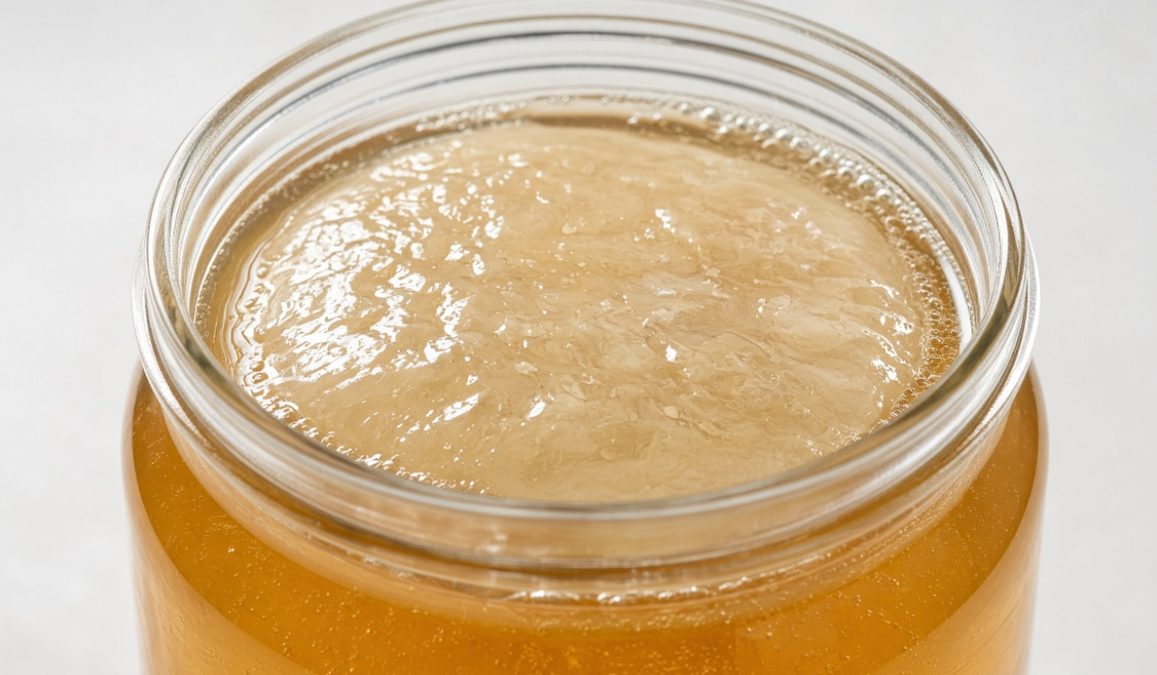
“The exact composition of the kombucha can vary depending on the time of fermentation, the temperature of fermentation, and which microorganisms are there in the SCOBY.”
She is a fan of kombucha and previously made her own batches, as well as consuming other fermented foods such as kefir, sauerkraut and kimchi, but says caution is needed with some more commercial kombuchas.
“Ideally, your kombucha should just have the tea, sugar and the SCOBY,” she said.