Foods that affect the quality of your dreams
By Dan Kauna, June 19, 2026You fall asleep. Your body goes still. But somewhere between midnight and 4 am, your brain lights up – and what happens in there, science now confirms, is partly shaped by what you ate for supper.
Research into the diet-dream connection is still relatively young, but it is getting sharper.
A 2025 study published in Frontiers in Psychology surveyed over 1,000 participants and found that food consistently influences the nature of people’s sleep and dreaming experiences, with desserts, sweets, and dairy most frequently blamed for disturbing the peace at night.
The study’s authors found that “unhealthy eating (including gastric symptoms, lower reliance on hunger and satiety cues, and evening eating) predicted nightmares and dream negativity,” while healthier eating patterns, including less evening eating, were linked to stronger dream recall.
That finding lands differently for Kenyans, where supper often comes late. A heavy ugali and stew at 9 pm is a national norm.
The tryptophan-serotonin-REM chain
To understand how food shapes your dreams, you need to understand one amino acid: tryptophan. It is the raw material your brain uses to produce serotonin, and serotonin is central to how your REM sleep (the stage in which most vivid dreaming happens) is regulated.

Foods rich in tryptophan include eggs, fish, groundnuts, soya, and milk.
A 2020 review in Nutrients found that “reducing the availability of tryptophan prevents the synthesis of serotonin and subsequently reduces sleep quality.”
Simply put: a diet consistently low in tryptophan-containing foods disrupts the biological pathway that makes restful, dream-rich REM sleep possible.
High-carbohydrate meals eaten two to four hours before bed actually assist this process as carbohydrates help shuttle tryptophan across the blood-brain barrier more efficiently.
A modest plate of rice or sweet potato in the evening is, biochemically, friendlier to your dreaming brain than the impulse to skip carbs at night.
The foods that disturb and the ones that restore
Nightmares may turn out to be responsive to diets that minimise the potential for ingesting foods that cause gastric distress, most notably, foods with lactose that cause gastrointestinal symptoms.
In other words, if you are waking up from strange or unsettling dreams, a late tea with full-cream milk may deserve more scrutiny than your stress levels.
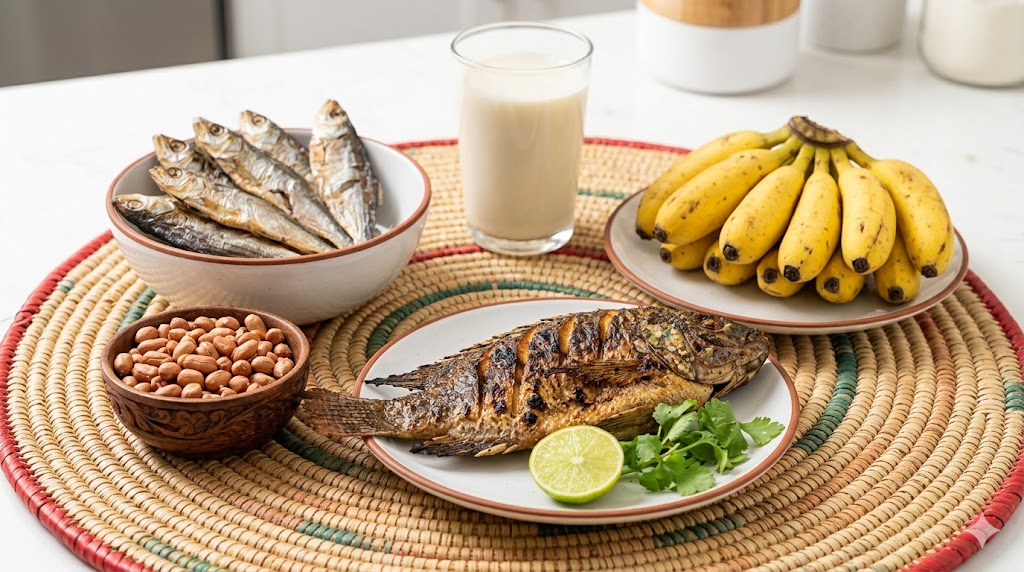
Sugar and heavy meat meals eaten late in the evening are also associated with poorer sleep quality, which in turn produces more negatively toned dreams. Fruit, vegetables, and fish, on the other hand, are linked to better measured sleep scores.
For the Kenyan kitchen, this points in some useful directions. Kunde, managu, terere, and other traditional greens are good pre-sleep additions. Omena and tilapia deliver tryptophan and omega-3s.
A banana before bed contains both tryptophan and magnesium, which support muscle relaxation and sleep onset. What you want to ease back on in the evening hours: the sugar-heavy sodas, late mandazi runs, and large portions of red meat.
None of this means you need to overhaul your entire diet for better dreams. It is about timing, composition, and paying attention to how your body actually responds. The brain that takes you through the night is building its experience out of whatever you gave it before you closed your eyes.